
Walking football: modified rules do not make the effort trivial
Walking football can support activity and social connection in older adults, but matches still include meaningful cardiovascular load, accelerations and injury risk.
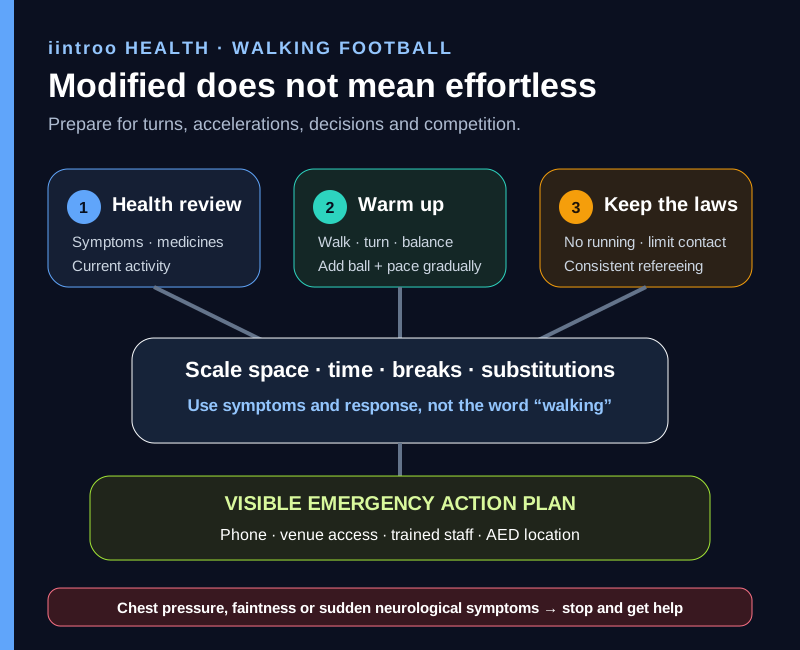
Key points
- Walking football is modified for accessibility, but measured sessions can still reach moderate or vigorous intensity and include repeated acceleration and deceleration.
- Research suggests possible physical and social benefits, yet samples remain small, short-term and predominantly male, limiting broad conclusions.
- Following the walking and contact rules, scaling time and space, and maintaining an emergency plan are part of health protection rather than optional extras.
Treat walking football as sport, not gentle background activity
This guide is for players, coaches, referees and programme organisers. Walking football removes running and modifies contact, but it still asks players to accelerate, decelerate, turn, pass and compete. A Swedish study of 63 regular players reported substantial relative heart-rate responses and frequent changes of speed. Age-estimated maximum heart rate is imprecise, so the result does not prescribe one target zone, but it shows that 'walking' does not mean negligible effort.
UEFA's toolkit recommends attention to medical readiness, warm-up, hydration, playing conditions and emergency planning, particularly for older people with cardiovascular or bone-health risks. A diagnosis does not automatically exclude participation; it changes the need for individual advice and programme adaptation.
Keep the evidence for benefit in proportion
The 2020 systematic review found only nine peer-reviewed studies with 117 participants, mainly older men in the United Kingdom. A 2025 scoping review expanded the evidence to 10 studies and 332 participants, but 85% were men and study designs remained varied. Reports suggest potential fitness, function, wellbeing and social-connection benefits, not guaranteed prevention or treatment of disease.
Social enjoyment is a meaningful outcome: it can help people continue activity. It should not be turned into a claim that walking football replaces cardiac rehabilitation, falls treatment or prescribed care. Programmes should record who takes part and who drops out, including women, disabled players and people from underrepresented communities.
Use the modified laws as safety controls
The FA laws restrict running and address contact, ball height and restart conditions. Referees and coaches need a shared interpretation before play; allowing occasional running or forceful tackles changes the exposure that participants accepted. Match formats, pitch size, player numbers, breaks and substitutions can also be scaled to the group.
Injury surveillance from the 2024 FA Walking Football Cup recorded both medical-attention and time-loss injuries, with tackling and running highlighted as prevention targets. It covered a tournament, not all community participation, so its rates should not be generalised to every session. It does show that modified sport is not injury-free.
Prepare for the actual demands
Use a progressive warm-up that includes comfortable walking, turning, balance, ball work and increases in pace. New or returning players may need shorter bouts, more space, scheduled substitutions and recovery between sessions. Footwear should suit the surface, and the playing area should be checked for hazards before every session.
Stop for chest pressure, unexplained severe breathlessness, faintness, palpitations with illness, sudden weakness or neurological symptoms. New major swelling, inability to bear weight, suspected fracture or head-injury symptoms also needs assessment. Do not use a wearable number alone to overrule concerning symptoms.
Make emergency planning visible
Every venue should have a rehearsed emergency action plan, a working phone, clear access for emergency services and staff who know the location of first-aid equipment and an automated external defibrillator. Participants should know how to summon help. Record relevant health information only with consent and keep it confidential.
After illness or injury, return should match the condition, medication, current function and playing demands. This article provides general education; it cannot perform cardiovascular screening, prescribe exercise intensity or clear a player for participation.