
Water skiing and wakeboarding: make the tow, course and rescue plan one system
Water skiing and wakeboarding safety starts before launch: inspect equipment, separate the course, brief the observer and rehearse rescue and concussion response.
Key points
- Boat, cable and park disciplines expose athletes to different speed, obstacle, rope and rescue hazards, so one generic water-sport checklist is not enough.
- Current IWWF guidance makes a trained safety team, site-specific plan, suitable equipment and rapid removal from the water core controls; protective gear does not make high-energy falls harmless.
- A rider with suspected concussion, neck pain, neurological signs or altered consciousness should be removed, assessed and not sent back to test the next run.
Separate the discipline before copying safety advice
This guide is for water skiers, wakeboard and wakeskate riders, boat crews, cable-park staff, families and event medical teams. Slalom, trick and jump skiing; boat wakeboarding; cable riding; and wakeskating use different speeds, ropes, obstacles, release systems and fall patterns. A recommendation developed for a straight recreational tow may not control risk around a jump ramp or cable obstacle. Start with the current federation rules, manufacturer instructions and a written assessment for the actual site and session.
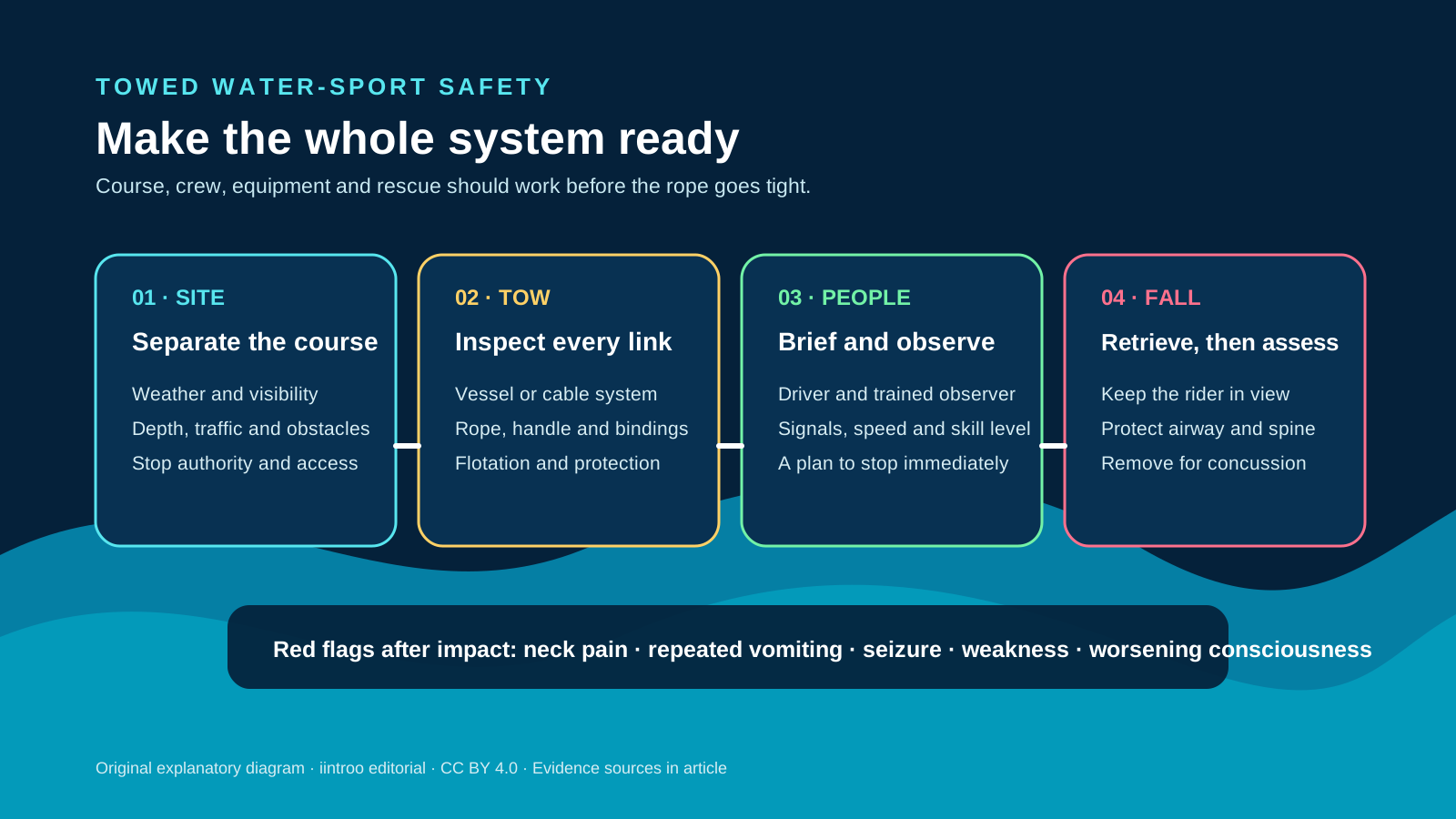
The International Waterski & Wakeboard Federation safety manual assigns event preparation to a safety director and team, including site inspection, communications, rescue craft, medical cover and procedures suited to the discipline and location. British federation guidance likewise states that each site needs its own risk assessment because configuration and participation differ. Check water depth and surface, traffic separation, weather and lightning, visibility, shoreline and obstacles, access for rescue and ambulance, and who has authority to stop activity. A waiver, helmet or skilled rider does not substitute for those controls.
Inspect the whole towing system and brief the crew
Before a boat tow, check the vessel, steering and throttle response, tow point, rope and handle, bindings, flotation, communication signals and the rider's chosen protective equipment. The driver needs a clear course and the observer needs an unobstructed view of the rider, responsibility for signals and the ability to alert the driver immediately. Agree on start, speed, stop and emergency signals before the rope tightens. Do not improvise a tow from an unsuitable craft or let a distracted passenger perform the observer role.
At a cable park, inspect carrier, handle, obstacles, entry and exit areas, separation rules and the method for stopping the system or reaching a fallen rider. Use the current rule book for helmet and buoyancy requirements and the park's instructions for features and ability level. A helmet can reduce some impact consequences but cannot prevent concussion or cervical injury; flotation supports recovery but does not guarantee that an unconscious rider will breathe safely. Progress speed, air, rotation and obstacle complexity separately, with coaching and recovery rather than stacking new risks in one attempt.
Treat the fall location and rescue delay as part of exposure
A United States emergency-department study described 898 reported water-skiing injuries between 2012 and 2022, with the head, face and knee among commonly affected regions and sprains, strains, lacerations and fractures represented. The database does not measure hours of participation, all injuries treated elsewhere or the effectiveness of a specific helmet. It describes presentations, not an individual's probability, and should not be turned into a universal equipment claim. Older reviews also combine eras and disciplines with changing gear and technique.
The practical response is rapid recognition and safe retrieval. Slow and approach a fallen rider according to the crew plan, keep them in view and stop propulsion hazards before contact. Do not ask an injured person to swim, remove a helmet or climb into a boat when neck, spine or serious limb injury is possible unless immediate airway or water danger requires trained rescue action. Event teams need equipment to protect rescuers, stabilise the rider and reach emergency services from the farthest point on the course, not just from the dock.
Remove suspected concussion and rehearse the escalation
Current IWWF cable rules reproduce an open-water concussion-recognition pathway: remove a rider after concerning head trauma, check for red flags, bring the athlete to shore for assessment and do not leave or send them home alone initially. Severe or increasing headache, neck pain, repeated vomiting, seizure, double vision, weakness or tingling, deteriorating consciousness or marked agitation requires emergency assessment. A normal-looking helmet, memory of the run or desire to compete does not rule out concussion or spinal injury.
Return is diagnosis- and task-specific. Rebuild ordinary activity, balance and controlled conditioning before tow starts, high speed, unpredictable water, obstacles, spins and full competition, following qualified clinical guidance. Recheck equipment after a hard impact and document the incident so site hazards can be corrected. This page cannot teach boat driving or rescue, diagnose concussion, select a helmet standard or clear a rider. It connects current rules, equipment, course control and medical response into one system that can be rehearsed before launch.