
Intermittent catheter use in wheelchair sport: plan access, recognise change and avoid reflex antibiotics
A positive urine test alone does not prove symptomatic UTI. Protect the athlete's established bladder routine, record meaningful changes and seek timely review.
Key points
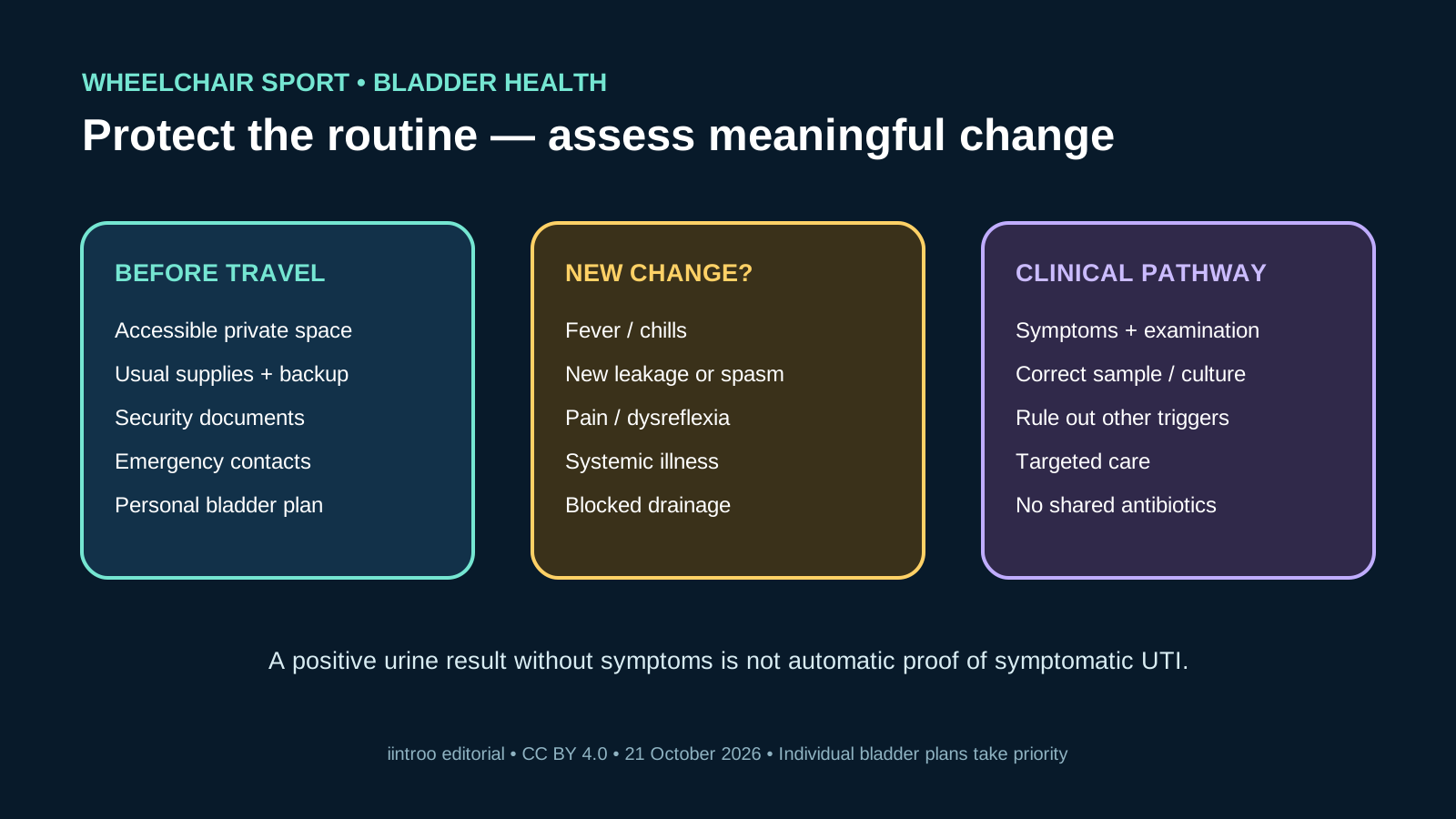
- Bacteriuria is common with neuro-urological bladder management; symptoms plus appropriate laboratory evidence matter more than urine appearance alone.
- Travel plans should protect the athlete's established catheter schedule, privacy, clean supplies and emergency access rather than restricting fluids to avoid toilets.
- Fever, rigors, new autonomic dysreflexia, flank pain, marked systemic illness or blocked drainage require prompt clinical assessment.
Start from the athlete's own bladder baseline
This guide is for wheelchair athletes who use intermittent catheterisation, and for coaches, organisers and travelling support teams. It does not apply one bladder routine to every impairment. Injury level, hand function, bladder pressures, prior surgery, medicines, catheter type, assistance and autonomic dysreflexia risk can all change what safe management looks like. The treating neuro-urology or rehabilitation team should define the individual plan.
A urinary tract infection in neuro-urology is not established by odour, cloudiness or a positive dipstick alone. Current EAU guidance describes UTI as new signs or symptoms accompanied by laboratory findings such as bacteriuria, white cells and culture. Because colonisation is common, routine screening and treatment of asymptomatic bacteriuria can create harm without improving sport readiness.
Recognise that symptoms may be atypical
Depending on sensation and lesion level, a symptomatic episode may present with fever, chills, malaise, new leakage, increased spasms, discomfort, flank or back pain, altered urine, or autonomic dysreflexia rather than the classic burning felt by someone without neurogenic bladder. No single symptom is diagnostic. A blocked catheter, stones, constipation, skin injury and other illnesses can mimic or trigger some of the same changes.
The 2025 elite wheelchair-athlete study links self-reported UTI with disrupted training and performance, but it is cross-sectional and cannot prove one practice caused the infections. Earlier athlete surveys also relied heavily on recall and selected competitors. These data establish that the problem matters in sport; they do not validate a universal antibiotic, catheter brand or hydration target.
Protect the routine during travel and competition
Map accessible toilets and private clean space at venues, airports, transport stops and accommodation. Carry the athlete's usual supplies in more than one permitted bag, with documentation needed for security and enough contingency for delay. Teams should not place catheter equipment in a shared open medical kit or require disclosure to people who do not need the information.
Follow the person's taught hand and catheter technique and the manufacturer's instructions. Do not improvise reuse, change catheter type or extend intervals solely to fit a schedule. Deliberately restricting fluid to avoid catheterisation can conflict with heat management and individual bladder care. Fluid advice must account for sweat rate, renal or cardiac issues, event duration and the established clinical plan rather than a generic bottle target.
Use culture and clinical review, not locker-room antibiotics
When meaningful new symptoms occur, contact the athlete's clinical pathway promptly. A properly collected urine sample before antibiotics may help direct treatment when the clinician considers it appropriate. Do not share antibiotics, use a previous prescription automatically or treat every positive screening result. Repeated unnecessary treatment increases adverse effects and selection for resistant organisms.
Urgent assessment is needed for fever with systemic illness, rigors, vomiting, new confusion, severe flank pain, reduced urine output, blocked drainage, suspected sepsis or autonomic dysreflexia that does not resolve with the athlete's emergency plan. Stop training while acutely unwell. This article does not diagnose UTI, teach catheter insertion, choose equipment, prescribe fluid or antibiotics, or clear return to competition.