
Women’s football breast health: fit support to the player and the session
Breast pain, movement, chafing and contact injuries deserve routine attention. A well-fitted sports bra can improve comfort and support, but fit is individual and persistent pain, a new lump or nipple or skin change still needs clinical assessment.
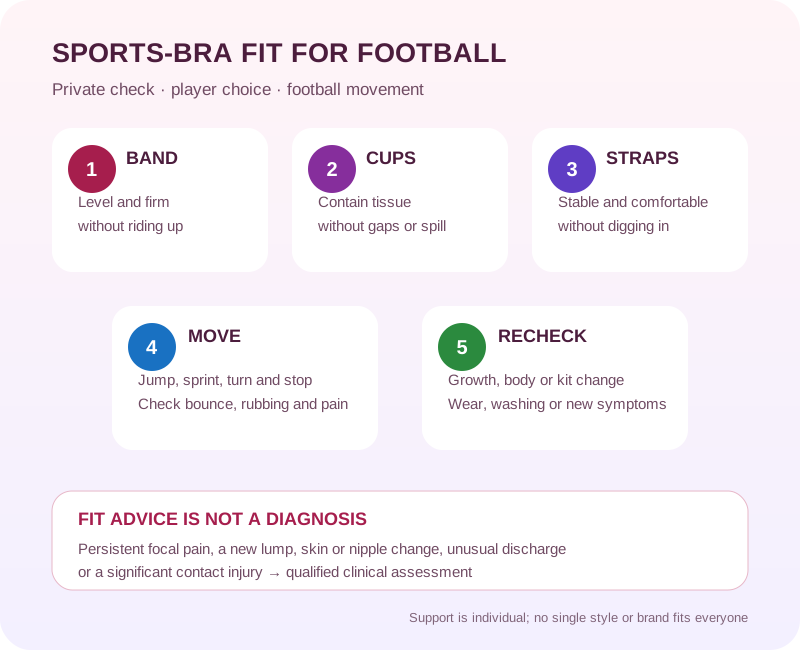
Key points
- UEFA's 2026 guide recommends judging fit by a level, firm band, contained breast tissue, stable straps, comfort and minimal movement during a simple jump or sport-specific test.
- A small 2024–2025 England senior-team intervention reported improved knowledge and perceived benefit after education, assessment and individual bra prescription; it does not prove one style or brand is best for every player.
- Support can reduce movement-related pain, but breast trauma, a new lump, persistent focal pain, skin or nipple change, or unusual discharge should not be managed only by changing a bra.
Make breast health a normal, private performance-health topic
This guide is for players, parents, coaches, kit staff and healthcare teams. Breast movement, pain, chafing and contact injury can affect participation and performance, yet athletes may not report them because of embarrassment, lack of privacy or the belief that discomfort is inevitable. Teams should offer inclusive language, confidential reporting and access to appropriately trained staff without making assumptions about body size or gender identity.
The evidence base is still narrow. The England senior-team study included 36 players before the intervention and 24 afterwards; it found common pain and fit problems plus self-reported benefit after education and individual prescription, but had no control group and cannot identify one universal product. Contact-injury reviews also highlight inconsistent definitions and under-reporting.
Use a movement-based fit check, not the label alone
UEFA's practical check looks for a level, firm band that does not ride up, cups that contain tissue without gaping or overspill, stable straps that do not dig in, comfort and minimal movement during a jump test. Size labels vary between brands, and compression, encapsulation and combination designs distribute support differently. The right option is the one that fits the player's body and the movement demands.
Test the bra with football actions: acceleration, deceleration, jumping, turning and repeated running. Check whether seams, fasteners or monitoring devices rub under match kit. A garment that works for a short gym session may not remain comfortable through a wet, hot or long match, so training is the place to rehearse it.
Reassess when the player or garment changes
Growth, menstrual-cycle-related changes, pregnancy, postpartum recovery, hormonal treatment, body-mass change, surgery and ageing can alter fit or symptoms. Elastic also changes with washing and wear. UEFA recommends periodic reassessment and replacement when support, fit or material function deteriorates rather than relying only on a fixed date.
Youth players need privacy, simple education and repeated access to different styles as bodies change. Parents and coaches can remove barriers by treating a sports bra as legitimate playing equipment, offering choice and never conducting public fit checks or commentary about a player's body.
Respond to pain and contact injuries instead of normalising them
Movement-related pain may improve with better support, but pain is not proof of poor fit and poor fit is not the only cause. After a ball, elbow or fall impacts the breast, stop and assess significant pain, swelling, bruising, a palpable mass or functional limitation. Ice or compression advice must be appropriate to the injury and the athlete; suspected serious trauma needs clinical review.
The systematic review found contact breast injuries across several sports but only six eligible studies, with variable methods and reporting. Protective garments are not proven to prevent every injury. They can be considered by preference and applicable rules, but should not replace safe coaching, reporting, examination or follow-up.
Know when fit advice becomes medical assessment
Seek qualified assessment for persistent or worsening focal pain, a new lump, skin dimpling or persistent redness, a new nipple inversion, unusual discharge, a wound, fever or symptoms that do not settle after trauma. Urgent care is appropriate for severe injury, rapidly increasing swelling, breathing difficulty or systemic illness. A bra fitting cannot diagnose or exclude breast disease.
Follow age- and risk-appropriate screening advice from the athlete's healthcare system. Self-awareness can help a player notice change, but it does not replace recommended screening or clinical evaluation. The practical aim is comfortable participation and early care, not turning kit staff or coaches into diagnosticians.