
Women’s lacrosse eyewear: certified protection still needs correct fit
World Lacrosse now requires protective eyewear in women’s field and sixes. The standard lowers eye-injury risk but does not prevent concussion or every facial injury.
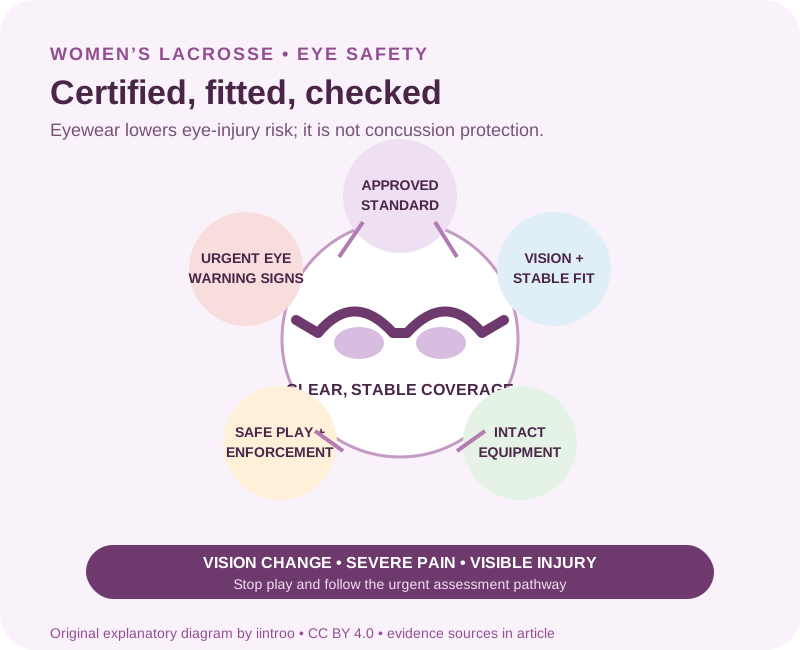
Key points
- World Lacrosse requires protective eyewear for women’s field and women’s sixes.
- Eyewear reduces eye-injury risk but is not concussion protection.
- Vision change, severe pain or visible eye injury needs urgent assessment.
Who this guide is for
This guide is for women’s field and women’s sixes players, parents, coaches, officials and equipment staff. World Lacrosse announced in 2026 that protective eyewear is required for athletes in those disciplines at its owned and sanctioned events. The accepted certification and transition arrangements should be checked in the current event rules.
Ordinary glasses, fashion goggles and an unverified product are not substitutes for sport eyewear that meets the required standard. Domestic federations may use different implementation dates or comparable national standards, so teams should confirm the rule before travel rather than relying on a previous tournament.
What the field evidence shows
A cohort study compared girls’ school lacrosse before and after a protective-eyewear mandate. Eye injuries fell from 0.10 to 0.016 per 1,000 athlete-exposures, an adjusted rate ratio of 0.16. Head and face injuries excluding concussion also declined, while the total injury rate did not change.
This was not a randomised trial, and recognition, play and reporting can change over time. The observed rise in diagnosed concussion could not be explained conclusively and should not be interpreted as proof that eyewear causes concussion. The study supports eye protection in that setting without claiming complete facial or brain protection.
Current injury evidence remains broader than eyewear
A 2026 systematic review included 31 studies comparing scholastic and collegiate female lacrosse. Head and face injuries, including concussion, formed a greater proportion of reported injuries in scholastic athletes, while ball and stick contact were more common mechanisms at that level. The underlying studies varied widely in surveillance and competition context.
World Lacrosse’s FAQ links the eyewear rule to faster shots and contact from the ball or crosse. Eyewear addresses the eye and surrounding area; it does not authorise dangerous play, replace rule enforcement or function as a concussion test.
Check fit before every session
Use certified eyewear in the correct size, with the frame stable through sprinting, turning and stick movement. It should provide clear central and peripheral vision without exposing the eye because of a shifted strap. Inspect the frame, lens or cage, fasteners and padding for cracks, deformation or missing parts.
Do not drill, cut, heat-shape or combine components unless the manufacturer and competition standard permit it. Players who need vision correction should discuss compatible options with an eye-care professional and equipment specialist. Replace damaged equipment according to the manufacturer rather than taping it for one more match.
Eye trauma can be time-critical
Stop play after a direct eye impact with vision loss or change, severe pain, blood in the eye, an irregular pupil, obvious penetration, marked swelling or inability to open the eye. Arrange urgent assessment through the event medical plan. Do not press on the eye, remove an embedded object or use return to play as a vision test.
A player with headache, dizziness, confusion, balance problems or other concussion concern also needs removal and the applicable concussion pathway, even when the eyewear looks intact. Return depends on the injury and qualified assessment; the equipment standard is prevention, not medical clearance.