
Young climbers with finger pain: think growth plate, not just pulley
Finger pain in young climbers may involve a growth plate, not an adult-style pulley injury. Learn when to pause loading, seek assessment and plan a safe return.
Key points
- Growing fingers need a different assessment from adult pulley injuries.
- A recent review pooled 98 adolescent climbers, but case-based evidence cannot establish a personal injury probability.
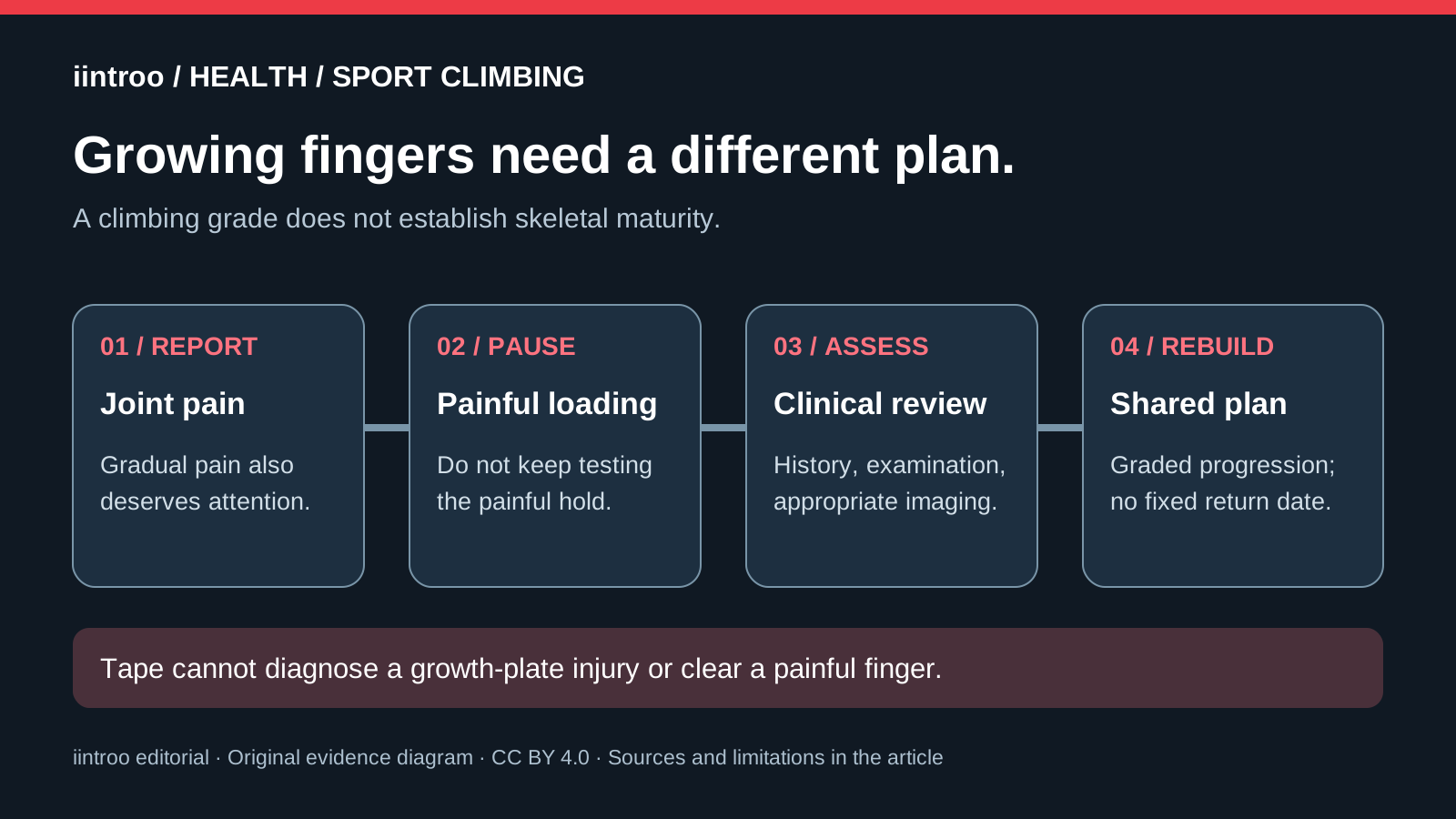
- Pain should prompt load interruption and clinical assessment, not repeated testing on small holds.
Who this guide is for
This guide is for adolescent climbers, parents and coaches working through growth spurts, harder grades or added finger training. An impressive climbing grade does not make the skeleton mature. Pain around a finger joint may come from a growth plate rather than the pulley injuries that dominate adult climbing discussions. This is educational guidance, not a diagnosis or a rehabilitation prescription.
The British Mountaineering Council explains that growing bone is relatively vulnerable at the growth plate. Repeated finger loading can matter even without a fall, a loud pop or one memorable move. A quiet, gradually worsening symptom deserves attention just as an obvious accident does.
What the evidence actually describes
A review published online in December 2025 and in the July 2026 issue of PM&R gathered 11 studies covering 98 adolescent climbers and 149 growth-plate stress injuries. Most reported injuries involved the middle finger joint. The evidence included case reports and case series, with inconsistent treatment and follow-up; it cannot tell every young climber their personal risk or prove one prevention programme works.
The publisher corrected the displayed article category to Narrative Review on 7 January 2026; the title still describes a scoping review. Its search ended in July 2024. Those details matter when interpreting a recent publication date. Reported return times varied widely and are not a timetable to copy.
A separate clinical case series followed 27 young climbers with 37 injuries: 36 developed through repetitive stress. Both nonsurgical and surgical care were used according to the injury. Encouraging healing outcomes in a specialist series support early assessment, not a promise that every case will recover the same way.
Make reporting easier than hiding pain
A 2020 survey of 267 competitors at the 2017 USA youth national championships found substantial confusion about growth-plate injuries and safe training. The survey measured knowledge and self-reported history, not the effectiveness of education or the true injury rate. Its practical lesson is to explain why a young person's finger problem should not automatically be labelled an adult-style pulley injury.
Ask about the exact painful joint, when symptoms began, whether swelling or movement has changed, and recent changes in climbing or training. Record the information for the clinician rather than testing painful holds repeatedly. Parents and coaches should make it clear that reporting pain will not be treated as a lack of commitment.
Sources: 4
Pause the provoking load and arrange assessment
BMC guidance emphasises stopping when finger pain appears. Do not use tape, a lower grade or pain medication as permission to keep loading a painful joint. Seek assessment from a clinician familiar with growing athletes and, where possible, climbing. Mention growth-plate stress injury explicitly; examination and appropriate imaging determine the next step.
The clinician should decide which activities remain suitable and whether imaging or specialist hand advice is needed. A training partner's scan or treatment cannot settle another climber's diagnosis. Swelling, persistent focal pain or reduced motion strengthens the reason to seek help rather than wait for a competition break.
Return is a shared decision
Once the diagnosis and recovery plan are clear, the athlete, family, clinician and coach can agree how climbing exposure will be rebuilt. Discuss grip demands, hold size, intensity, session frequency and symptom response rather than relying only on elapsed weeks. There is no universally validated return test or safe weekly finger-load number in the reviewed literature.
Keep the young athlete involved in decisions and connected to the club during modified participation. The aim is not to replace one frightening label with another, but to recognise a growth-related injury early enough for an individual plan. This guide complements, rather than duplicates, adult pulley-injury and bouldering-fall advice.