
Youth sport specialisation: protect rest, variety and the athlete's voice
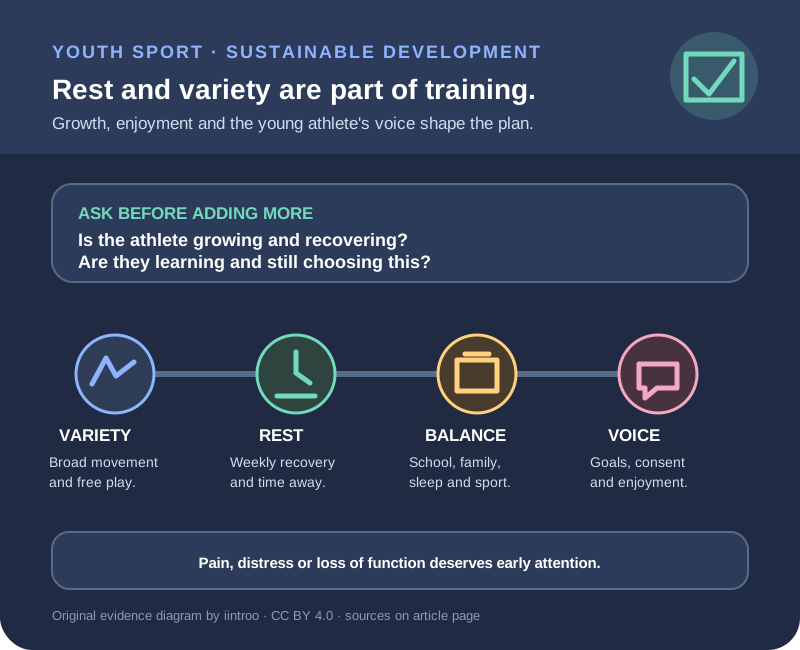
More organised training is not automatically better development. Build a youth-centred plan around growth, enjoyment, varied skills, weekly recovery and periods away from the main sport rather than chasing an adult competition calendar.
Key points
- Youth development depends on individual growth and maturation, so training should not be copied from adult or same-age peers without adjustment.
- A 2026 meta-analysis found an association between greater specialisation and injury, but heterogeneous observational studies cannot prove that specialisation alone caused each injury.
- Rest, variety and enjoyment are development inputs, not lost training; the young athlete's goals and willingness should guide decisions.
Define the problem before counting sports
This guide is for young athletes, families, coaches, schools and clubs. Specialisation is not simply loving one sport. It usually combines a narrow sport focus, reduced participation in other sports and intensive, often year-round organised training. The degree, age, position and sport context matter, and early-entry sports cannot be discussed exactly like late-specialisation sports.
The IOC emphasises that growth, maturation and behavioural development follow individual paths. Two athletes of the same age can differ substantially in size, recovery, coordination and readiness. Calendar age, team status or selection pressure should not override the young person's development, health, education and willingness to participate.
Read injury evidence as association, not destiny
A 2026 systematic review and meta-analysis reported higher pooled odds of injury among specialised youth athletes than multi-sport peers. However, the included evidence was heterogeneous and largely observational. Athletes may specialise because of existing skill, access, coaching culture or selection systems that also change training exposure, so the result does not prove one universal causal pathway.
The useful response is to examine total organised load, repeated movements, rapid increases, pain, fatigue and time for recovery. Do not use the association to shame a family or ban a chosen sport. Equally, do not dismiss persistent symptoms because the athlete is talented or because the competition is important.
Build recovery into the calendar before adding events
The AAP report recommends regular weekly days away from the primary sport and periods away from it across the year. These are general guardrails rather than a prescription for every child. Schools, clubs and private teams should share calendars so the same athlete is not quietly carrying overlapping sessions, matches and travel.
Recovery includes adequate sleep, energy intake, hydration, time for school and relationships, and freedom from constant performance evaluation. A rest day filled with compulsory conditioning is not genuinely away from the main load. During growth spurts or after illness and injury, the plan may need additional individual adjustment.
Keep variety even when one sport becomes the priority
Variety can come from other sports, free play, different roles, broad movement skills and changes in practice design. It should support, not punish, the athlete. The IOC framework values technical, physical, perceptual, psychological and social development rather than measuring progress only through early results or selection.
Some athletes may choose a focused pathway with informed support. Review that choice periodically rather than treating it as permanent. Ask whether the athlete still enjoys the environment, feels safe speaking up, has realistic goals and can step back without retaliation. Adults should distinguish the child's ambition from their own expectations.
Escalate pain, distress and loss of function early
Persistent or localised pain, swelling, altered movement, repeated illness, falling performance with fatigue, sleep disruption, marked mood change, anxiety about attendance or loss of enjoyment deserve attention. These patterns are not a diagnosis of overtraining or burnout, but they justify a conversation and, where appropriate, assessment by qualified health professionals.
Urgent symptoms or a significant injury need prompt medical care. Return and training decisions should consider diagnosis, growth, school demands and sport-specific tasks. The goal is sustainable participation and healthy development, not proving commitment by training through warning signs.