
Youth table tennis pain: growth and training load belong in the same review
Young table-tennis players can accumulate overuse problems at the knee, foot, back and shoulder. Record training and growth-related change, then respond before pain becomes normal.
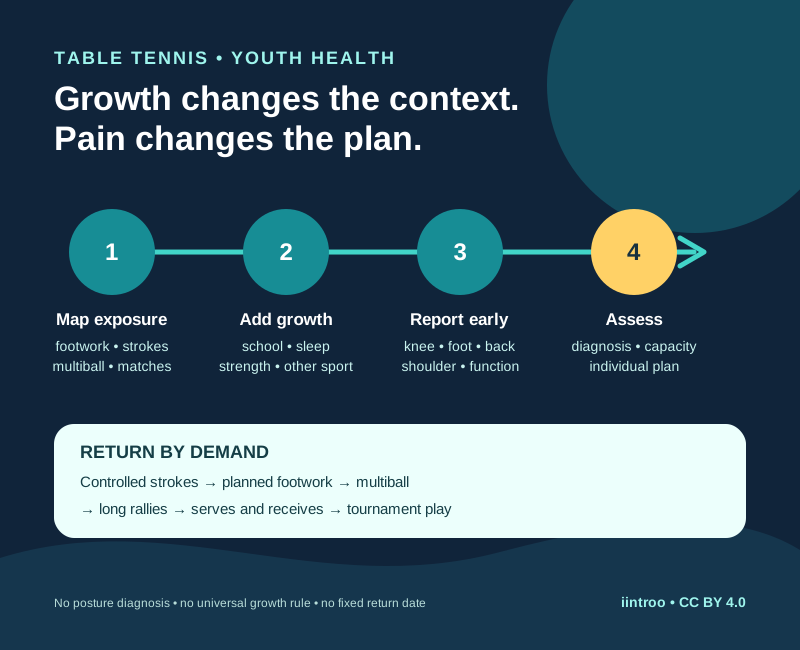
Key points
- A recent single-centre cohort found most recorded problems in young high-level players were gradual-onset overuse conditions, but retrospective clinical records cannot establish cause.
- Knee, foot, lower-back and shoulder problems appear in the literature; one screen or posture measurement cannot predict who will be injured.
- Track footwork, multiball, serves, strength work and match exposure together rather than counting only competition hours.
See the whole athlete behind a fast sport
This guide is for young table-tennis players, families, coaches and support teams. Training can combine repeated low positions, rapid accelerations, braking, rotation and thousands of strokes across individual practice, multiball, service work and matches. A player may also be adapting to growth, school, travel and strength training at the same time.
A 17-year retrospective cohort of 139 national-level players aged 8 to 19 reported knees, feet, lumbar spine and shoulders among commonly treated sites, and classified most recorded problems as overuse. Forty percent were labelled growth-related. Because the study used records from one centre, it cannot show how common these problems are in all countries or prove that table tennis caused every diagnosis.
Map exposure beyond tournament matches
Record session duration and content: footwork patterns, multiball density, high-effort rallies, serve volume, forehand and backhand emphasis, competition, strength work and another sport. Add surface, footwear and racket changes. A weekly total can hide a sudden rise in a single repetitive task.
The competition systematic review combined eight studies and found only 31 musculoskeletal injuries among 873 professional players, with wide variation in incidence estimates. More than half occurred during training and most caused no time loss. Small event counts and inconsistent surveillance mean these figures should not be used to promise that elite play is low risk or to predict an individual child.
Treat growth-related pain as a reason to review load
During growth, changes in limb length, strength, coordination and tissue tolerance can alter how a young player responds to the same programme. Pain around the knee or heel may have several causes, and the name of a common growth-related condition should not be assigned from age and location alone.
Ask when pain appears, what movements change it, whether it affects walking or sleep and how it responds the next day. Coaches can adjust volume and drill selection while qualified clinicians assess persistent or function-limiting symptoms. Resting one painful stroke while doubling footwork is not automatically a reduction in total load.
Build preparation without selling one corrective posture
Preparation can include progressive footwork, leg and trunk strength, shoulder capacity, coordination and gradual exposure to match intensity. ITTF's medical and sports-science programme highlights injury risks, diagnosis, treatment and prevention, but current research does not validate one posture, asymmetry test or exercise package as a universal shield.
Technique feedback should support performance and comfort rather than label normal variation as damage. Equipment and table height must follow current rules, while footwear and training setup should fit the athlete and surface. Screening can start a conversation; it should not exclude a healthy child or clear an injured player by itself.
Return from controlled drills to unpredictable play
Return can rebuild comfortable daily movement, controlled strokes, planned footwork, multiball, longer rallies, serves and receives, then match play and tournament density. Readiness combines symptoms, function, confidence and repeated tolerance of the athlete's actual demands. A fixed rest period does not fit every diagnosis.
Acute deformity, inability to bear weight, major swelling, sudden weakness, numbness, loss of circulation, severe back pain after trauma or neurological symptoms needs prompt medical assessment. Persistent pain, night pain or loss of normal function also warrants review. This guide is educational and does not provide a personal diagnosis, exercise prescription or clearance decision.