
Youth badminton warm-up: promising injury evidence needs replication
An eight-week cluster trial reported fewer injuries with a badminton-specific warm-up, but the event count was small. Use structured preparation while continuing to track growth, exposure and symptoms.
Key points
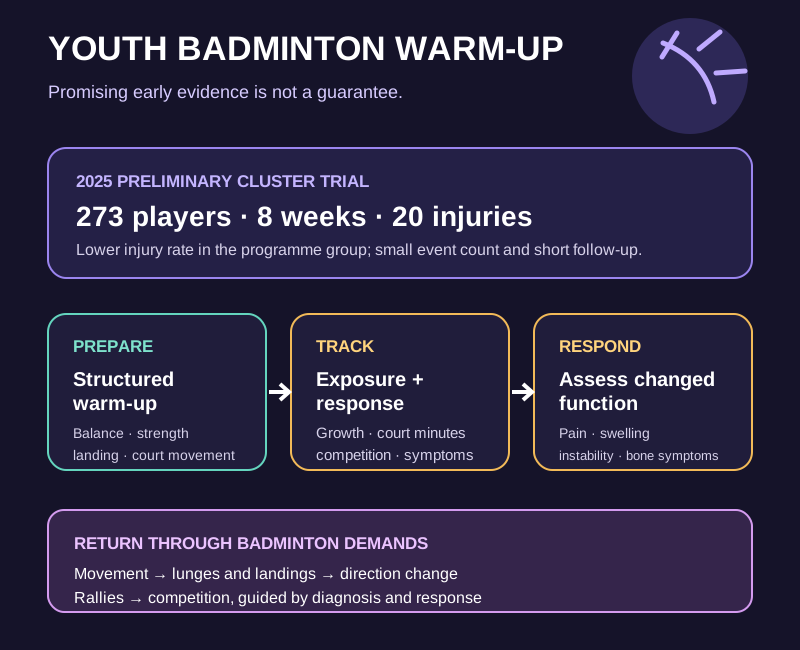
- A 2025 cluster-randomised preliminary trial followed 273 youth players for eight weeks and recorded 20 injuries in total.
- The intervention group had a lower injury rate, but the small event count and short follow-up mean the result needs replication.
- Badminton injury studies use varied definitions, so one programme cannot be assumed to prevent every acute or overuse problem.
A warm-up trial is useful evidence, not a guarantee
This guide is for youth badminton players, parents, coaches and health teams. The PreventiBad preliminary trial allocated 273 players, with an average age of about 14 years, by cluster to a structured warm-up or usual practice for eight weeks. Researchers recorded six injuries in the intervention group and 14 in the control group, corresponding to a reported injury risk ratio of 0.30.
That difference is encouraging, but only 20 injuries occurred. The follow-up was short and the study cannot show whether the same effect persists across seasons, age groups, countries or delivery settings. A percentage reduction from one preliminary trial should not be marketed as a universal promise.
Sources: 1
Badminton loads the lower body in several ways
Badminton combines lunges, jumps, repeated accelerations, braking and rapid changes of direction. A 2025 systematic review of 19 studies found that lower-limb problems were most common, but reported injury incidence, type and risk factors varied widely. A separate elite-player review published in a 2026 issue also found lower-limb injuries predominated.
These reviews describe patterns; they do not identify one movement fault or screening score that predicts an individual injury. Previous injury and a rapid rise in competitive level may deserve attention, but evidence on risk factors remains heterogeneous.
Make preparation repeatable and observable
A structured warm-up can progress from temperature-raising activity to balance, strength, landing, direction change and badminton-specific movement. Coaches should use a programme they can teach accurately, record attendance and adapt for space, age and training phase. The published trial tested a package, not one magic exercise.
Track court minutes, competition density, strength work, growth-related changes and symptoms that alter movement. A warm-up does not cancel the effects of abrupt exposure changes, unsuitable surfaces, damaged footwear, poor recovery or an untreated injury.
Respond to symptoms before the next tournament
Pain that changes a lunge, landing or direction change; swelling; recurrent giving way; focal bone pain; or symptoms that persist after load is reduced warrant assessment by an appropriately qualified clinician. Inability to bear weight, deformity, a cold or numb foot, or severe pain after trauma needs prompt medical evaluation.
Young athletes may describe pain inconsistently, so parents and coaches should create a route for reporting without punishment or selection pressure. This is especially important when training level rises quickly or a previous injury is still affecting function.
Return through the demands of badminton
Return depends on the diagnosis, clinical findings and response to progressive work. Rebuild basic movement, controlled lunges and landings, direction changes, overhead footwork and rally demands before tournament play becomes the first full test. The current BWF rules and venue conditions should inform equipment and court preparation, but they are not a rehabilitation protocol.
No study in this article supplies a universal number of rest days or a pass-fail test for every injury. A clinician, athlete, caregiver and coach should agree how symptoms during and after loading affect the next step.