
Handball · National
Handball study finds athlete stress reports and blood markers tell overlapping stories
A season-long observational study cautions against treating questionnaires and hormones as identical monitoring tools.
Study publication:
A season behind the publication
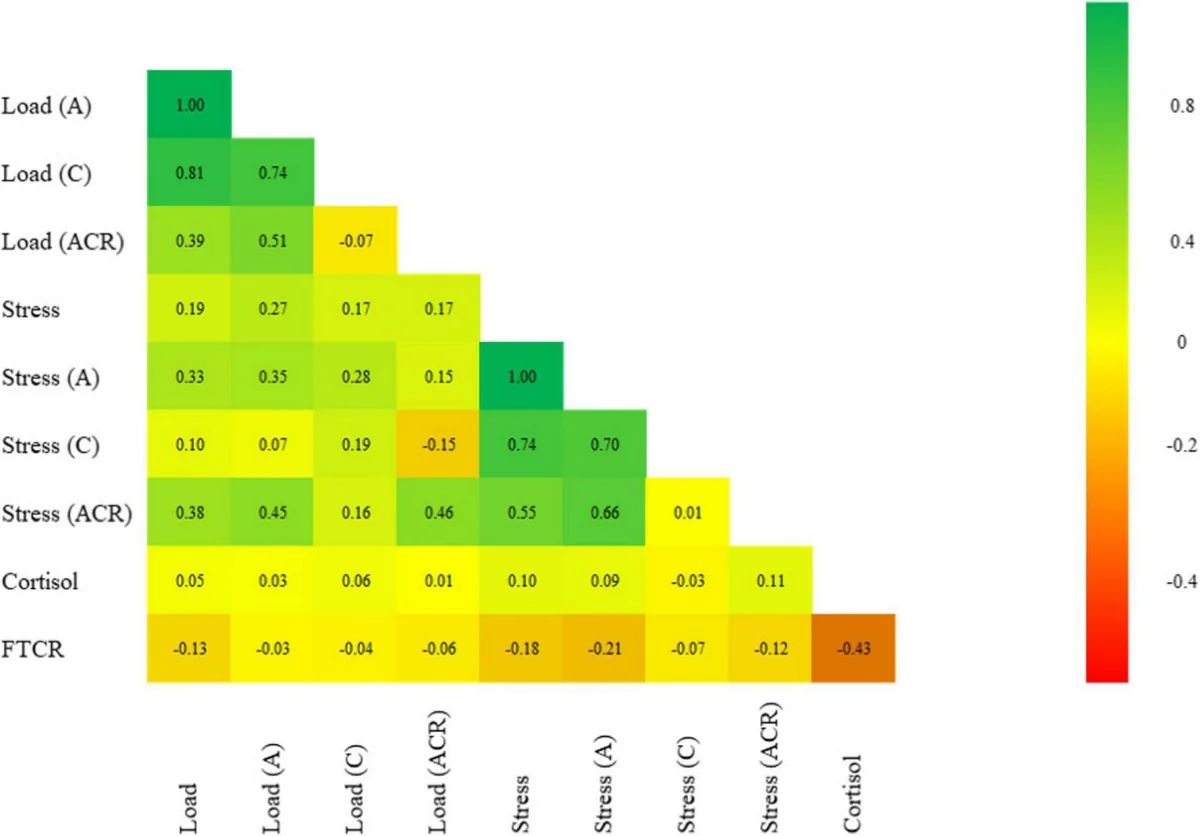
Published on 21 January, the study followed 189 elite male handball players over 45 weeks of 2022/23. Players reported stress and hours in training, competition, study and work; researchers took blood samples five times. Associations between perceived stress, load, cortisol and the free-testosterone-to-cortisol ratio were generally weak to moderate at group level, with individual variation. Measures overlapped without describing every athlete identically. This observational comparison does not establish diagnostic equivalence, prove injury prevention or identify a universal training threshold. January marks publication of existing seasonal data.
Load includes more than training
The IOC's consensus on load in sport places physical and psychological demands within a broader account of athlete health. Its framework considers training and competition alongside other stresses, and calls for monitoring how athletes respond to the load they encounter. That approach explains why counting only practice hours can leave an incomplete picture of a student's or working athlete's week. External activity and an internal response answer related but different questions: what an athlete did, and how that athlete experienced it. For an organisation, the implication is to describe each measure's purpose before interpreting a dashboard. A diary entry, competition schedule and biological measurement should not become one undifferentiated label simply because each appears under 'load'. Nor does a consensus framework provide a causal explanation for a particular individual's result. It offers a way to organise information and frame further questions. The January handball report adds a concrete example to that discussion, while its own estimates remain tied to its population and measurement schedule.
Stress monitoring and mental-health care
The IOC's 2019 mental-health consensus treats psychological health as part of athlete well-being and calls for assessment that recognises sporting context. It discusses the athlete's environment and the roles of qualified health professionals and support personnel. This provides an important boundary for interpreting monitoring research: recording perceived stress is not the same task as assessing a mental-health disorder. A score can start a conversation without settling a clinical question. An organisation reviewing such research can ask whether athletes understand why information is collected, who interprets it and how concerns receive appropriate follow-up. Those are questions about a support system rather than about replacing professional judgement with a single number. The consensus also cautions against separating mental and physical health into unrelated silos. A study of associations may help refine research measures, but it cannot by itself demonstrate that a specific service model works. That would require evaluating the service and outcomes directly. The useful distinction is between learning about measures, recognising an athlete's concern and assessing what care is needed.
This research report is for education and professional discussion. Personal diagnosis, treatment and return-to-sport decisions require a qualified clinician.
Original sources
Read the underlying records.
Explore the official results, organiser reports or original research behind this story.