
Acromegaly in sport: reassess heart, sleep, joints and metabolic health
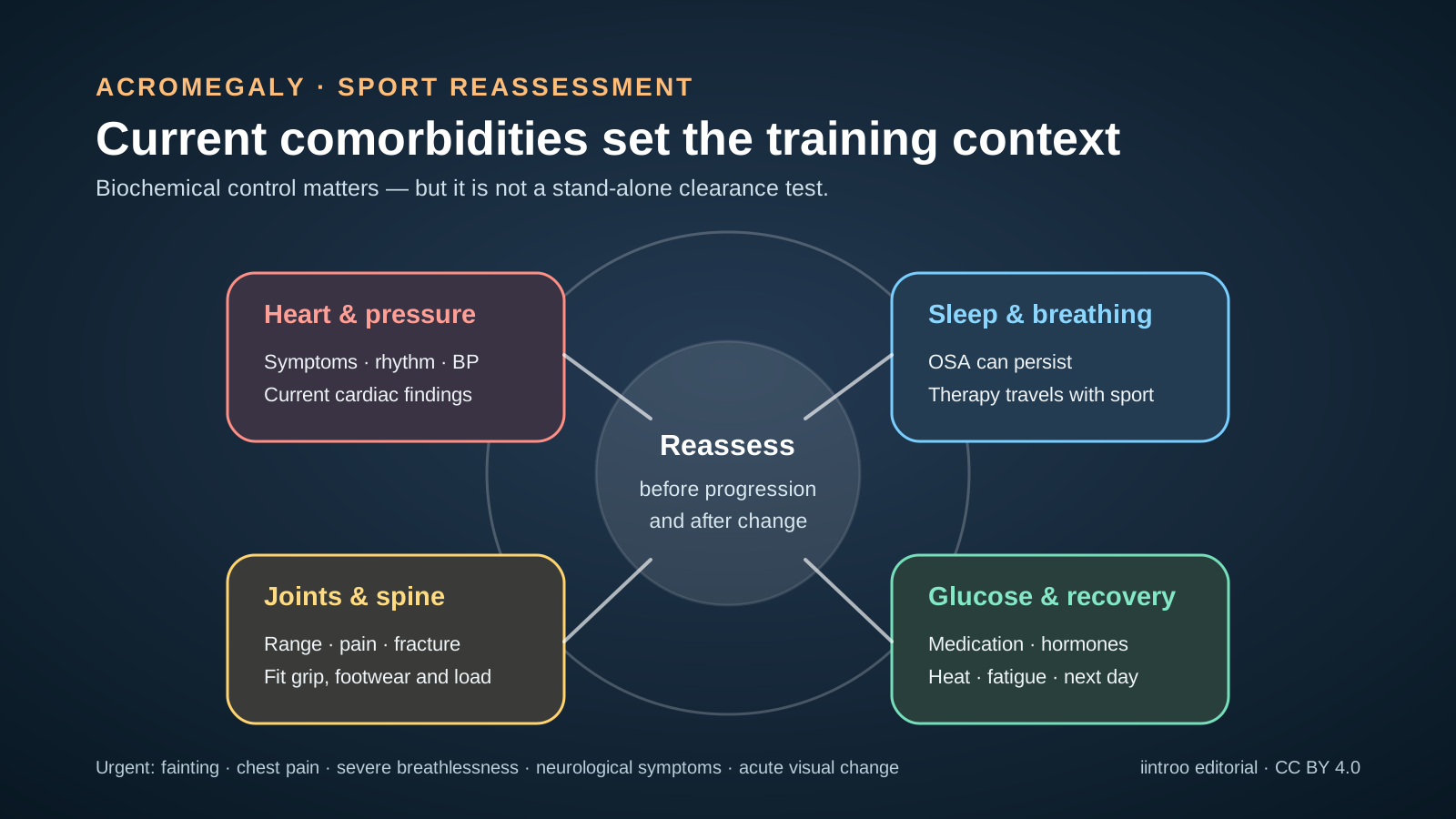
Acromegaly can affect cardiovascular, sleep, joint and metabolic health. Training should follow current comorbidities, symptoms and treatment response.
Key points
- Current consensus supports individualized exercise when there is no contraindication, alongside assessment and treatment of acromegaly and its comorbidities.
- Hypertension, cardiomyopathy, arrhythmia risk, sleep apnea, diabetes, hypopituitarism, joint disease and fracture risk can alter training decisions.
- Fainting, exertional chest pain, sustained palpitations, severe breathlessness, neurological symptoms or acute visual change needs urgent assessment.
Separate disease control from sport readiness
This guide is for adults with acromegaly, families, coaches and clinical teams. Acromegaly usually results from excess growth hormone produced by a pituitary adenoma and can affect cardiovascular, respiratory, metabolic, musculoskeletal, neurological and psychological health. Treatment and biochemical control matter, but symptoms and complications can persist after hormone levels improve. Conversely, a person may feel capable while hypertension, sleep apnea, glucose disturbance, cardiac changes, visual-field loss or hypopituitarism remains clinically important. A recent hormone result alone is therefore not a sport clearance test.
Before a new programme or major load increase, document ordinary activity, exertional symptoms, blood pressure, sleep, joint and back pain, headaches, vision, heat tolerance, glucose management and recovery. Confirm the current plan for pituitary imaging, hormone replacement, cardiac assessment, sleep apnea and diabetes when relevant. Ask about hand or foot symptoms, carpal tunnel syndrome, prior vertebral fracture and changes in equipment fit. A coach can adapt sessions and record change, but cannot determine biochemical control, adjust pituitary or replacement therapy, interpret an electrocardiogram or exclude sleep apnea.
Exercise is reasonable; the evidence is not a guarantee
The 2024 complications consensus recommends routine individualized exercise when there is no contraindication, while screening and treating cardiovascular, respiratory, metabolic and musculoskeletal disease. This recommendation is clinically sensible but should not be confused with a large sport trial. A 12-week exercise study and an earlier short-term programme reported improved functional capacity or physical performance, yet samples were small and participants were selected. Observational cardiopulmonary studies show that exercise capacity and ventilatory efficiency can be impaired even when resting measurements appear acceptable.
The limitations matter. Acromegaly is rare, exercise studies use different outcomes, and controlled long-term data on injuries, competition and specific training loads are scarce. Fatigue reviews identify sleep disturbance, comorbidities and disease-specific factors rather than one correct intervention. Arthropathy can continue despite biochemical remission and may materially limit movement. Exercise can support conditioning, function and quality of life, but it should not be presented as treatment for the adenoma, proof of cardiovascular safety, a way to reverse established joint structure or a substitute for sleep, endocrine and metabolic care.
Build around current comorbidities
Choose walking, cycling, pool exercise, controlled resistance or sport-specific practice according to present joint range, neurological findings and cardiorespiratory assessment. Start from a repeatable workload and change duration, resistance or complexity one variable at a time. Use technique and next-day function rather than soreness as the progression signal. Modify grips, footwear, seating and range when enlarged hands or feet, osteoarthritis, spinal symptoms or carpal tunnel syndrome affect mechanics. High-load or impact goals deserve individualized discussion when there is significant arthropathy, fracture history or uncertain cardiac status.
Sleep and metabolic plans travel with the athlete. Obstructive sleep apnea may persist after acromegaly treatment and can impair alertness, blood pressure and recovery; continue prescribed therapy and arrange power or mask logistics for travel. Diabetes medication and pituitary hormone replacement can alter illness and competition planning, so follow the person's clinician-written instructions rather than improvising dose or carbohydrate advice. In heat, account for cardiovascular and metabolic conditions, medicines and the environment. Record dizziness, palpitations, unusual breathlessness, headache, visual symptoms, joint swelling and glucose events as well as performance.
Escalate cardiac, neurological and visual warning signs
Stop activity and seek urgent assessment for fainting, exertional chest pain, sustained palpitations with symptoms, severe or rapidly worsening breathlessness, collapse, a new focal neurological deficit or sudden visual loss. A severe new headache with vomiting, visual change, altered consciousness or neurological symptoms needs urgent evaluation. Marked hypoglycaemia, severe hyperglycaemia with illness, acute weakness in a person at risk of adrenal insufficiency, or significant trauma also requires the individual's emergency plan and appropriate medical care. A normal smartwatch or previous normal test does not rule out current disease.
After surgery, a cardiac or metabolic event, sleep-treatment change, fracture, acute joint flare or material loss of function, return through comfortable daily activity, controlled conditioning and then sport-specific work. Decisions should follow updated pituitary, cardiovascular, sleep, metabolic and musculoskeletal findings. There is no universal IGF-I value, blood pressure, echocardiographic result, pain score or symptom-free interval that clears every athlete. This article cannot diagnose acromegaly, interpret hormone or imaging results, prescribe exercise or medicine, alter treatment, or clear competition; it offers an educational framework for coordinated, current reassessment.