
Alpha-1 antitrypsin deficiency in sport: investigate breathlessness, then train the person
Alpha-1 antitrypsin deficiency can affect lungs and liver. Training should follow symptoms, lung function, exposure control and individual rehabilitation needs.
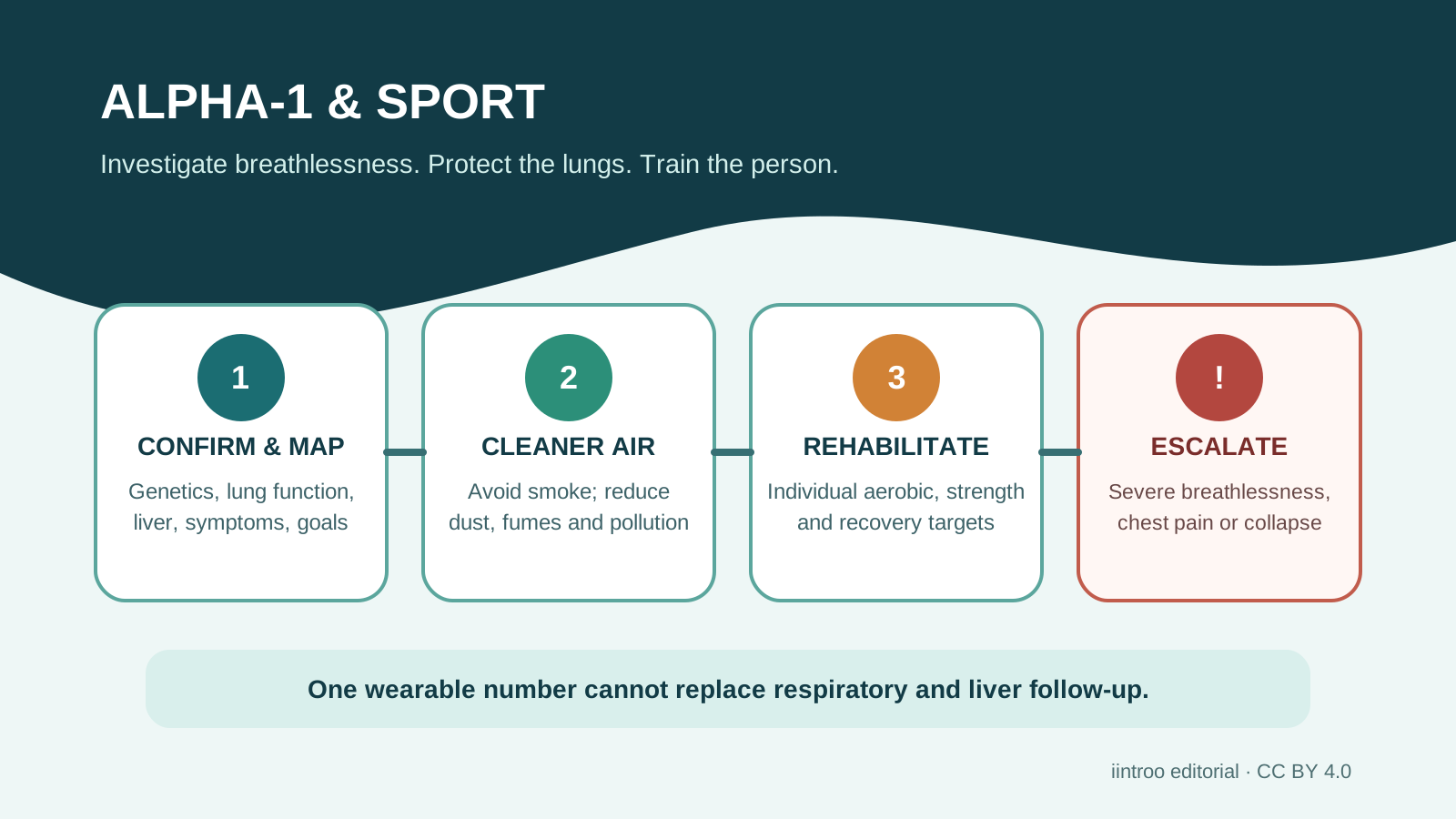
Key points
- Alpha-1 antitrypsin deficiency is inherited and can affect lungs, liver and, rarely, skin; breathlessness alone cannot diagnose it or show disease severity.
- Pulmonary rehabilitation is reasonable when lung disease limits function, but Alpha-1-specific exercise studies remain small and do not identify one best intensity.
- New chest pain, fainting, severe breathlessness, blue lips, confusion or rapidly worsening symptoms needs urgent assessment rather than another training test.
Confirm the condition before explaining the performance
This guide is for active people with confirmed or suspected alpha-1 antitrypsin deficiency, plus coaches and support teams. AATD is an inherited condition in which particular SERPINA1 variants can reduce or alter alpha-1 antitrypsin. It can increase susceptibility to emphysema or other lung disease and can also affect the liver; not every carrier develops the same disease. Exertional breathlessness, wheeze, cough, fatigue or reduced pace are common to many conditions and cannot establish AATD, COPD or exercise safety on their own.
The 2026 Spanish guideline recommends a two-step diagnostic approach using a blood level plus genetic or protein characterization in appropriate clinical settings. The Alpha-1 Foundation guideline similarly warns that a level alone does not fully describe family risk. A respiratory clinician may combine history, complete lung-function testing, genotype or phenotype, imaging when indicated, liver assessment and other explanations for symptoms. A coach should record what happens during exercise, not interpret spirometry, genetics or liver tests.
Use rehabilitation evidence without promising a normal response
Pulmonary rehabilitation can combine aerobic work, resistance exercise, breathing strategies, education and self-management for people whose lung disease limits daily function. The AATD-specific evidence is much thinner than the wider COPD evidence. A 2023 systematic review found only four relevant studies and concluded that the most suitable intensity and delivery model remain uncertain. A scoping review also found that research mostly measured exercise capacity rather than changing everyday physical activity or sedentary time.
A randomized trial compared three weeks of higher- and moderate-intensity training in 30 people with severe AATD-related COPD; 25 completed it. Both groups improved selected walking, sit-to-stand, breathlessness and quality-of-life measures, with no clear between-group difference for the main outcomes. The short programme, small sample and advanced disease mean it cannot set a universal athlete protocol. A 2025 retrospective cohort likewise found that people referred to rehabilitation had more severe disease and did not show a clearly superior quality-of-life trajectory, reinforcing the need for individual targets and follow-up.
Protect lungs from the environment as well as the workout
Avoiding tobacco smoke is a central recommendation. Training plans should also reduce avoidable exposure to dust, fumes, wildfire smoke and poorly ventilated indoor air, especially when these reproduce symptoms. Check local air quality, move a session, choose a cleaner route or reduce intensity when needed. Masks or respirators can change breathing comfort and communication and are not a substitute for exposure control; occupational or environmental protection decisions need appropriate professional advice.
AATD does not make every cough an emergency or every endurance event unsafe. Establish the athlete's usual symptom pattern, inhaler and oxygen instructions if prescribed, warm-up response, recovery and infection plan. Do not borrow another person's bronchodilator, change augmentation therapy around competition or use supplemental oxygen without a prescription and event-safety plan. Augmentation therapy is a disease-specific decision for selected lung disease; it is not a performance aid, and it does not treat AATD-related liver disease.
Escalate change and return by function
Stop exercise and seek urgent help for severe or rapidly worsening breathlessness, blue or grey lips, confusion, collapse, fainting, new chest pain, coughing blood or a very unwell athlete. New ankle swelling, jaundice, abdominal swelling, dark urine, unexplained weight change or a marked persistent fall in capacity needs clinical review. A pulse-oximeter or wearable can add context when a clinician has explained its use, but one reassuring number cannot rule out a significant lung, heart or liver problem.
After an exacerbation, infection or treatment change, rebuild from comfortable daily activity to controlled conditioning, sport-specific work and full training. Review breathlessness, technique, recovery and the person's clinical plan before adding hills, heat, altitude, long duration or remote routes. This page cannot diagnose AATD, interpret genetic results, prescribe rehabilitation, medicines or oxygen, or clear competition. It supports a respiratory-led plan that values participation while acknowledging that current exercise evidence is limited and individual responses can differ.