
When an athlete discloses harm: listen, protect and follow the safeguarding route
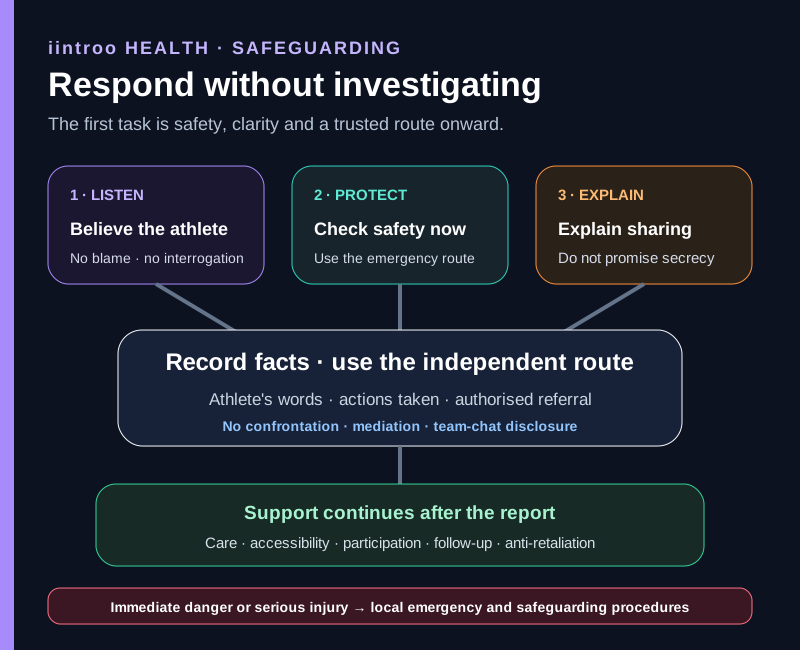
A calm first response can reduce further harm. Listen without investigating, check immediate safety, explain the limits of confidentiality and use the correct independent safeguarding pathway.
Key points
- Interpersonal violence in sport can be physical, psychological, sexual, neglectful, contact, non-contact or online; the athlete does not need to use a legal label before being taken seriously.
- The first listener should not interrogate, mediate or promise secrecy. Their role is to listen, check immediate danger, explain what must be shared and activate the correct safeguarding pathway.
- Reporting and mental-health care are different needs. An athlete may require ongoing clinical and practical support regardless of the outcome of a sport or legal process.
Recognise harm without forcing a label
This guide is for athletes, coaches, volunteers, clinicians and sport administrators. The 2024 IOC consensus uses interpersonal violence as an umbrella for physical, psychological and sexual violence and deprivation or neglect. Harm may involve bullying, hazing, grooming, coercive control, discrimination or cyber-enabled behaviour. It can affect children or adults and can occur between peers as well as within relationships of authority, trust or dependency.
A concern does not become unimportant because it occurred outside training, involved online contact or does not fit one person's idea of abuse. Power, age, disability, selection control, financial dependence, isolation and fear of retaliation can affect whether an athlete can speak. Do not make the athlete prove intent before recording and referring a concern.
Make the first conversation safe
Choose a private setting that is observable or otherwise consistent with the organisation's safeguarding rules. Listen without shock, blame or leading questions. Thank the athlete for telling you, acknowledge that the concern matters and use their own words. Avoid confronting the person accused, arranging informal mediation or asking the athlete to repeat the account to multiple people.
Do not promise complete confidentiality. Explain, in plain language, what information may need to be shared, with whom and why. Check whether the athlete needs an interpreter, communication support, a trusted person or another accessibility adjustment. The goal is not to conduct an investigation; it is to preserve safety and pass accurate information to people authorised to act.
Act on immediate danger first
If anyone is in immediate danger, seriously injured, suicidal or at risk of imminent harm, contact local emergency services and follow the organisation's emergency and child-protection procedures. A child disclosure must be handled under the law and reporting duties of the place where the athlete is located. This article cannot define those duties across countries.
Where there is no immediate emergency, identify the designated safeguarding officer or independent reporting channel. If the concern involves that person, a senior leader or the organisation itself, use the external route named in the policy, governing body or national system. Do not allow performance deadlines, travel or selection to delay a safety decision.
Record facts and protect the process
As soon as practical, make a factual, dated record of what was said, what you observed, the safety steps taken and where the concern was referred. Separate the athlete's words from your interpretation. Store the record only in the authorised system and limit access to those who need it. Do not copy sensitive details into team chats, informal email chains or performance notes.
A report is not a finding of guilt, and neutrality does not mean inaction. The organisation needs a fair, trauma-informed process that prevents retaliation, manages conflicts of interest and communicates what can reasonably be shared. The person receiving the disclosure should not attempt to collect digital evidence or interview witnesses unless formally assigned and trained.
Offer support beyond the report
Ask what the athlete needs now: medical care, an independent advocate, culturally appropriate mental-health care, transport, changes to training contact, communication support or help understanding the process. Explain that accepting support does not determine the outcome of an investigation. Protect participation where it is safe, rather than automatically isolating the person who spoke.
Follow up at agreed times and watch for retaliation, worsening distress, sleep disruption, avoidance or loss of access to care. Safeguarding is an organisational health responsibility, not a one-off form. This article provides general education, not legal advice, an investigation protocol or crisis counselling.