
Bipolar disorder in sport: protect sleep, treatment and a confidential crisis plan
Athletes with bipolar disorder need continuity, privacy and early support. Training should protect sleep and care rather than reward mood instability.
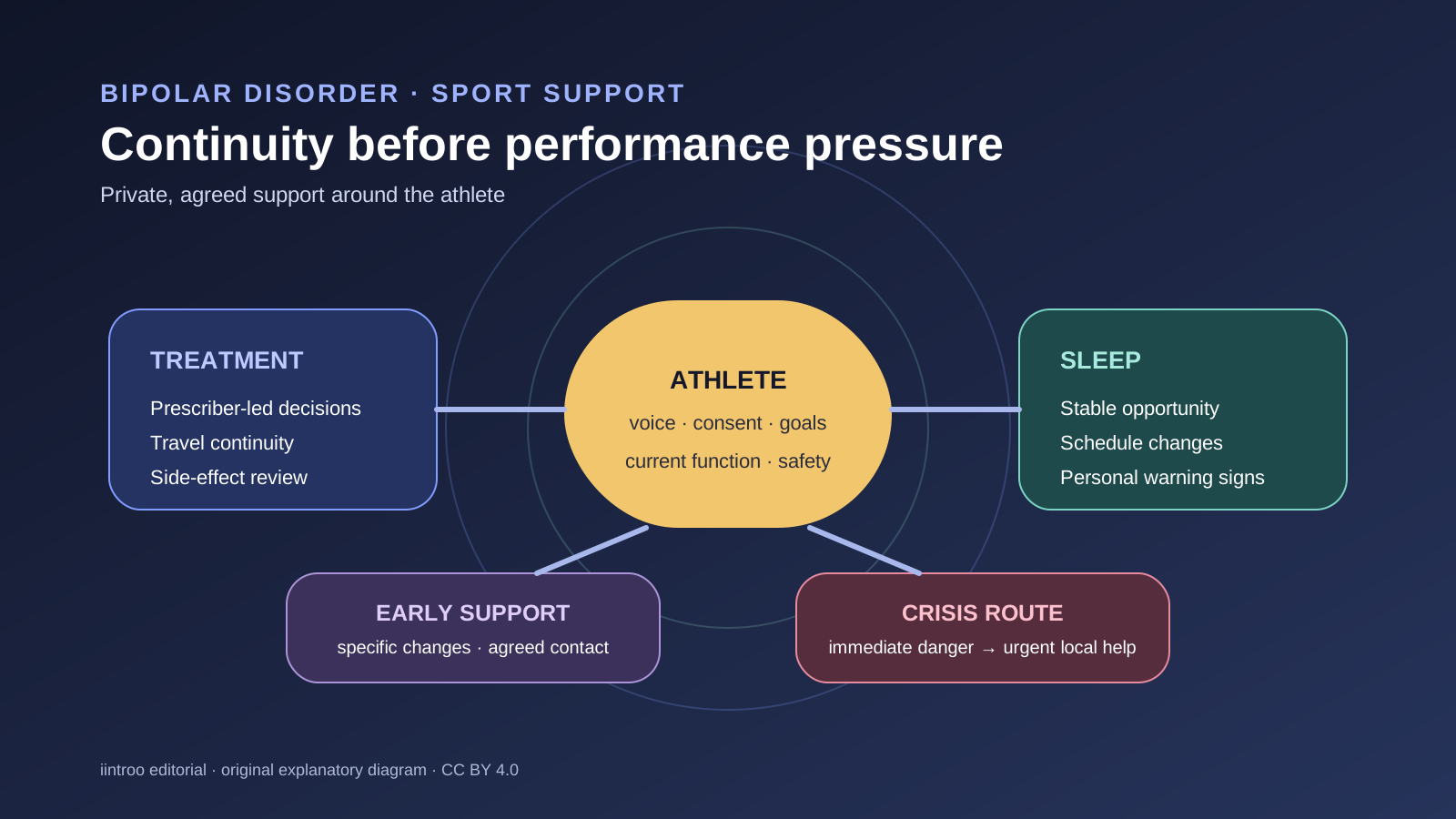
Key points
- Bipolar disorder requires qualified assessment; energy, confidence or a bad day in sport does not diagnose mania or depression.
- Sleep and circadian disruption are clinically relevant, so travel and training schedules should be part of a shared care plan.
- Immediate danger, suicidal intent, severe agitation, psychosis or inability to remain safe requires urgent local crisis or emergency support.
Keep diagnosis and selection decisions separate
This guide is for athletes with bipolar disorder and for trusted coaches, clinicians and support staff working with consent. Bipolar disorder involves episodes of depression and mania or hypomania, assessed through a detailed clinical history and the effect on functioning. High energy, confidence, frustration, intense training or one poor performance does not by itself diagnose an episode. Teammates and coaches should report specific changes and safety concerns, not apply a psychiatric label.
The 2026 IOC consensus describes athlete mental health as a system-wide responsibility and emphasizes psychologically safe environments, regular monitoring and appropriate care. That means protecting privacy, avoiding punishment for help-seeking and making referral routes clear. A diagnosis should not become an automatic reason for exclusion. Selection and participation decisions should be based on current function, safety, relevant rules and qualified assessment rather than stigma.
Protect treatment continuity through the sporting calendar
NICE recommends an agreed care plan that can include personal triggers, early warning signs, preferred responses and crisis contacts. In sport, the plan may need to account for travel, camps, media duties, injury, alcohol exposure and abrupt changes in routine. Decide who the athlete wants involved, what information each person needs and how to contact care away from home. The athlete’s clinician, not the coaching staff, directs medication and psychological treatment.
Do not skip, double or stop prescribed medicine to alter weight, alertness or competition timing. Side effects such as sedation, tremor, thirst, heat sensitivity or changes in coordination require review with the prescriber; they are not instructions to self-adjust treatment. Anti-doping status should be checked for the exact medicine where testing applies. A therapeutic prescription and a sporting rule are related administrative questions, not reasons to interrupt effective care without advice.
Treat sleep and circadian stability as health infrastructure
Changes in sleep can accompany mood episodes, and systematic reviews show substantial sleep disturbance across phases of bipolar disorder. Late competition, early training, time-zone travel and irregular recovery can disrupt sleep opportunity. Protect a realistic sleep window, reduce avoidable schedule swings and include sleep change among the athlete’s personally agreed early warning signs. A wearable score cannot diagnose an episode and should not be used for team surveillance without informed consent.
Exercise can support physical and mental health, and a 2026 international position statement reports likely benefits while noting that robust bipolar-specific intervention data remain limited. Training is an adjunct, not a substitute for mood-stabilizing care. When sleep falls sharply, activity becomes unusually driven, judgement changes or depression deepens, reduce pressure and contact the agreed clinical support rather than prescribing extra exercise or rest as a cure.
Make the crisis route explicit before it is needed
The plan should name local urgent contacts, a trusted person, the nearest appropriate service and how the team responds during travel. Immediate danger, suicidal intent or planning, severe agitation, psychosis, reckless behaviour with inability to remain safe, or inability to care for basic needs requires urgent crisis or emergency support under local procedures. Do not leave a person at immediate risk alone, promise secrecy or attempt to manage the crisis only through a coach.
After an episode or treatment change, return should be individualized around current symptoms, sleep, medication effects, decision-making, support and the consequences of the sport. There is no universal number of symptom-free days. Evidence specific to competitive athletes with bipolar disorder is limited, so this article does not diagnose an episode, prescribe exercise or medication, determine emergency care, or provide personal clearance.