
Hypothyroidism in athletes: investigate fatigue before changing training or thyroid medicine
Fatigue and slower recovery are not specific to hypothyroidism. Athletes need testing, stable treatment and a gradual training response—not self-dosing.
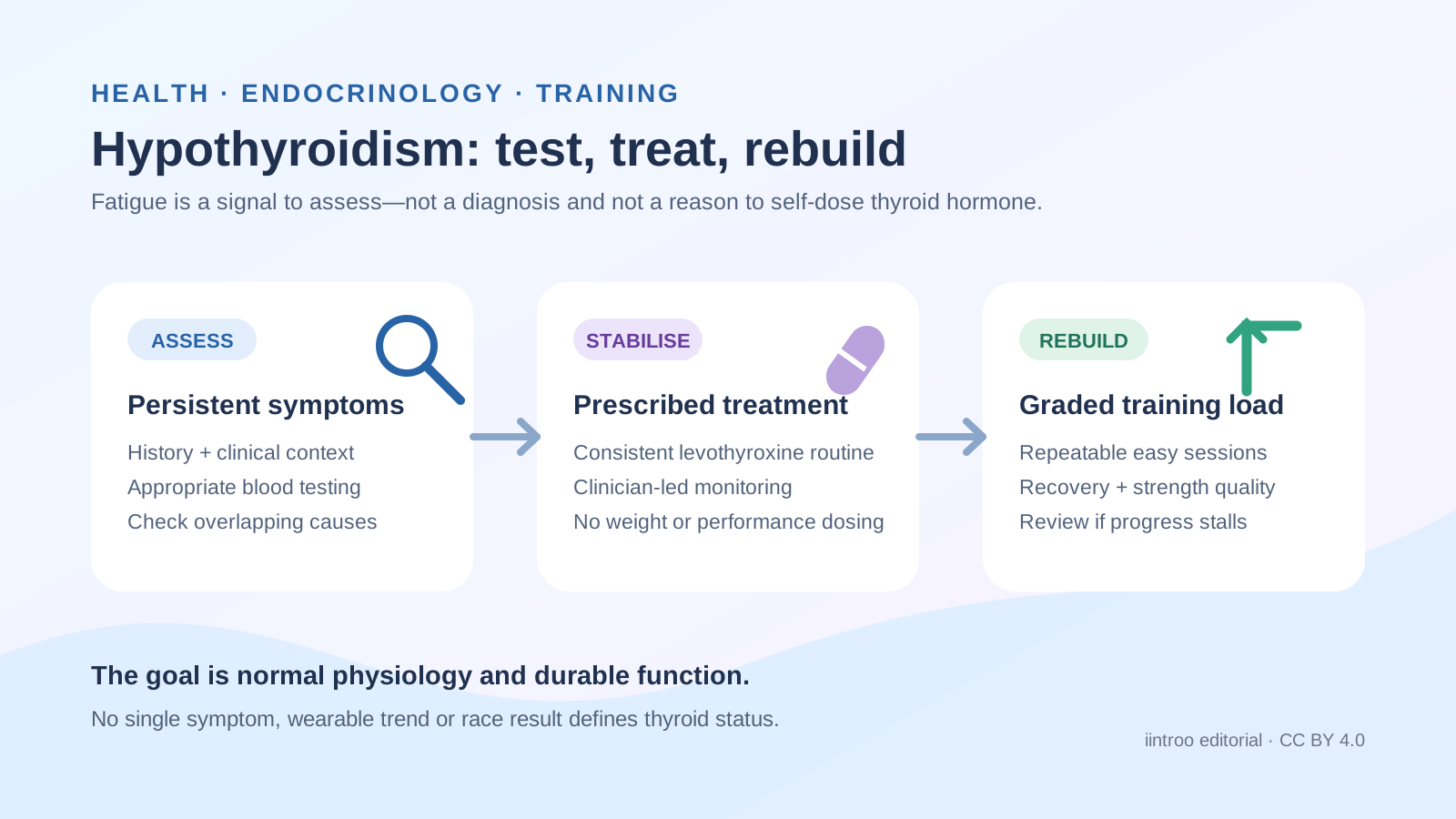
Key points
- Fatigue, feeling cold or a slower session can have many causes; hypothyroidism requires clinical assessment and appropriate blood testing.
- Levothyroxine replaces missing hormone and should not be started, stopped or dose-adjusted to chase performance or body weight.
- New chest pain, fainting, severe breathlessness, confusion or a sustained fast or irregular heartbeat needs urgent medical assessment.
Do not diagnose thyroid disease from a training slump
This guide is for athletes with diagnosed or suspected hypothyroidism and for support teams working with consent. Tiredness, low mood, feeling cold, dry skin, constipation, concentration difficulty and changes in body weight can occur with hypothyroidism, but they are not specific. Travel, infection, iron deficiency, low energy availability, sleep loss, medication effects, depression and an excessive training load can produce overlapping complaints. A wearable trend, basal temperature, online symptom list or one poor race cannot make the diagnosis.
Clinical assessment and appropriate thyroid-function blood tests are required. Test interpretation depends on context, including pregnancy, pituitary disease, acute illness, medicines and the laboratory reference range. Athletes should not request a thyroid label simply to explain every performance change, and staff should not dismiss persistent symptoms as weak motivation. New chest pain, fainting, severe breathlessness, confusion or a sustained fast or irregular heartbeat needs urgent medical assessment.
Use replacement treatment for health, not as a performance lever
NICE recommends levothyroxine as first-line replacement for primary hypothyroidism and monitoring that aims to keep thyroid-stimulating hormone within the reference range while considering symptoms. The dose and follow-up interval are clinical decisions. Absorption can be affected by the timing of food, calcium, iron and some medicines, so the athlete should follow the prescriber’s instructions consistently and report changes rather than inventing a competition-week schedule.
Do not start thyroid hormone for weight loss or perceived energy, borrow another person’s medicine, double a missed dose without advice, or stop treatment because a training block feels better. Too much thyroid hormone can cause palpitations, tremor, sweating, anxiety, bone loss and rhythm problems; too little leaves the condition undertreated. Athlete reviews find no established performance-enhancing benefit in people without a medical need. The aim is normal physiology and health, not an artificially suppressed laboratory value.
Rebuild load from current function and recovery
Once treatment and symptoms are being assessed, training can be matched to current capacity. Use repeatable markers such as completing planned easy work, recovery between sessions, strength quality and tolerance of sport-specific intensity. If the athlete has been unwell or markedly inactive, progress volume and intensity rather than immediately restoring a previous programme. Persistent deterioration is a reason to review the diagnosis, treatment, nutrition, sleep and load—not automatically to increase thyroid medication.
A 2023 systematic review found that exercise programmes may improve some physical and mental outcomes in people with hypothyroidism but did not show a significant effect on thyroid function; studies were small and not focused on elite competition. Exercise is therefore supportive care, not a substitute for replacement therapy or a proven way to normalize thyroid tests. A graded plan should be individualized when there is cardiovascular disease, pregnancy, another autoimmune condition or a long period of deconditioning.
Plan travel, testing and anti-doping administration
Carry enough prescribed medicine for travel in labelled packaging and preserve the usual dosing routine across time zones with advice from the treating team. Tested athletes should record the exact product and verify current rules using their national anti-doping organization or another official medication-checking service. Rules can change, and a prescription does not by itself answer every anti-doping administration question. Do not change effective medical treatment solely on the basis of an unverified social-media claim.
Return to unrestricted training does not depend on one universal TSH number or a fixed rest period. It should combine the clinical picture, test results, treatment stability, other diagnoses and the actual demands of the sport. This page provides general education, not a diagnosis, laboratory interpretation, levothyroxine schedule, supplement recommendation, anti-doping ruling or personal clearance.