
Narcolepsy in sport: plan for sleepiness, cataplexy and anti-doping rules
Narcolepsy does not require one sport rule. Match training and venue safety to sleepiness or cataplexy, protect treatment and check anti-doping status.
Key points
- Excessive daytime sleepiness and cataplexy are different symptoms and create different sport-specific hazards.
- Regular activity may be feasible and helpful, but the exercise evidence is small and does not replace sleep-specialist treatment.
- Several prescribed wake-promoting medicines are prohibited in competition, so tested athletes may need an approved TUE before use.
Map the symptom to the consequence in that sport
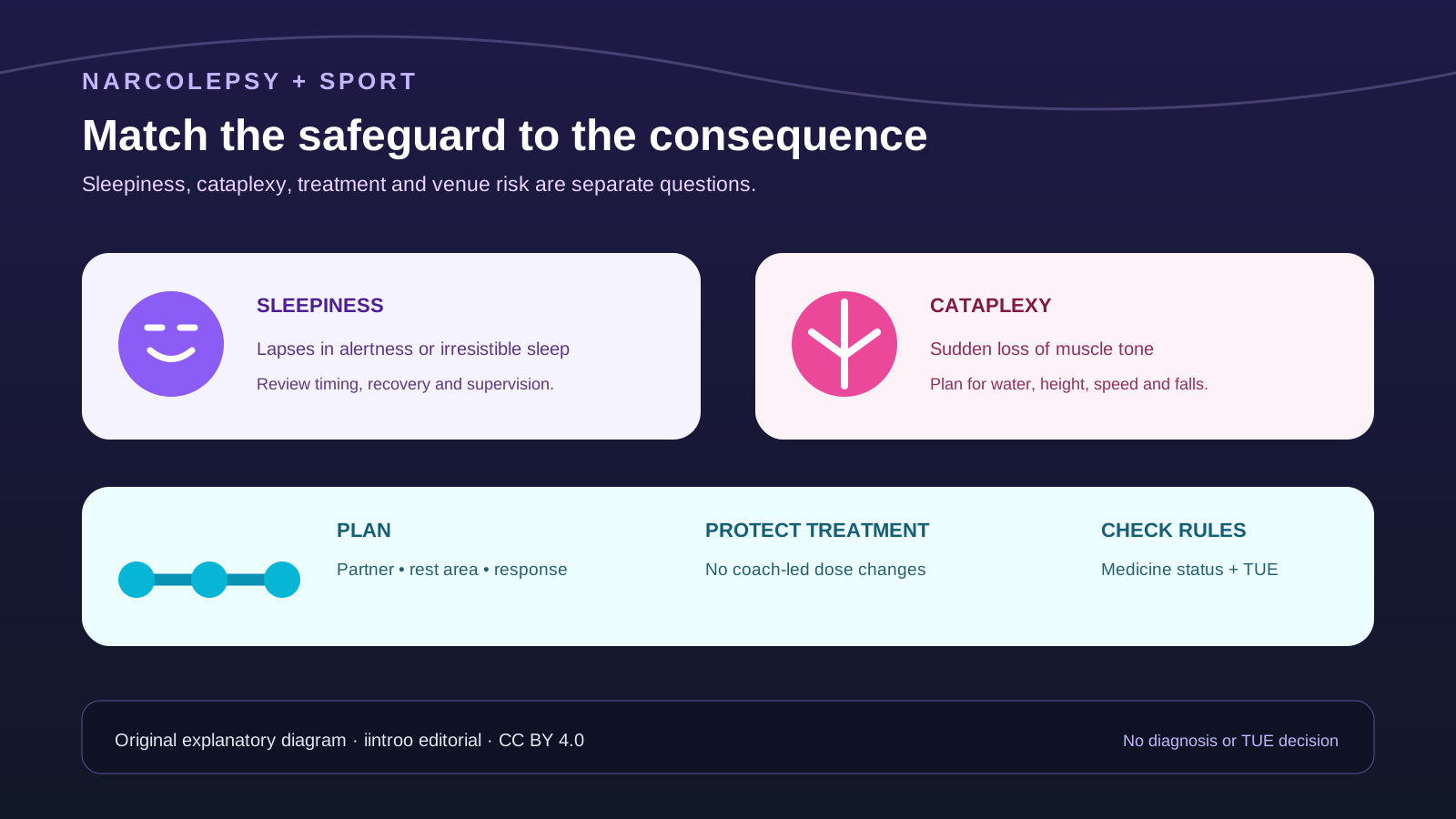
This guide is for athletes with diagnosed narcolepsy, families, coaches, officials and medical teams. Narcolepsy is a neurological disorder of sleep-wake control. Excessive daytime sleepiness can cause irresistible sleep episodes or lapses in alertness. Cataplexy is a sudden loss of muscle tone, often triggered by emotion, while awareness is usually preserved. Not everyone with narcolepsy has cataplexy, and neither symptom should be mistaken automatically for poor motivation, fainting or a seizure.
Risk depends on the event. A brief lapse during a seated skills session has different consequences from one while belaying, diving, cycling in traffic, riding a horse, swimming alone or operating equipment. Ask the athlete and sleep specialist about symptom pattern, warning signs, triggers, medicines and recent control. Build safeguards around the actual hazard: a trained partner, protected rest area, active supervision, route choice, removal from heights or water when control changes, and an agreed response if an episode occurs.
Keep treatment and recovery ahead of competition convenience
Guidelines support specialist-directed treatment that may combine regular sleep timing, planned naps and medication. The right medicine depends on symptoms, age, other conditions and adverse effects. Coaches should not advise dose changes, skipped treatment or extra stimulants to fit a start time. Travel, early training, late media duties and sleep restriction can worsen alertness, so the schedule itself belongs in risk management.
The NHS advises regular exercise but warns that unexpected sleep or falls can make some activities dangerous without extra measures. A 2025 prospective study reported that supervised exercise was feasible in a small group with narcolepsy type 1 and found encouraging changes in symptoms and cardiometabolic measures. It was not a large randomized athlete trial. Exercise can support health; it is not proven to control cataplexy or make an unsafe setting safe.
Treat anti-doping as part of medical continuity
The WADA 2026 Prohibited List places modafinil and several stimulant medicines used for central hypersomnolence in the in-competition prohibited class. A legitimate prescription is not automatically a Therapeutic Use Exemption. Tested athletes should check the exact medicine, route, competition level and responsible anti-doping organization early. Do not stop an effective treatment to avoid paperwork without speaking to the prescriber and anti-doping authority.
WADA’s medical guidance for intrinsic sleep disorders explains the type of specialist evidence a TUE committee may need, but approval is individual and must meet the International Standard. Product names and rules can change, and combination cold or alertness products add risk. Record the generic name and dose, use a recognized medicine-status service where available and keep the clinical diagnosis and follow-up current. This page cannot determine whether a TUE will be granted.
Review the plan when control, context or consequences change
Seek urgent help for a serious fall, head injury, drowning event, prolonged unresponsiveness, breathing difficulty, chest pain or another medical emergency. A first episode that looks like cataplexy or sleep should be medically assessed rather than diagnosed from a sideline video. For a known athlete, increased sleepiness, new falls, medicine adverse effects, mood change or reduced function warrants review with the sleep team before simply adding training stress.
Return decisions should consider symptom control, treatment stability, recent sleep, the environment and the severity of a possible failure. Evidence on competitive athletes is sparse, and qualitative or small interventional studies cannot establish universal restrictions. The aim is supported participation with disclosed, proportionate safeguards. This article offers no diagnosis, medicine schedule, TUE decision or clearance for water, height, speed or collision sport.