
Boxing hand and wrist injuries: equipment is not a diagnosis
Hand wraps and approved gloves are essential competition equipment, but pain, swelling or an unstable knuckle still needs assessment and a criteria-based return to punching.
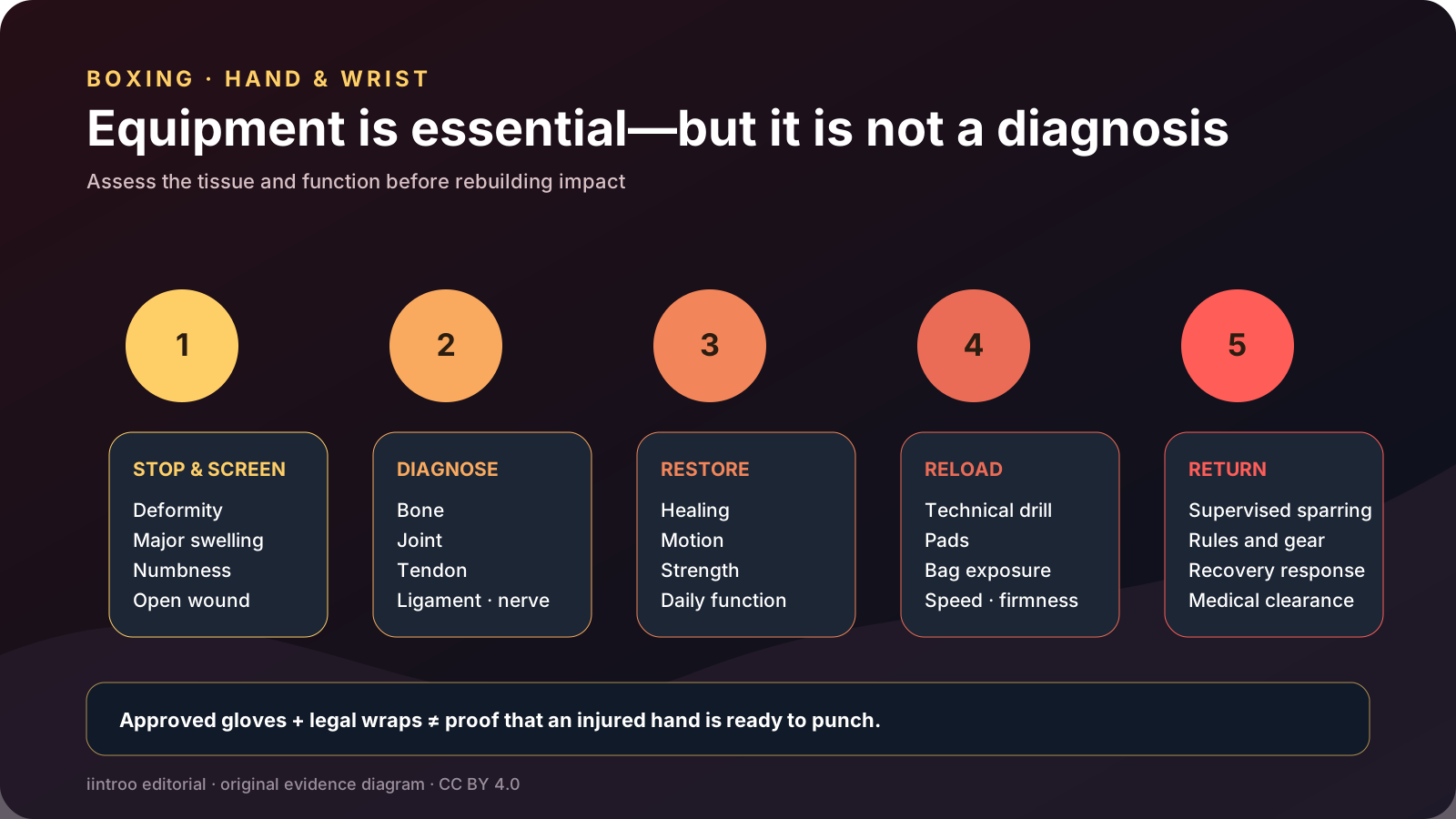
Key points
- Prospective surveillance in elite Olympic-style boxers found finger carpometacarpal instability and extensor-hood or capsule sprain were prominent hand and wrist diagnoses.
- Current World Boxing rules specify approved gloves and hand protection, but compliant equipment cannot rule out a fracture, joint instability, tendon injury or other diagnosis.
- Return-to-sport evidence after metacarpal fracture is low quality and objective criteria are poorly standardised; published average timelines are not personal clearance dates.
Start with the symptom pattern, not the phrase boxer's hand
This guide is for boxers, coaches, parents and sports-medicine teams. Pain over a knuckle, along a metacarpal, at the thumb or across the wrist can arise from different bones, joints, ligaments, tendons or nerves. In elite Great Britain surveillance, finger carpometacarpal instability and extensor-hood or joint-capsule sprain—often described as boxer's knuckle—were prominent diagnoses.
Emergency-department data from the United States also place the hand and wrist among frequently injured upper-extremity regions, with fractures a common diagnosis. That database captures people who attended an emergency department, not all boxers or all training exposure, so it cannot provide an individual's risk or identify the exact cause of an injury.
Wraps and gloves reduce neither diagnosis nor uncertainty
World Boxing competition rules specify glove weights and approved hand protection, including Velcro bandages or professional handwraps according to age group and event rules. Its equipment programme tests items against technical requirements. These rules support consistent competition conditions; they do not make punching risk-free or show that an athlete with pain is fit to continue.
Wrapping should follow the current rules, event instructions and qualified coaching for that setting. Do not add unapproved padding, alter equipment or assume that a tighter wrap treats an injury. Numbness, colour change, increasing pressure or worsening pain after wrapping is a reason to stop and reassess, not to cover the hand with another layer.
Know when the next round is the wrong test
Deformity, a displaced or sunken knuckle, major swelling, an open wound, loss of finger motion, marked weakness, numbness or severe pain after a punch needs prompt medical assessment. Ringside staff should follow the current medical handbook and local emergency pathway. A boxer should not punch a bag or ask a teammate to squeeze the hand to decide whether a fracture is present.
Persistent pain, recurrent knuckle movement, clicking with loss of function or symptoms that return whenever punch intensity rises also warrants evaluation. Imaging and treatment choices depend on the suspected structure, examination, timing and athlete—not on a generic picture or a published average.
Published return times are not clearance criteria
A systematic review of eight studies on metacarpal and phalangeal fractures reported that athletes returned to sport, but every study was fair or poor quality and none was randomised. Injury, treatment and sport differences prevented a reliable optimal strategy. A newer review found only three eligible studies after surgical repair and no standard objective return criteria.
Those limitations matter especially in boxing, where return means repeated impact through a closed fist, not simply running or playing with a protected hand. Mean days in a review should not be copied into a calendar. A treating clinician must consider fracture stability or other diagnosis, healing, motion, strength, pain, protection rules and consequences of another impact.
Rebuild impact in layers
Once the diagnosis and healing stage permit, a supervised progression can rebuild hand and wrist motion, force production and tolerance before increasing punch volume, target firmness and speed. Pads, bag work, technical drills and sparring are different exposures. Progress should be observed during the session and after recovery, with clear stopping criteria.
Competition return also requires current medical and equipment rules, coach communication and an emergency plan. This article does not prescribe a wrap, imaging test, exercise programme, operation or return date. New or worsening symptoms require qualified reassessment.