
Breaking injuries: build capacity for freezes, power moves and battles
Breaking loads the wrists, shoulders, spine, knees and ankles in very different ways. Injury data are limited, so progression should follow movement demands and individual response.
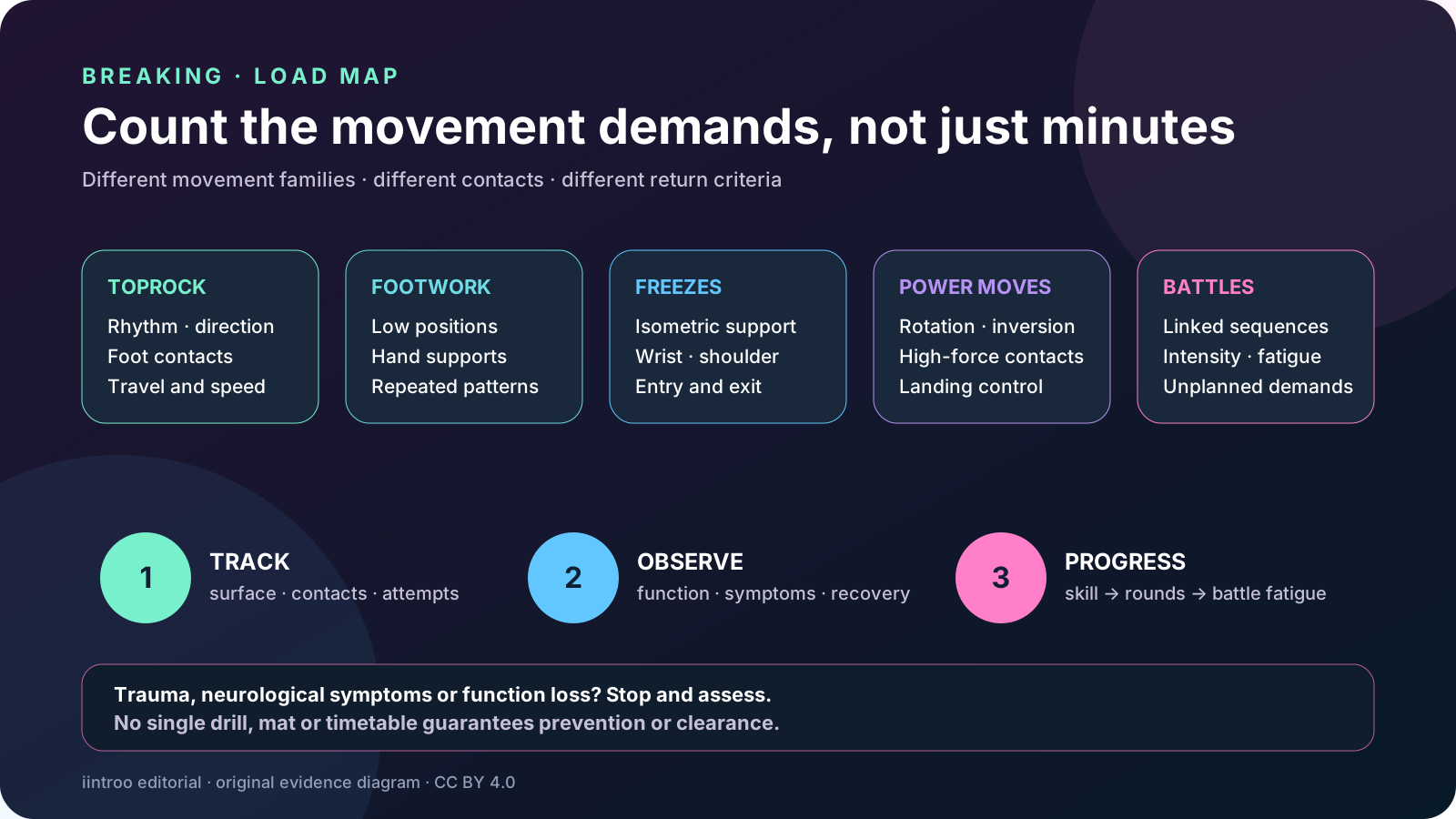
Key points
- Published breaking studies consistently identify the wrist, shoulder, knee, spine and ankle as important problem areas, but most data are retrospective and cannot prove one injury mechanism.
- Toprock, footwork, freezes and power moves place different demands on the body; progression should be specific to the movement family rather than based only on total session minutes.
- There is no validated universal warm-up, protective-equipment package or return date for breakers. Persistent pain, neurological symptoms and traumatic injuries need qualified assessment.
Map the movement before labelling the injury
This guide is for B-boys, B-girls, coaches, families and sports-medicine teams. Breaking includes toprock, footwork, freezes and power moves, with battles adding repeated efforts, speed, fatigue and an unpredictable floor sequence. A wrist used for a brief freeze, a shoulder supporting an inversion and an ankle landing from a dynamic transition do not receive the same load.
Current WDSF materials provide the competition context and describe physical conditioning and injury prevention as part of training education. They do not supply a clinical diagnosis or one safe dose for every breaker. Record the movement family, direction, surface, number of high-demand attempts and symptom response instead of describing every session simply as breaking practice.
Injury studies show priorities, not precise probabilities
A retrospective survey of 40 professional and 104 amateur breakers reported frequent wrist, spine, shoulder and ankle pain, while a separate 42-person study identified the wrist, finger, knee, shoulder and lumbar spine among commonly affected sites. A newer Chinese cross-sectional study also found wrist, knee, shoulder and waist injuries prominent among 1,000 self-reported cases.
These studies rely largely on recall, self-report or selected samples and use different definitions. Exposure time and movement-specific risk were not always measured. The 2025 case-report synthesis can describe unusual and serious presentations but cannot estimate incidence. These limitations mean a list of common sites should guide observation and research, not predict what will happen to one athlete.
Progress exposure by movement family and fatigue
A practical progression can separate low-load skill rehearsal from repeated freezes, rotational power moves, head-supported actions and full-intensity battle rounds. Increase one demanding feature at a time where possible, allow enough recovery to observe the response, and preserve foundational strength and movement options. Total minutes alone can hide a sudden rise in wrist contacts, inversions or high-force landings.
A 2025 systematic review found only eight dance injury-prevention studies across varied genres; methods were too inconsistent to determine overall effectiveness. Conditioning and neuromuscular warm-up approaches may be reasonable components, but no study establishes a breaking-specific prevention formula. Avoid presenting wrist guards, mats, stretching or one exercise circuit as guaranteed protection.
Pain and trauma need different decisions
A sudden fall with deformity, inability to bear weight, loss of strength, new numbness, a severe head or neck impact, or rapidly increasing swelling needs prompt medical assessment. After any head impact, worsening headache, repeated vomiting, seizure, confusion, weakness or difficulty waking requires urgent local emergency care. Do not test a suspected fracture, dislocation or neurological problem with another power move.
Gradually increasing pain, repeated loss of motion or symptoms that return at the same movement threshold also deserve evaluation. The problem may involve bone, joint, tendon, ligament, nerve or more than one structure. A video clip can help explain the movement but cannot establish the tissue diagnosis or prove that technique alone caused it.
Return by rebuilding the actual sequence
Return should reconnect diagnosis-specific healing with everyday function, strength, motion and tolerance of the exact movement families required. A staged plan may progress from controlled supports and footwork to selected freezes or rotations, linked combinations, full rounds and battle-like fatigue. The order and criteria must be individualised by qualified professionals; this is not a rehabilitation prescription.
Before competition, agree stopping signals, floor inspection, warm-up, round exposure and access to medical help. One pain-free attempt, a fixed rest period or an online checklist is not clearance. This educational synthesis does not provide a diagnosis, protective-equipment recommendation or universal return date.