
Competitive diving injuries: count dryland, take-off and water entry together
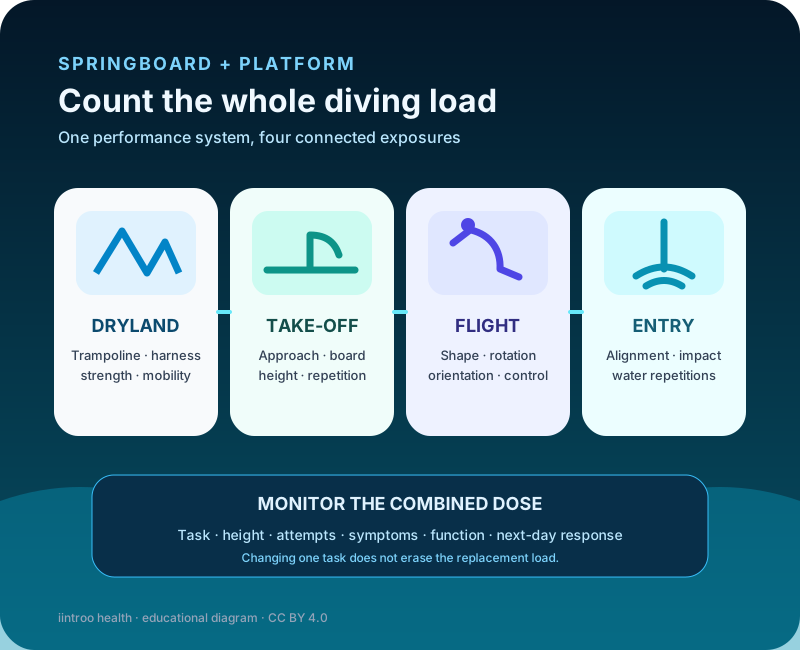
Springboard and platform divers accumulate load in dryland, take-off, flight and entry. Whole-programme monitoring helps teams respond to symptoms before technique and function deteriorate.
Key points
- Competitive-diving load includes dryland, strength, flexibility, take-off, flight and repeated water entry; pool time alone misses much of the dose.
- A four-year Australian programme study recorded most injuries in training and frequently around pool training, water entry and take-off, but one programme cannot predict every diver's risk.
- Shoulder, back, trunk and hand or wrist problems appear in a small, heterogeneous evidence base; symptoms that alter function or technique deserve early assessment.
Track the complete dive workload
This guide is for springboard and platform divers, families, coaches and health teams. A training day may combine trampoline, harness work, mats, strength, mobility, repeated approaches and take-offs, aerial skills and entries. Each component adds mechanical and cognitive demand even when only water time appears in the diary.
Record surface, board or platform height, dive group, number of attempts, new-skill progressions, entry repetition, dryland and strength work, and the diver's symptoms and recovery. The aim is not a single magic load number; it is to make abrupt changes and repeated aggravating tasks visible to the whole team.
Use the evidence without pretending it is precise
A 2024 systematic review found shoulder, lumbar or trunk and wrist or hand problems among reported diving injuries, but studies used different definitions and populations. Its competition estimates should not be treated as a universal prevalence or an individual forecast.
A four-year observational study of 63 Australian national-programme divers recorded 421 injuries, with most occurring in training; pool training, water entry and take-off featured prominently. It was one elite programme and descriptive, so it can identify useful surveillance targets but cannot prove that one technique, height or workload caused an injury.
Respond when symptoms change skill execution
Ask where symptoms occur, whether they appear during take-off, flight, entry or dryland, and whether they change alignment, confidence, grip, range or power. Persistent pain, swelling, weakness, loss of motion, numbness or a repeated need to avoid a dive deserves qualified assessment rather than endless technique correction.
After a high-energy impact, severe neck or back pain, neurological symptoms, loss of consciousness, breathing difficulty, deformity or inability to move normally requires the facility emergency plan and urgent medical care. Do not return a diver to height after a suspected head, neck or spinal injury without appropriate assessment.
Progress skill and height inside current rules
Qualified coaching, maintained equipment, appropriate water depth, clear spotting or harness procedures and the current World Aquatics and local facility rules form the environment around training. General shoulder or core exercises may be useful parts of preparation, but no exercise set guarantees prevention and a rulebook is not a rehabilitation protocol.
Build new dives through the programme's established progressions and count failed or aborted attempts as exposure. When symptoms appear, the team may temporarily change dive group, height, entry volume or dryland task while preserving tolerable training. The replacement work must also be counted.
Return from capacity to complete dives
Return depends on the diagnosis and may rebuild daily function, region-specific capacity, basic shapes, dryland simulation, take-off, controlled entries and then full dives under fatigue. Platform and springboard demands differ, as do forward, backward, reverse, inward, twisting and armstand groups. One calendar date cannot cover them all.
This article provides general education. It does not diagnose pain, prescribe an exercise programme or specify a safe height, dive count or return date. Persistent, recurrent or function-limiting symptoms need individual assessment and coordination between the diver, clinician and qualified coach.