
CGM for athletes without diabetes: useful data, uncertain performance decisions
Continuous glucose monitors show interstitial glucose trends, not a direct verdict on fuelling, recovery or fitness. Athlete evidence remains small and difficult to standardise.
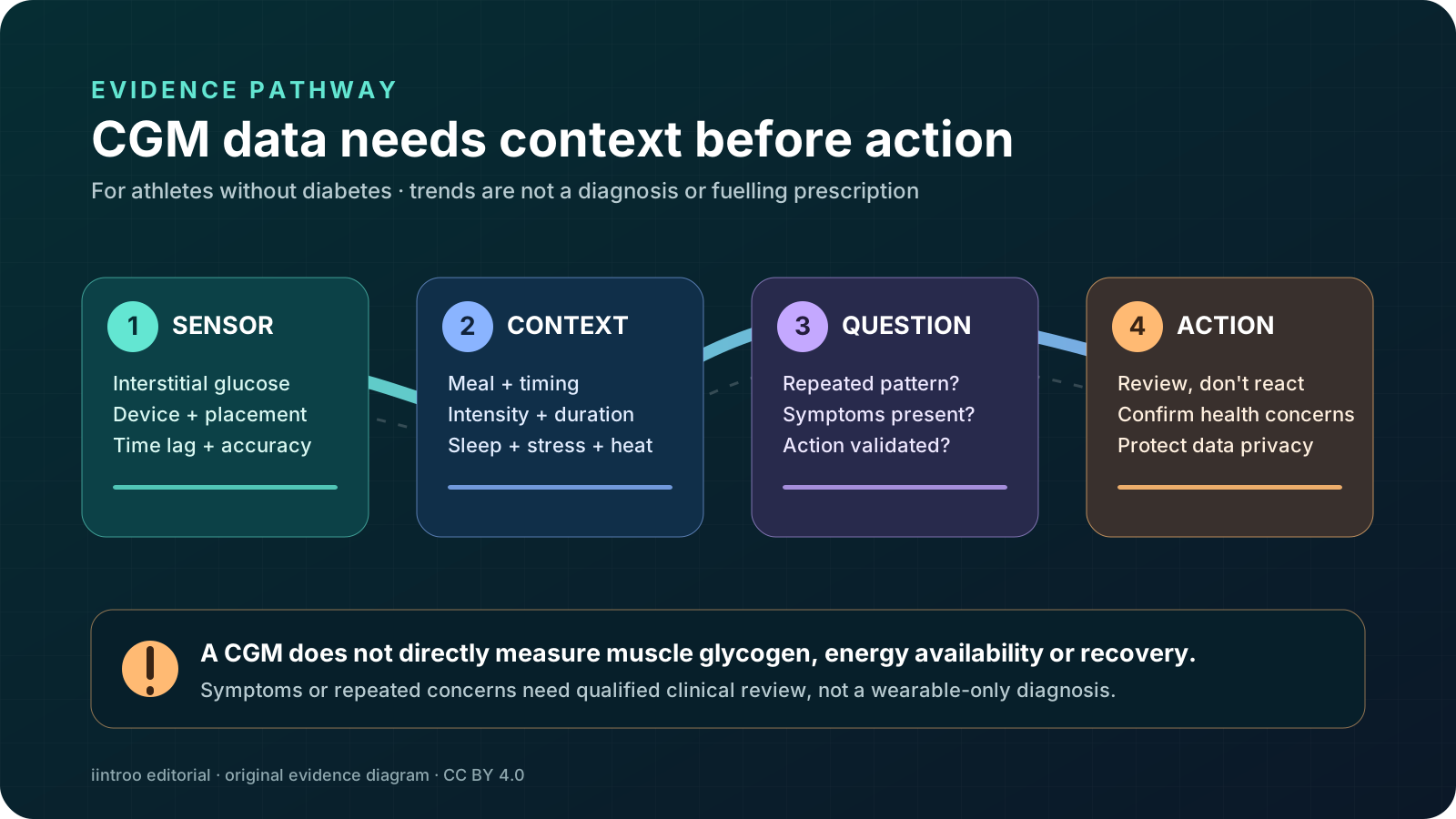
Key points
- A CGM measures glucose in interstitial fluid, so a reading can lag behind blood glucose and is not a direct measure of muscle glycogen, energy availability or recovery.
- A 2026 scoping review found heterogeneous methods, typically small exercise studies and relatively few athlete samples, limiting universal performance thresholds.
- In athletes without diabetes, a sensor trace should not be used alone to diagnose hypoglycaemia, prescribe carbohydrate or justify restrictive eating.
Know what the sensor is—and is not—measuring
This guide is for athletes without diabetes, coaches, sports dietitians and clinicians considering CGM for training or competition. A skin-mounted CGM estimates glucose in the fluid between cells rather than sampling blood directly. Exercise intensity, recent food, temperature, hydration, sensor placement and the normal delay between blood and interstitial compartments can all shape the trace.
The FDA has cleared an over-the-counter CGM for adults who do not use insulin, including people without diabetes who want to understand diet and exercise responses. Clearance does not mean every graph has a validated performance interpretation. The FDA separately warns that watches and rings claiming to measure glucose without piercing the skin are not authorised glucose monitors; do not confuse those products with a cleared CGM.
Athlete evidence is growing, but the map is not yet a rulebook
A 2026 scoping review identified 93 exercise-CGM publications, but only 7.5% of the study populations were athletes. Samples were usually small, chronic training studies were uncommon, and devices, placement and reported metrics varied. That makes it difficult to turn one athlete's line into a universal low, high or optimal performance zone.
A 2026 report of three elite performances showed very different glucose patterns across ultra-endurance cycling, an Everesting attempt and a breath-hold dive. As a three-person descriptive case series it can illustrate context, not prove that a particular glucose pattern caused success, fatigue or harm.
Accuracy changes the question you can safely ask
In 13 non-diabetic recreational runners, one CGM system followed average glucose trends during steady-state running but did not provide valid point-by-point glucose values; accuracy was poorer at lower readings. The study tested selected sites, intensities and one device in a small group, so it cannot validate every model, sport or high-intensity session.
A single low alert or spike should therefore prompt context and, when symptoms or health concerns exist, appropriate clinical confirmation—not an automatic diagnosis. A CGM cannot directly report muscle glycogen, total energy availability, dehydration, overtraining or the correct carbohydrate dose for an individual.
Prevent the graph from driving unnecessary restriction
Food responses are affected by portion, mixed meals, timing, sleep, prior exercise and normal within-person variation. Avoid labelling ordinary foods as good or bad from one sensor response or chasing a perfectly flat line. Restrictive changes made to suppress every rise can conflict with fuelling needs and may be especially risky for an athlete with low energy availability or disordered-eating concerns.
If CGM is used as a learning tool, agree in advance which question is being explored, keep the training and meal context, and review repeated patterns with a qualified sports dietitian or clinician. Protect the athlete's privacy; glucose data should not become a selection test, public leaderboard or substitute for a confidential medical history.
Use symptoms and clinical risk to decide when data need care
An athlete with diabetes, suspected hypoglycaemia, pregnancy, medication effects or another health condition needs condition-specific medical guidance; this article is not intended to alter that plan. Fainting, confusion, seizure, severe weakness or rapidly worsening symptoms requires urgent local medical assessment regardless of what a wearable displays.
For an athlete without diabetes, persistent symptoms, repeated concerning values or anxiety driven by monitoring deserves professional review. This educational synthesis does not prescribe a device, target range, diagnosis, fuelling strategy or performance intervention.