
Fasted endurance training: more fat burned does not mean better results
Separate fuel use in a fasted session from race performance and long-term fat loss, with evidence from reviews, cycling trials and sports-nutrition guidance.
Key points
- Burning more fat during one session does not establish greater long-term body-fat loss.
- Pre-exercise feeding can support prolonged aerobic performance.
- Selected carbohydrate-periodisation strategies are not a blanket reason to skip meals.
First define what the claim is promising
This guide is for endurance athletes weighing up advice to train before breakfast. Here, fasted training means exercise after an overnight period without eating. It is not a review of Ramadan fasting, time-restricted eating or a personal weight-loss programme. Those exposures involve different schedules and questions.
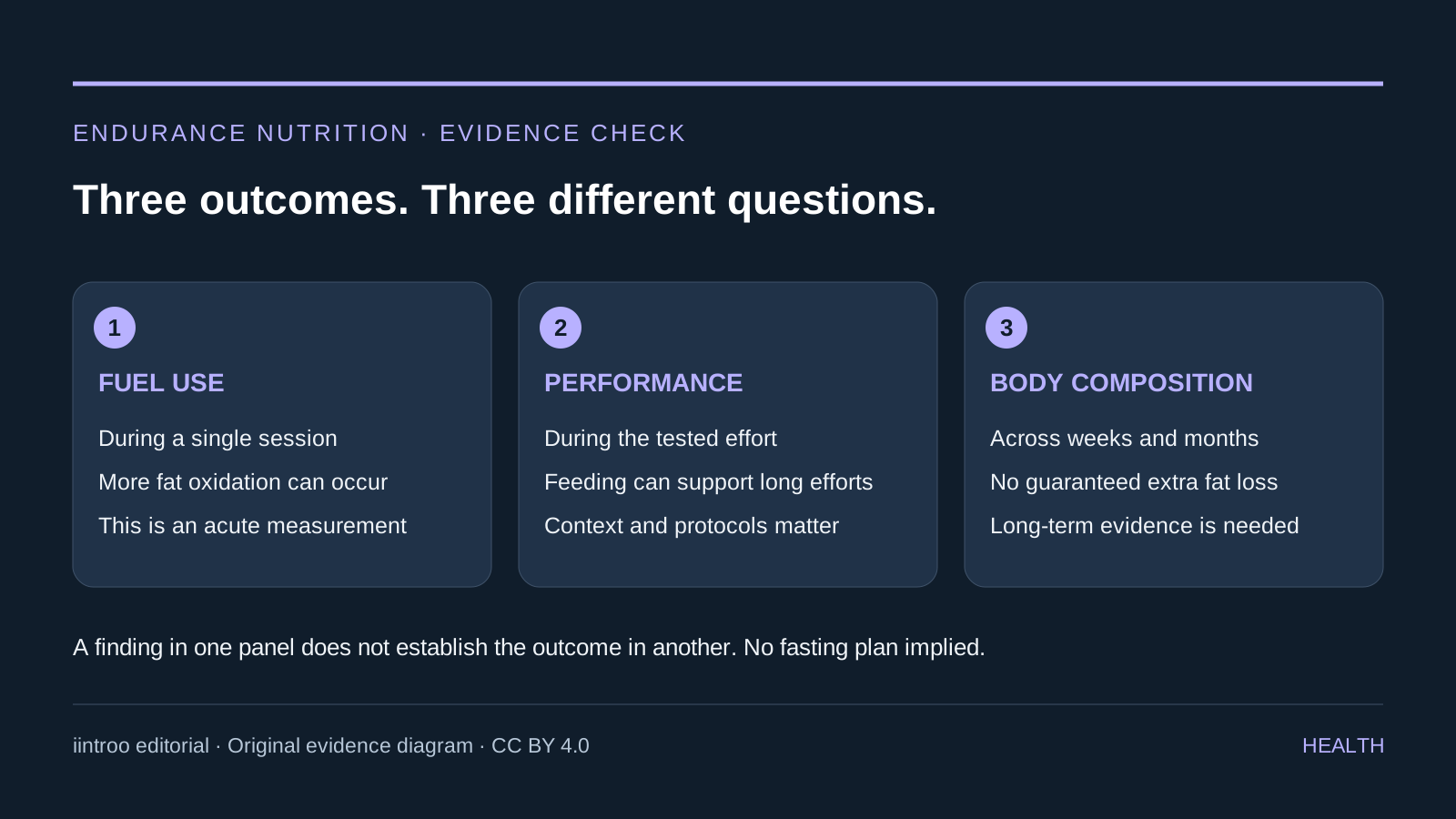
Three outcomes are often blurred together: which fuel is used during exercise, how well the session is performed, and how body composition changes over weeks. Evidence about the first cannot automatically answer the other two. A laboratory measurement of fat oxidation is not a direct measurement of an athlete's long-term progress.
Acute fat oxidation is a narrow finding
A 2016 review pooled 27 studies involving 273 participants and exercise bouts lasting up to 120 minutes. Fasted low-to-moderate-intensity aerobic exercise generally increased fat oxidation compared with exercise after a carbohydrate-containing meal. That is a finding about fuel selection under the studied conditions.
Intensity, meal composition, duration and participants varied, and some older reports had incomplete information. The authors cautioned against translating acute results into claims about long-term fat reduction or safety. The finding does not mean every fasted session is more useful, nor that an athlete should avoid eating afterwards to preserve a supposed advantage.
Sources: 1
Performance can point in a different direction
A separate 2018 systematic review included 46 studies. Pre-exercise feeding improved prolonged aerobic performance in pooled analysis; the shorter-duration comparison was not statistically significant. Lack of a significant short-duration difference is not proof that breakfast never matters for a shorter event or for a particular person.
Training adaptations and immediate performance are also distinct. A molecular signal associated with low carbohydrate availability does not guarantee a faster race. The review's varied exercise and feeding protocols leave room for individual context rather than a universal instruction to train either always fasted or always fed.
Sources: 2
Long-term body-fat claims need long-term evidence
In a four-week randomized trial published in 2014, 20 physically active young women completed matched aerobic training with dietary plans intended to reduce energy intake. Both groups lost weight and fat, without a significant difference between fasted and fed exercise groups.
This small, short study challenges a guaranteed extra fat-loss benefit, but does not prove equivalence across all athletes or durations. Dietary intake was self-reported and the population was restricted. Participants in the fasted group ate after training, so the experiment does not support extending food avoidance through recovery. Its diet is not a template to copy.
Sources: 3
Skipping breakfast can affect a later effort
A randomized crossover study of 11 highly trained cyclists compared breakfast-plus-lunch with breakfast omission followed by a larger lunch. Total pre-test energy and macronutrients were matched. Evening 20-km mean power was about 3% lower after breakfast omission.
This was one small acute experiment with a specific meal pattern, not a forecast for every athlete. Nevertheless, it illustrates why counting only the morning session can miss the wider training day. Later intake did not fully remove the performance difference in this study; an apparently convenient skipped meal may have consequences beyond the next hour.
Sources: 4
Match fuelling to the work, not a slogan
NSW Institute of Sport guidance advises against fasted training for prolonged, high-intensity or performance-priority sessions and recommends working with a sports dietitian. A practical discussion includes the purpose of the session, morning food tolerance, subsequent meals and the rest of the day's training. It should not become a rigid fasting schedule.
AIS recognises that some athletes deliberately vary carbohydrate availability for selected sessions. That strategy is different from habitually eating too little, and its inclusion in professional guidance does not make it necessary for recreational athletes. Diabetes or another condition affecting exercise nutrition requires an individual clinical plan. This article does not establish that unsupervised fasted exercise is safe in those circumstances.