
Sport after a kidney transplant: train the athlete and protect the graft
Kidney transplant recipients can rebuild fitness, but graft location, infection risk, medicines, heat and contact exposure require transplant-led planning.
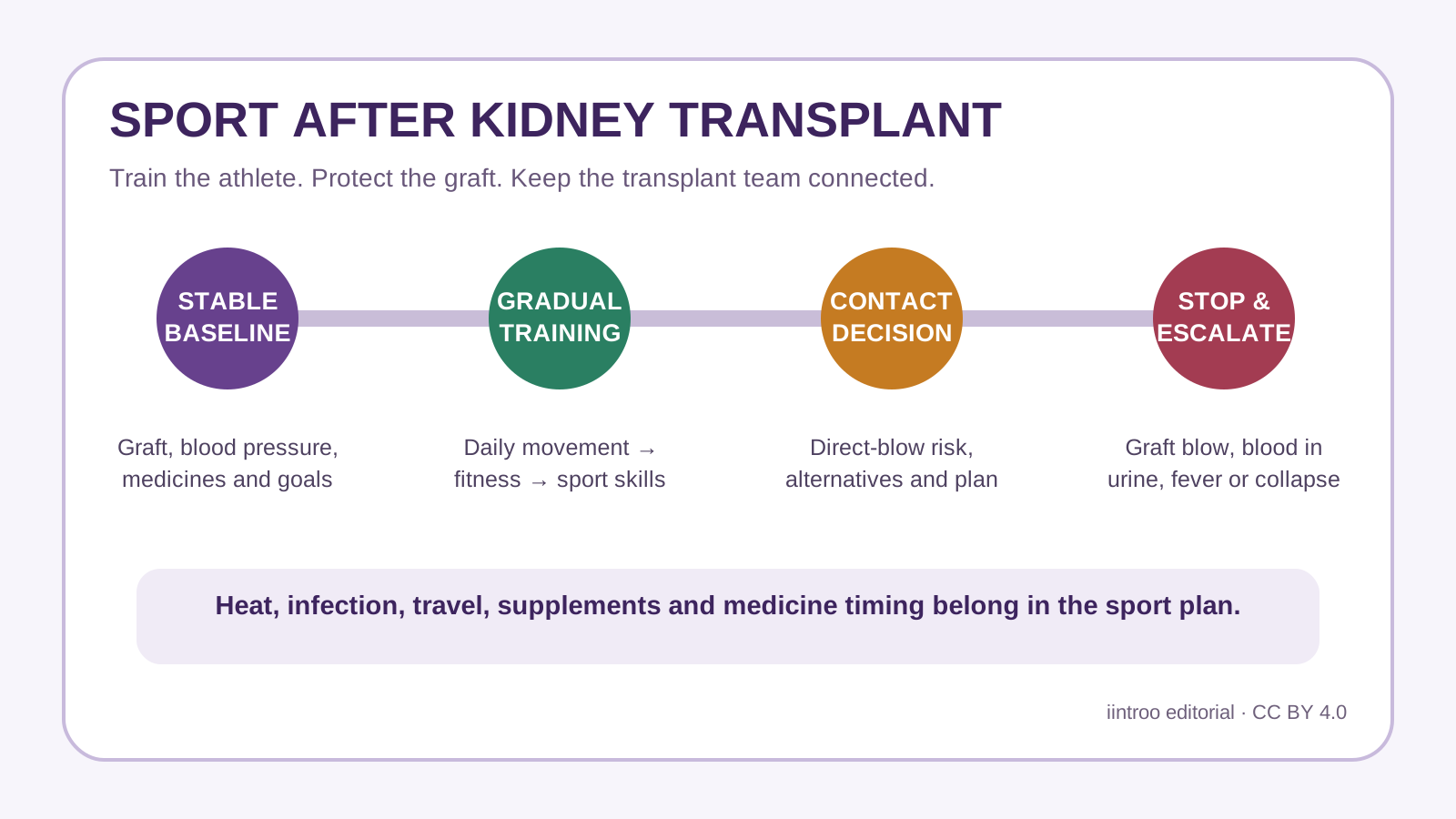
Key points
- Regular activity is encouraged after kidney transplantation, but the operation, graft function, cardiovascular health and medicine effects make progression individual.
- Exercise trials support selected fitness outcomes, yet programmes vary and do not establish one safe return date or prove extreme endurance suits every recipient.
- Direct blows to the lower abdomen can threaten the transplanted kidney, so collision and combat sport decisions need transplant and sports-medicine expertise.
Begin with the graft, the person and the sport
This guide is for kidney transplant recipients returning to organised or recreational sport, and for coaches working with permission. A transplanted kidney is usually placed low in the abdomen, closer to potential impact than the original kidneys. Health questions also include graft function, blood pressure, cardiovascular fitness, bone and muscle health, diabetes risk, infection, wound healing and immunosuppressive medicines. The transplant date alone cannot decide readiness.
NHS Blood and Transplant encourages gradual activity as recovery progresses and advises transplant-team input. World Transplant Games Federation eligibility likewise requires stable graft function, training and medical approval; its event threshold is a competition rule, not a universal clinical return date. Before progression, clarify restrictions, monitoring, medicine timing, signs of rejection or infection, emergency contacts and the real demands of the chosen sport, including travel, heat, collision and limited access to care.
Use exercise evidence for progression, not guarantees
A 2025 systematic review included 23 randomised trials of physical activity after kidney transplantation. Programmes differed in aerobic, resistance and mixed training, supervision, duration and reporting. The review supports exercise as part of rehabilitation and cardiovascular-risk reduction, while noting inconsistent effects across outcomes and poor protocol detail. A 2026 meta-analysis also found benefits for selected fitness measures but could not identify one optimal training type for every recipient.
Build from regular daily movement to aerobic conditioning, resistance work and sport skills in stages agreed with the clinical team. Progress volume before intensity when appropriate, and watch blood pressure, symptoms, recovery and graft-related advice rather than copying a general fitness plan. Do not use a normal session, smartwatch estimate or stable body mass as proof of graft function. Blood tests, examination and transplant follow-up answer different questions from performance data.
Plan contact, heat, infection and medicines
UK kidney guidance advises avoiding traumatic damage to the graft and treating heavy contact sport and prolonged extreme exercise cautiously. Rugby, martial arts, boxing, ice hockey and similar settings can expose the lower abdomen to direct blows or compression. Padding cannot make that risk zero. The decision should include transplant and sports-medicine clinicians, the athlete's values, event rules, alternatives and an emergency plan; a successful case from another sport is not personal clearance.
Immunosuppression changes infection and skin-cancer prevention, and some medicines affect blood pressure, glucose, electrolytes or heat response. Follow the transplant team's fluid, food, sun, vaccination and travel advice rather than a generic athlete formula. Avoid unreviewed supplements: contamination, interactions and unknown immune or kidney effects matter. Fever, vomiting, diarrhoea, reduced urine, inability to take medicines or significant heat illness needs prompt contact with the transplant team or urgent care as instructed.
Know which changes stop training
Stop and seek urgent assessment after a substantial blow over the graft, especially with abdominal pain, swelling, blood in urine, dizziness, fainting or reduced urine. Chest pain, severe breathing difficulty, collapse, new neurological symptoms or a very unwell athlete also requires emergency care. New fever, graft-area pain, rapid swelling, marked fatigue or unexplained performance decline should not be managed by simply reducing training and waiting for the next event.
Return after illness, injury or a change in graft function should rebuild daily activity, controlled conditioning, skill work and full training with reassessment at each step. This page cannot assess graft stability, prescribe fluids, change immunosuppression, recommend a supplement or clear contact and endurance competition. It supports a transplant-led plan that protects long-term health while recognising that many recipients can train, compete and belong in sport when risks are identified honestly rather than hidden or exaggerated.