
Kinesiology tape in sport: a visible strip is not evidence of repaired tissue
Kinesiology tape may change some short-term symptoms, but athlete performance evidence is inconsistent and the tape cannot diagnose or heal an injury.
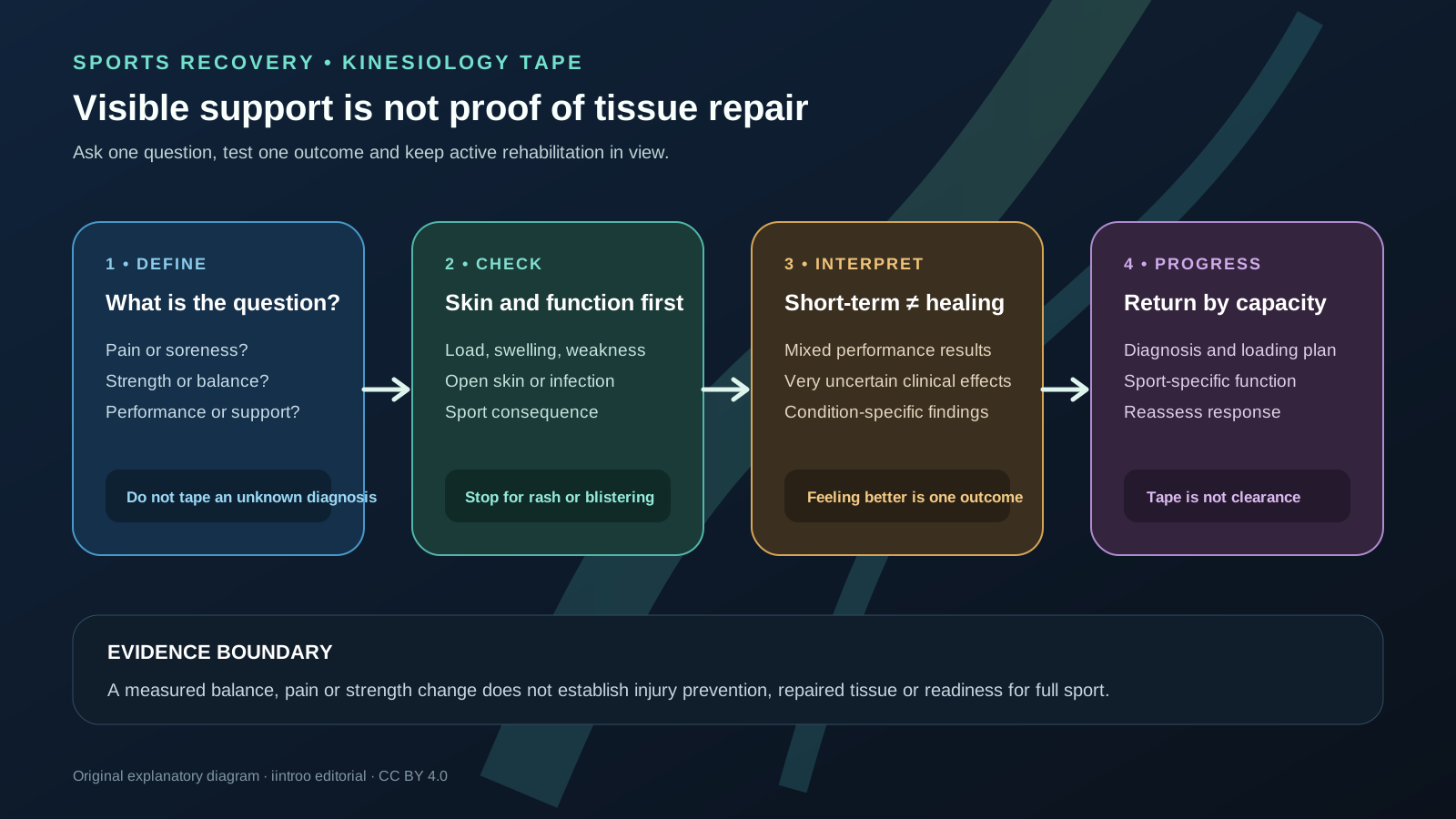
Key points
- Kinesiology tape is an elastic skin-applied product; colour, pattern and visible tension do not show that a muscle, ligament or joint has been repaired.
- Athlete strength and performance reviews do not show a dependable clinically relevant gain, while pain findings vary by condition and follow-up.
- Tape may irritate skin and can change sensation or confidence, but it should not hide progressive pain, weakness, swelling or loss of function.
Name the problem before choosing a strip
This guide is for athletes, coaches and support teams considering elastic kinesiology tape for pain, support, recovery or performance. Tape is applied to skin and may change sensation, movement confidence or symptom perception. It does not reveal whether pain comes from muscle, tendon, ligament, bone, joint, nerve or another source. The same coloured pattern placed over two shoulders can therefore be attached to very different clinical questions.
Begin with the goal and the consequence of being wrong. Comfort during an easy drill is different from preventing an ankle injury, restoring force after fatigue or clearing a sprinter with focal bone pain. Record the symptom, recent load, swelling, weakness and function before tape changes the experience. Deformity, inability to bear weight, progressive neurological change, major trauma, rapidly increasing swelling or systemic illness requires assessment rather than an improvised taping pattern.
Separate a measured effect from a meaningful performance gain
A 2024 athlete-focused meta-analysis found ten eligible strength studies and pooled five. It reported no clinically relevant strength effect versus placebo or control, either immediately or later. An earlier performance review examined 15 randomised studies and 193 comparisons across jumping, sprinting, agility, balance, cycling, running and ball skills. Only two comparisons favoured kinesiology tape, while more favoured another tape or no tape. That distribution did not support a compelling general performance benefit.
An ankle-focused review found 84 eligible trials and ran 58 meta-analyses. Fifty-one did not show functional or performance benefit; seven low- or very-low-certainty analyses favoured tape for selected balance or inversion measures. Those mixed results do not mean no athlete can feel supported. They mean a small laboratory change, preferred feel or visible application should not be promoted as injury prevention, stronger tissue or guaranteed competition improvement.
Read soreness and pain results with their risk of bias
A 2024 review of 16 lower-limb fatigue studies reported lower pain after 48 hours and higher strength in pooled analyses, but every included study was judged at high risk of methodological bias and balance findings were mixed. A 2025 crossover experiment involved only 12 healthy young men and tested timing around one eccentric-exercise model. It cannot establish recovery in women, injured athletes, Para athletes, older competitors or a complete training week.
A 2026 overview of systematic reviews judged evidence across musculoskeletal disorders highly inconclusive, with very low certainty and unstable clinical relevance for most outcomes. It found little or no effect for several pain, function, strength and range-of-motion outcomes at different follow-ups, and reported skin irritation and itching as adverse events. A condition-specific short-term signal should remain attached to that condition, comparator and time point rather than becoming a universal claim that tape reduces inflammation or accelerates healing.
Use tape, if chosen, inside an active plan
A qualified clinician may use tape as one optional cue or short-term comfort measure while diagnosis, load modification and progressive exercise address the underlying problem. Agree in advance what outcome is being tested and when the tape will be removed or reconsidered. Skin should be clean and intact; stop for burning, blistering, marked itching or rash. Do not tape over an open wound, infection, unexplained swelling or impaired sensation without appropriate professional advice.
A good response does not authorise a larger training jump, and pain returning when tape is removed is not proof of dependence or damage. Return to sport depends on the diagnosis, capacity, sport-specific function and risk of the task. Compare the strip with a credible plan that includes education, recovery and active rehabilitation rather than with doing nothing. This page does not prescribe an application, diagnose an injury, promise performance or clear participation.