
Foam rolling for recovery: useful for comfort, not a repair switch
Foam rolling may briefly improve motion and soreness, but performance and injury-prevention claims exceed the evidence. Use comfort, not pain, as a guide.
Key points
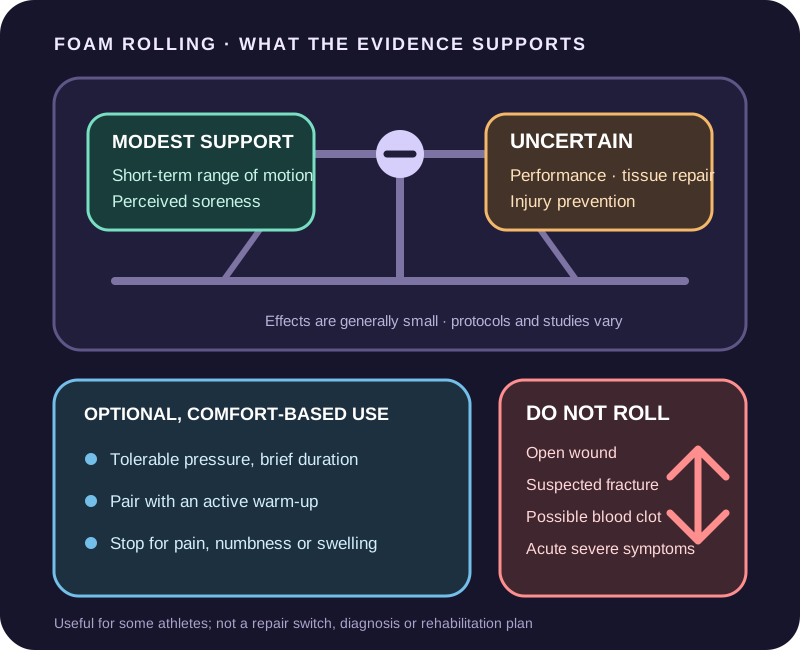
- Foam rolling can produce small, short-term improvements in range of motion and perceived soreness, but study methods and protocols vary considerably.
- Effects on strength, speed, power and recovery are generally small or inconsistent, and evidence does not show that foam rolling repairs tissue, breaks adhesions or prevents injury.
- Avoid rolling over an open wound or suspected fracture and seek advice for suspected blood clot, acute inflammation, severe pain, numbness or unexplained swelling.
Foam rolling is a self-massage option, not a tissue diagnosis
This guide is for athletes, coaches and support teams deciding whether a roller belongs in a warm-up or recovery routine. Foam rolling uses body weight over a roller or ball to apply pressure to soft tissue. It may change sensation, tolerance to stretch and short-term movement. The popular phrase 'breaking up fascia' is not an established explanation for the small effects seen in controlled studies.
A roller cannot identify why a joint feels stiff or why pain persists. Soreness after unfamiliar exercise, tendon pain, nerve symptoms, a muscle strain and a bone injury can all feel different yet overlap in everyday descriptions. Use rolling as an optional comfort tool around training, not as a test, diagnosis or substitute for progressive exercise and professional assessment.
The clearest signal is short-term flexibility and soreness
Systematic reviews generally find small acute improvements in joint range of motion without the clear immediate performance reductions sometimes associated with long static stretching. A 2024 meta-analysis also found that foam rolling and static stretching can both improve range of motion, with results influenced by protocol and comparison. These are average short-term responses, not proof that tissue length or joint structure has permanently changed.
A 2024 soreness meta-analysis covering 16 studies and 515 participants reported reduced delayed-onset muscle soreness after exercise. Many trials are small, use different rolling pressures and durations, and rely on subjective ratings. The umbrella review found only seven reviews of sufficient quality for synthesis. Positive findings therefore support a modest option for comfort, not a large or certain recovery effect.
Performance and injury claims need restraint
The 2019 meta-analysis described most effects on sprinting, jumping, strength and flexibility as minor or negligible, with some possible flexibility and soreness benefits. The later umbrella review similarly found mixed muscular outcomes and limited evidence for proposed mechanisms. A session may help an athlete feel ready, but that is different from restoring muscle damage, accelerating healing or creating a meaningful performance gain.
No strong evidence shows that foam rolling alone prevents injury. Injury risk depends on exposure, capacity, previous injury, recovery, environment and many sport-specific factors. Do not replace an active warm-up, strength programme, sleep, nutrition, rehabilitation or training-load planning with prolonged rolling. Marketing claims about toxins, scar tissue or permanent fascial release should not be treated as physiological facts.
Use tolerable pressure and protect the training purpose
If rolling feels useful, choose a tolerable pressure and a brief duration that does not leave bruising, numbness or altered movement. Before training, combine it with an active warm-up that raises temperature and rehearses the session's movements. After training, treat it as one optional way to manage comfort. More pressure is not automatically more effective, and chasing severe pain is not evidence of releasing a restriction.
Judge usefulness by a simple outcome: does movement or comfort improve without adverse symptoms, and does the routine leave enough time for higher-value preparation? Athletes with limited mobility, sensory changes or difficulty controlling body weight may need a different tool or assistance. Coaches should not force rolling as a punishment or interpret a player's pain tolerance as commitment.
Know when not to roll
An expert Delphi study identified open wounds and suspected fracture as contraindications, while local tissue inflammation, suspected deep-vein thrombosis, osteomyelitis and myositis ossificans were among conditions requiring caution or avoidance. Expert consensus is not outcome-trial evidence, but it offers a sensible safety boundary. Do not roll directly over a recent surgical site, marked swelling, an acutely injured joint or an area with impaired sensation without clinical advice.
Stop for sharp or escalating pain, tingling, numbness, weakness, colour change or worsening swelling. Sudden calf swelling, warmth, breathlessness or chest pain needs urgent medical assessment rather than massage because a blood clot is possible. Persistent pain, night pain, loss of function or symptoms that recur with training also warrant evaluation. This article does not prescribe a pressure, duration or treatment plan for an individual condition.
Sources: 6