
Netball finger injuries: check the joint before taping for the next pass
A ball-struck finger can hide a fracture, dislocation or tendon injury. Check alignment, movement and sensation before deciding tape is enough on court.
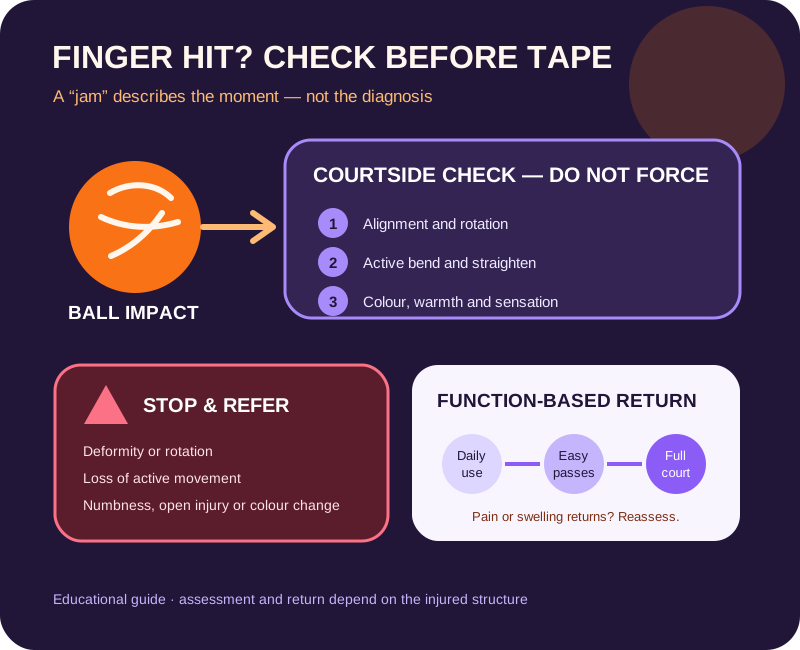
Key points
- Finger, hand and wrist injuries are part of the netball injury pattern, and younger players sustain proportionally more upper-limb injuries than adults.
- A ball can hyperextend a finger, fracture bone, dislocate a joint or disrupt a tendon; the label 'jammed finger' does not identify which structure is injured.
- Visible deformity, rotation, loss of active movement, numbness, marked swelling or an open injury means stop play and obtain prompt assessment rather than taping the finger straight.
Treat the mechanism as information, not a diagnosis
This guide is for netball players, coaches, families, officials and event medical teams. A fast pass can strike the end of a finger, force a joint backwards or sideways, or trap the hand in a contest. Similar early pain and swelling can come from a sprain, volar-plate injury, fracture, dislocation or tendon injury. Calling all of them a 'jammed finger' can delay the assessment that separates those problems.
A systematic review of 46 netball studies found that younger players sustained proportionally more upper-limb injuries, including wrist, hand and arm fractures, than adults. In one tournament study summarised by the review, fingers accounted for 9.3% of injuries. Definitions and surveillance methods varied widely, so those figures describe studied groups rather than predicting one team's risk.
Stop play for alignment, movement or sensation concerns
Remove rings early if this can be done safely before swelling increases. Compare the finger with the other hand without forcing it straight: look for an abnormal angle, rotation when making a gentle fist, an open wound, rapidly increasing swelling or a fingertip that droops. Ask about numbness, tingling and whether the athlete can actively bend and straighten each joint. Severe pain, pale or blue colour, loss of sensation or obvious deformity needs urgent assessment.
Do not ask an untrained teammate to pull a dislocated joint back into place. A fracture, joint-surface injury or tendon disruption can coexist, and an attempted reduction can add harm. Protect the hand, stop ball contact and follow the event's first-aid and referral plan. Imaging or specialist review is a clinical decision; a normal-looking finger on court does not settle it.
Understand why hyperextension deserves follow-up
The volar plate supports the palm side of a finger joint and resists excessive backward movement. A ball striking the fingertip can tear it or pull off a small piece of bone. Pain and bruising around the middle joint may look modest at first, yet untreated instability or stiffness can interfere with catching, passing and ordinary hand use. A qualified clinician or hand therapist can decide whether splinting, protected movement or further investigation is appropriate.
Mallet-finger and central-slip tendon injuries are different patterns that can also follow ball impact. Inability to actively straighten the fingertip or middle joint should not be tested repeatedly or managed from a generic taping video. Early management differs by structure, so the practical coaching rule is simple: loss of active movement is a referral sign, not a toughness test.
Sources: 4
Tape is support, not clearance
Buddy taping may be used for selected stable injuries when recommended by a clinician, but tape can conceal rotation, compress swelling or create skin and circulation problems. Check colour, warmth and sensation after any approved support and follow the clinician's duration and exercise plan. Do not copy a teammate's splint because two painful fingers can involve different tissues and stability.
Return should progress from comfortable daily hand use to controlled catching and passing, then harder and less predictable ball contacts before full training or competition. The athlete needs enough movement, strength, coordination and confidence for their position without worsening pain or swelling during and after the session. No universal number of days applies to every sprain, fracture, dislocation or tendon injury.
Make reporting easy for younger teams
A survey of 200 junior netball players found fingers among commonly recalled injury sites, but retrospective self-report cannot show which preventive strategy works. Coaches can still reduce delay by normalising immediate reporting, keeping jewellery rules clear, teaching safe catching progressions and ensuring that an injured player can leave without losing selection or disappointing the team.
Record the mechanism, hand, finger, visible changes and referral outcome so recurrent patterns can inform coaching and venue planning. This article does not diagnose an injury, teach reduction or prescribe taping. Apply current competition rules and obtain professional assessment when alignment, movement, sensation or recovery is uncertain.