
Netball load monitoring: use trends to start a conversation, not predict an injury
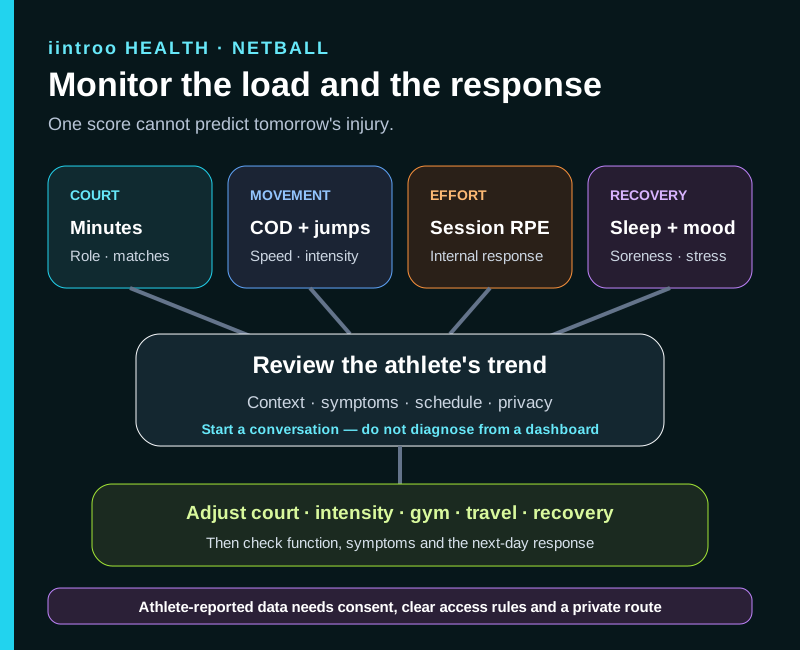
Court minutes, change of direction and session effort describe different parts of netball load. Combine them with sleep, soreness, mood and athlete context without turning one score into a diagnosis.
Key points
- Netball-specific evidence on training load, fatigue and recovery remains limited and has been dominated by female elite or pre-elite cohorts.
- A session-effort score, wearable metric or wellness questionnaire describes one part of exposure or response; none predicts injury or illness for an individual player.
- Repeated changes from an athlete's own baseline should trigger conversation, clinical review when indicated and adjustment of the whole schedule rather than punishment or automatic exclusion.
Define what each number represents
This guide is for netball players, coaches and support teams. External load describes work performed, such as court minutes, jumps, accelerations and changes of direction. Internal load describes the athlete's response, often estimated with heart rate or session rating of perceived exertion. Sleep, soreness, stress, mood, motivation and perceived recovery add context; they are not interchangeable with workload.
Choose a small set of measures that the team can collect consistently and explain to players. A simple session-effort rating multiplied by duration may be more useful in a community programme than an expensive device used inconsistently. Wearable outputs depend on the device, algorithm and placement, so values from different systems should not be merged as though they were the same unit.
Interpret trends, not magic thresholds
In a retrospective study of 536 elite and pre-elite female netballers, preparedness variables showed complex, bidirectional associations with injury and illness across different time windows. This does not produce a cut-off that predicts who will be injured tomorrow. Pain, poor sleep or low mood can follow an emerging health problem as well as precede a missed session.
A 2025 netball consensus identified many possible risk factors across individual, lifestyle, training, medical, facility and equipment domains. Most underlying studies were limited, and a 2024 methods review highlighted inconsistent definitions and sparse continuous surveillance. Avoid labelling one weekly ratio, colour or wellness score as a validated netball injury test.
Plan tournament recovery before the first centre pass
A three-day study of nine elite female players found lower perceived recovery and higher stress during and after four tournament matches. The sample was small and elite, but it illustrates why match density, travel, warm-ups, bench time and the days after competition belong in the plan rather than being treated as separate from training.
Map likely court exposure by position and role, schedule food and fluid access, protect sleep opportunities and plan substitutions or modified sessions where feasible. Count repeated changes of direction, jumping and high-intensity work alongside total duration. Recovery tools should not distract from basic scheduling, nutrition, sleep and appropriate medical care.
Make monitoring safe and useful
Tell players why information is collected, who can see it, how long it is stored and how it may affect selection. Give them a way to report symptoms privately. A wellbeing score should not be used to shame an athlete, force disclosure or prove commitment. Adolescents need age-appropriate consent, safeguarding and family communication.
Review each athlete against their own recent pattern and known context rather than a team average alone. A repeated shift in sleep, fatigue, soreness, mood, motivation or performance should prompt a conversation. Sudden severe pain, inability to bear weight, significant swelling, neurological symptoms, chest symptoms or acute mental-health danger requires appropriate clinical or emergency assessment.
Change the programme, then check the response
An adjustment might change court minutes, intensity, jumping or change-of-direction volume, strength work, travel demands or recovery time. It is not always complete rest. Record what changed and whether symptoms, function and training response improved. Coordinate school, club, representative and gym loads so one coach does not unknowingly replace work removed by another.
Netball research has largely studied female players and high-performance settings, so the same distributions cannot be assumed for men, mixed teams, children or community athletes. This article does not prescribe a workload threshold, diagnose overtraining or predict injury.