
Noonan syndrome in sport: let current heart, bleeding and access needs guide participation
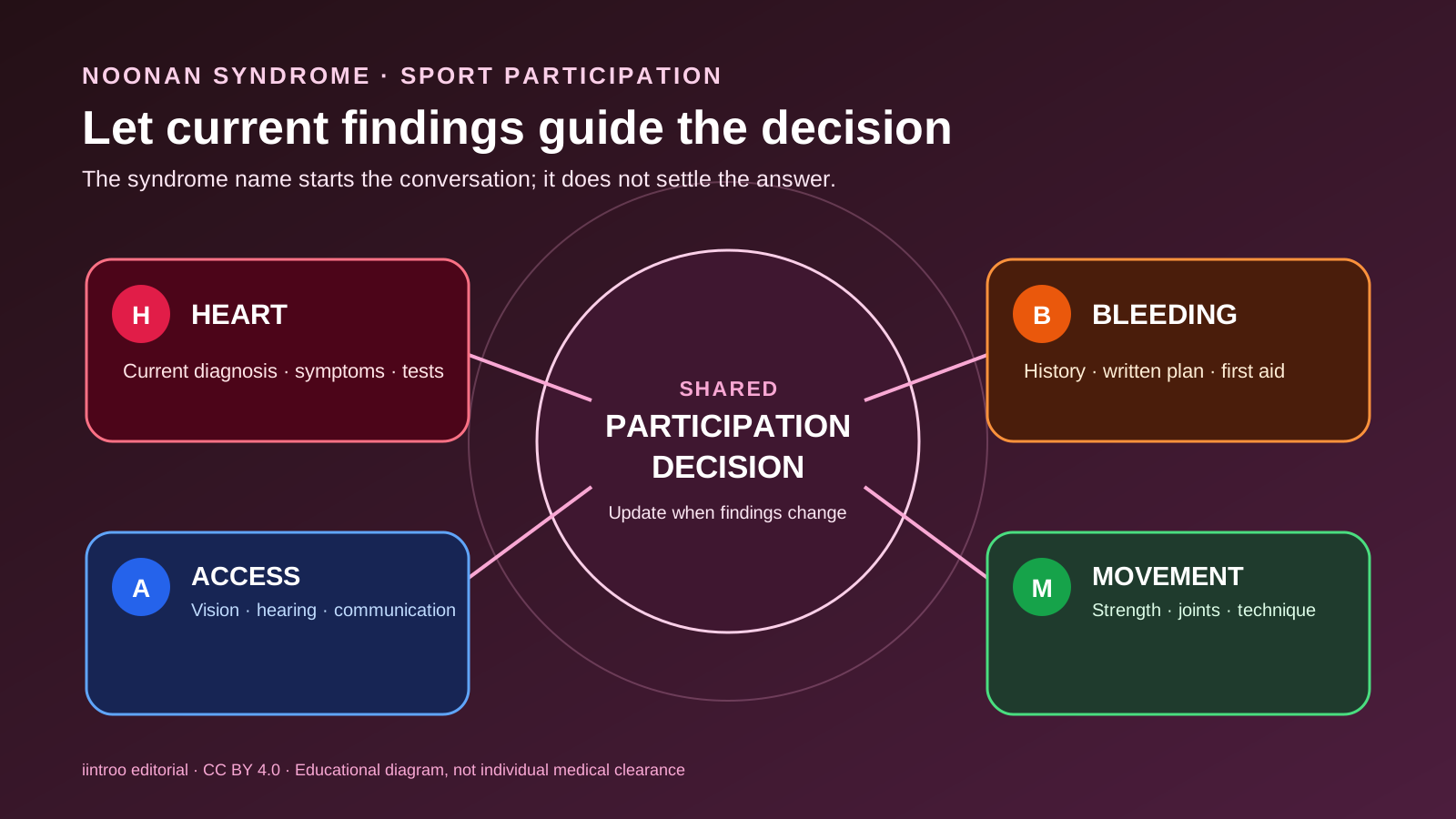
Noonan syndrome can involve the heart, bleeding, vision, hearing and movement. Participation should follow current findings, symptoms and shared decisions.
Key points
- Noonan syndrome varies widely; pulmonary valve stenosis, hypertrophic cardiomyopathy, other congenital heart disease or arrhythmia can change sport decisions.
- Bleeding history, vision, hearing, musculoskeletal function and learning or communication access belong in planning alongside cardiovascular findings.
- Fainting, exertional chest pain, new sustained palpitations, severe breathlessness, neurological symptoms or uncontrolled bleeding needs urgent assessment.
Define the athlete's current phenotype, not a syndrome label
This guide is for people with Noonan syndrome, families, coaches and clinical teams. Noonan syndrome is a RASopathy with variable features that can include short stature, pulmonary valve stenosis, hypertrophic cardiomyopathy, other congenital heart disease, arrhythmia, bleeding tendency, lymphatic disease, chest-wall or spinal differences, hypotonia, developmental differences and vision or hearing impairment. The gene, childhood operation or appearance does not tell a coach what today's capacity or risk is. Some people have few limitations; others need detailed adaptation and specialist follow-up.
GeneReviews recommends continuing cardiovascular surveillance based on age and findings, plus attention to hearing, vision and bleeding history. Before a new sport or substantial training change, establish the current cardiac diagnosis and symptoms, medicines, previous intervention, exercise advice, bleeding plan, hearing and visual access, mobility and communication needs. Coaches should not interpret echocardiographic gradients, ventricular wall thickness, rhythm tests or coagulation factors. Their role is to translate documented advice into an accessible session and report meaningful change.
Make heart decisions diagnosis-specific and shared
The 2025 AHA/ACC competitive-sports statement moved away from automatic exclusion for many cardiovascular conditions and emphasizes individualized assessment and shared decision-making. That approach does not mean every activity is safe. Pulmonary stenosis, repaired congenital heart disease, hypertrophic cardiomyopathy and arrhythmia have different physiology and need condition-specific evaluation. For an athlete with hypertrophic cardiomyopathy, the 2024 HCM guideline supports nuanced discussion of activity, symptoms and risk rather than a syndrome-wide rule.
Noonan-specific sport trials are scarce, so cardiovascular guidance is largely extrapolated from congenital heart disease and cardiomyopathy populations. The 2026 Japanese Noonan consensus describes the breadth of cardiac phenotypes and the need for lifelong care, while ESC cardiomyopathy guidance also favors individualized assessment. These documents cannot produce a universal safe intensity, competition category or interval between tests. A previous normal study is reassuring only within its clinical context; it does not cancel new fainting, chest pain, palpitations or declining tolerance.
Integrate bleeding, sensory access and movement
Ask about easy bruising, nosebleeds, prolonged bleeding after dental work or surgery, known factor deficiency and the written response plan. Routine contact restrictions should not be invented from diagnosis alone, but unresolved bleeding tendency matters when choosing collision exposure, remote venues and first-aid readiness. GeneReviews advises evaluation when bleeding is suspected and before procedures. Coaches should not recommend aspirin or other pain medicine, interpret normal-looking bruises as proof of safety, or decide that a normal basic blood count excludes a coagulation problem.
Vision or hearing differences can change starts, whistles, spatial judgement and communication. Use visible and audible cues, confirm comprehension, control glare and background noise, and orient the athlete to boundaries and emergency signals. Hypotonia, joint laxity, chest-wall shape, scoliosis or prior surgery may affect strength and technique; build from stable movement and progress one variable at a time. A wearable cannot assess outflow obstruction, bleeding risk or sensory access. Record symptoms, near-falls, bruising and recovery alongside performance.
Escalate symptoms and return through updated findings
Stop activity and seek urgent assessment for fainting, exertional chest pain, sustained palpitations with dizziness, severe or rapidly worsening breathlessness, blue or grey colour, a new focal neurological deficit, collapse or bleeding that does not stop with the person's plan. A significant head impact, rapidly expanding swelling or sudden severe headache needs prompt evaluation, especially when a bleeding disorder is known or suspected. Do not rely on a watch rhythm, a previous clearance letter or absence of dramatic bruising to dismiss new symptoms.
After a cardiac event, procedure, significant bleed, concussion, surgery or material change in function, return through daily activity, easy conditioning and sport-specific tasks according to updated clinical advice. There is no universal valve gradient, wall thickness, rhythm result, factor level or symptom-free interval that clears every athlete. This article cannot diagnose Noonan syndrome, interpret genetic, cardiac or bleeding tests, prescribe exercise or medicine, or clear competition. It offers a framework for informed participation that respects both current physiology and practical access.