
Omega-3s for athlete recovery: promising soreness results, no performance guarantee
Omega-3 trials suggest possible soreness benefits, but products and methods vary. Compare current evidence, food sources, safety and supplement risk in sport.
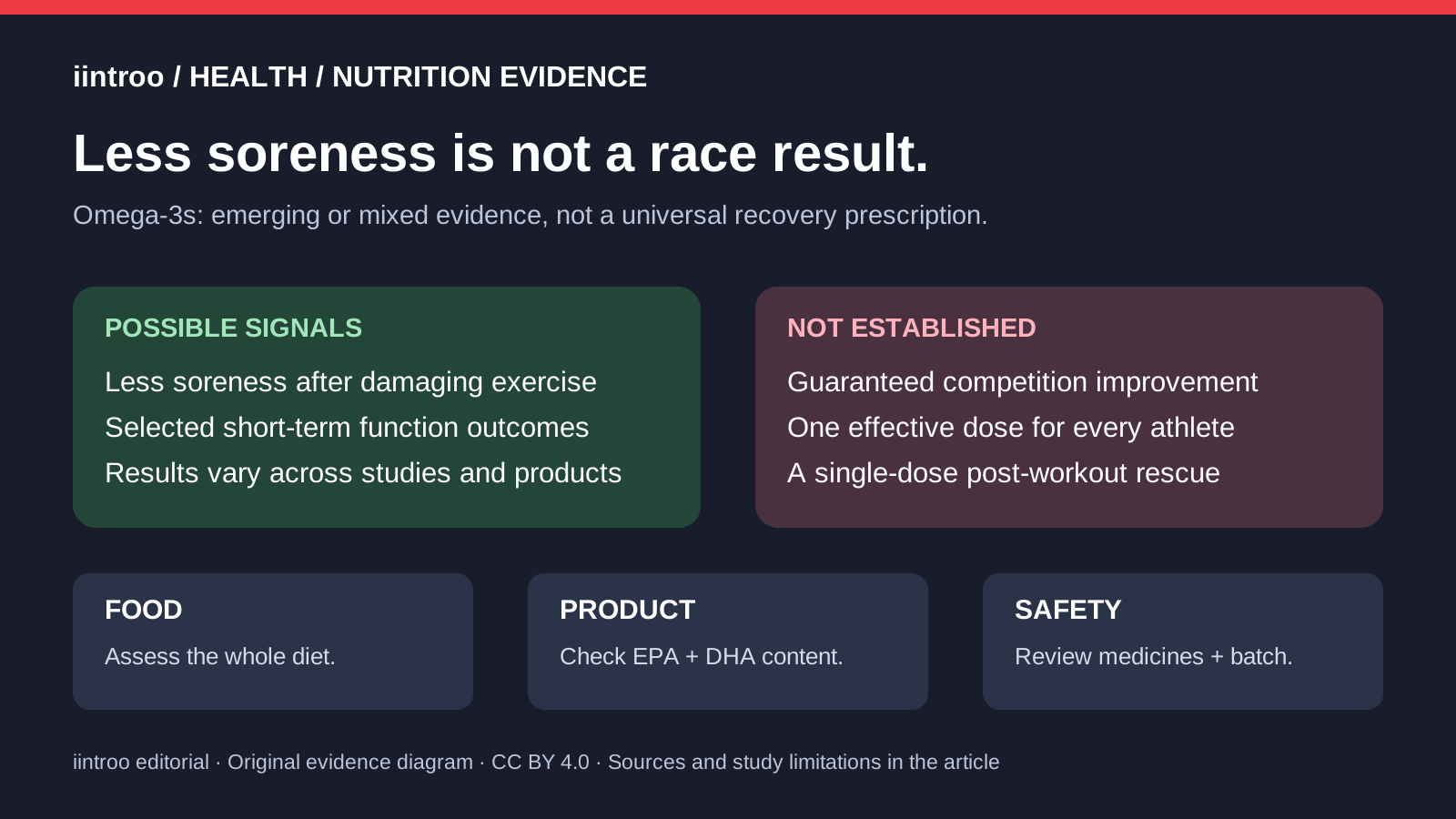
Key points
- AIS places fish oils in Group B: emerging or mixed evidence for selected, monitored situations.
- A 2026 review included 43 studies, but pooled only nine eccentric-exercise trials and could not establish an effective dosing strategy.
- Less soreness after laboratory exercise is not proof of faster racing, injury prevention or a universal need for supplements.
Start with the outcome you want to change
This guide is for athletes and coaches considering fish oil or algal omega-3 products for recovery. EPA and DHA are long-chain omega-3 fats, not a substitute for a well-supported training diet. A claim about blood fatty-acid status is different from a claim about soreness, muscle function or winning a competition.
AIS currently places fish oils in Group B, meaning emerging or mixed support in selected circumstances with individual monitoring. That is not a recommendation that every athlete take them. Begin with the actual problem—persistent soreness, a limited diet or repeated difficulty recovering—and discuss the wider picture with a sports dietitian.
What the latest synthesis found
A systematic review published in April 2026 examined 43 studies of long-chain omega-3 supplementation and exercise-related muscle outcomes. Its search ended in January 2025. Only nine placebo-controlled eccentric-exercise trials could be combined in the meta-analysis. Pooled results favoured supplementation for several soreness, function and muscle-damage outcomes at peak impairment.
The authors nevertheless described the wider evidence as equivocal and methodologically limited, and could not identify an effective dosing strategy. Participants, products, duration and exercise tests differed. A pooled signal after deliberately muscle-damaging exercise does not establish better performance throughout a season or show that one shop-bought product reproduces the result.
Sources: 3
New trials add detail, not a universal recipe
A May 2026 double-blind, pair-matched trial studied 38 physically trained adults with low fatty-fish intake: 26 received DHA and 12 a control over 12 weeks. After unfamiliar eccentric cycling, the DHA group reported less soreness at 24 and 48 hours, with selected recovery findings. The small, unequal groups and short post-exercise observation limit application to competition. Not every function measure showed a clear between-group effect.
A separate 2024 trial allocated only 30 men across four groups. EPA alone and DHA alone showed some benefits, while the combined formulation did not clearly improve recovery. Such small studies cannot reliably rank products. Both studies involved sustained intake, so they do not support a one-off capsule as an immediate rescue after a hard session.
Food and labels answer different questions
Salmon, sardines and herring provide EPA and DHA. Walnuts, chia and flax provide ALA, another omega-3 fat; conversion from ALA to long-chain forms is limited. Algal oils can provide DHA, and some also contain EPA, offering an option for people who avoid fish. These distinctions help a dietitian assess the whole diet without assuming every plant-based athlete is deficient.
If a supplement is being considered, read its EPA and DHA amounts rather than the large total fish-oil figure on the front. Two capsules with identical oil weight may have different compositions. Check additional ingredients, storage instructions and expiry dates. An omega-3 blood index is not a validated standalone target for sporting performance, and a higher number is not proof of better recovery.
Safety is part of the decision
Omega-3 supplements can cause unpleasant taste, reflux or gastrointestinal symptoms. Discuss medication use—especially anticoagulants—and relevant medical history with a clinician before starting or escalating intake. High-dose, long-term studies in people with cardiovascular disease or elevated cardiovascular risk have reported increased atrial-fibrillation risk. Those populations are not equivalent to healthy athletes, but the finding argues against assuming that more is automatically better.
Independent batch testing can reduce the risk of prohibited substances in sport supplements, not eliminate it. Check the specific batch rather than relying on a brand's reputation or a professional athlete's endorsement. Products combining fish oil with other ingredients add further questions about evidence and exposure.
A useful review is broader than a capsule count
Agree what would count as a worthwhile change and how it will be assessed before buying into a recovery claim. Consider diet, training context and tolerance together, with professional guidance where needed. Persistent pain or a marked fall in function should not be managed by increasing supplements and hoping for the best.
This is an evidence explanation, not an individual dose recommendation or treatment plan. The defensible conclusion is modest: omega-3s may help selected recovery outcomes, but current evidence does not make them a universal performance aid, an injury-prevention strategy or a replacement for adequate food and recovery planning.