
Pole vault safety: inspect the landing system before the runway opens
Pole-vault safety starts with the box, pads, poles and surroundings. Inspect the landing system and progress speed and skill under qualified supervision.
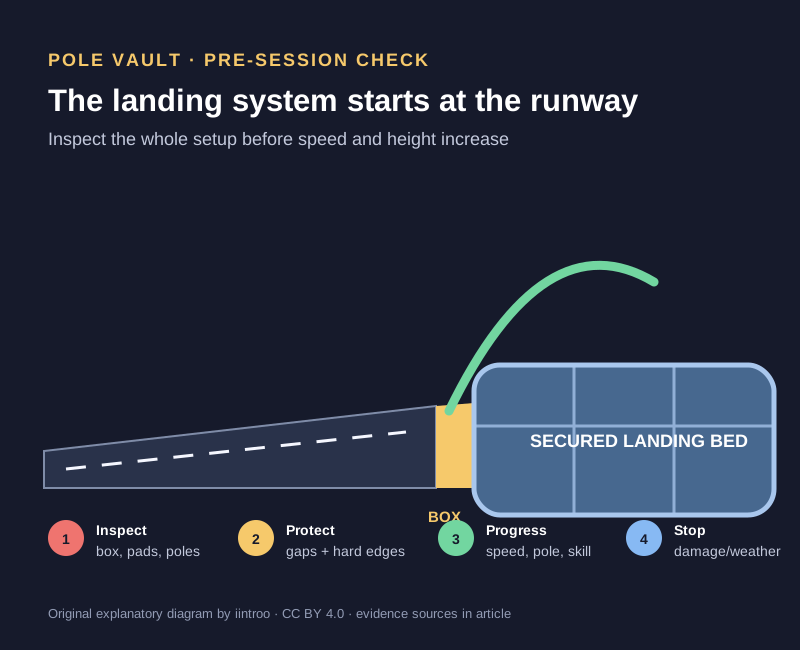
Key points
- Catastrophic pole-vault injuries are uncommon but can occur when an athlete lands in or around the box or outside the landing system; compliant dimensions do not replace inspection and supervision.
- The box, landing modules, standards, runway, pole and surrounding hard surfaces should be checked before use and again if weather, movement or damage changes the setup.
- Previous injury, fatigue, technique and training load matter alongside equipment, so progression should be coach-supervised and symptoms should not be hidden to preserve a practice attempt.
Treat the facility as part of the safety system
This guide is for vaulters, coaches, officials, facility managers and medical teams. World Athletics rules specify the competition apparatus and landing-area dimensions, while its medical guidance calls for regular inspection, secure landing modules, attention to impacted or water-damaged foam, safe surrounds and checks for damaged poles. Meeting a dimension on paper does not prove that today's setup is safe.
Before the runway opens, inspect the box, planting area, standards, crossbar supports, pad modules, covers, gaps, seams and surrounding hard surfaces. Confirm that modules are secured and have not shifted. Recheck after wind, rain, transport, a pad movement or a hard landing. A damaged pole, saturated foam, exposed base or unstable standard is a stop condition, not a problem to monitor between attempts.
Protect the box and the edges, not only the middle
A nine-year US follow-up identified 19 catastrophic injuries from 2003 to 2011; most involved landing in or around the vault box, while some followed a miss beyond the side or back and one involved a broken pole. The study is historical and country-specific, but it shows why attention cannot end at enlarging the centre of the landing bed.
Use the governing body's current rules and certified equipment for the competition level. Do not improvise extra padding in a way that creates gaps, catches or a new hard edge. Coaches and officials should know who has authority to close the runway and should document inspection, defects and corrective action rather than relying on memory.
Progress speed, pole and skill together
Prospective high-school and collegiate studies reported injuries across lower limbs, back and upper limbs, with incorrect landing and plant or take-off phases featuring in the patterns. Previous pole-vault injury was associated with further injury. These cohorts do not validate one screening test, but they support asking about prior problems and observing the whole attempt.
Approach length and speed, grip height, pole stiffness, take-off skill and landing control should progress under qualified coaching. Beginners need landing education before maximal approaches. A 2025 observational event study linked the recorded competition injuries to less experienced athletes and non-optimal landings, but only eight injuries occurred; it generates useful coaching questions rather than proving a universal technique formula.
Stop when conditions or the athlete change
Wind, rain, poor visibility, runway contamination and equipment movement can change risk during a session. The responsible official or coach should pause and reassess rather than letting the next attempt create the test. Fatigue, disrupted approach rhythm, repeated aborted plants or an athlete who cannot follow instructions also justify stepping back.
New neck or back pain, limb weakness, numbness, loss of coordination, severe headache, chest or abdominal pain, deformity or inability to bear weight after a landing requires urgent assessment and spinal precautions when indicated. Lesser pain that changes the run, plant or swing still deserves evaluation before returning to full approach speed.
Return to vaulting through controlled exposure
After injury, return should rebuild ordinary function, running and jumping capacity, technical drills, controlled short-approach vaults and then full approaches at the relevant pole and competition demand. Criteria depend on the diagnosis and event phase that caused symptoms. A pain-free jog or one successful plant is not full clearance.
Prospective studies are modest in size and come largely from US school and college programmes; catastrophic surveillance is rarer and historical. They do not establish one workload limit, pole selection rule or return interval. This article supports facility checks and graded coaching but does not replace the current rulebook, equipment instructions or individual medical care.