
Sauna after exercise: heat stress is not guaranteed recovery
Post-exercise sauna and hot-water immersion can add heat stress, but evidence for faster recovery or better endurance remains uncertain and safety depends on context.
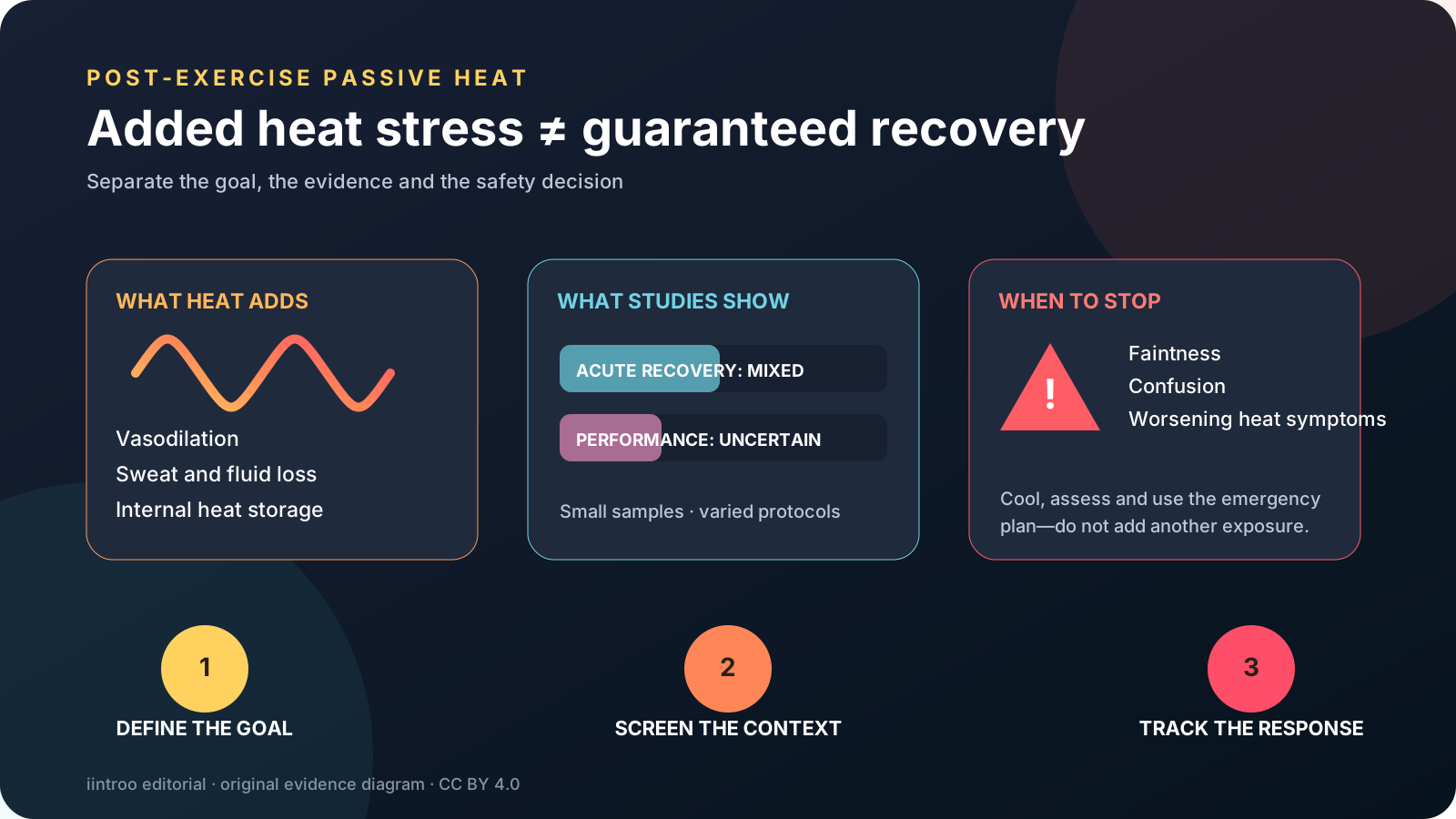
Key points
- A 2025 systematic review of 14 studies and 194 participants found mixed acute recovery results and low-to-moderate overall evidence quality.
- A separate meta-analysis of 10 studies and 199 participants judged performance effects uncertain, with low or very-low certainty and samples dominated by young men.
- Post-exercise heat can add vasodilation, dehydration and internal heat storage; faintness, confusion or worsening heat-illness symptoms require cooling and medical action, not another exposure.
First decide whether the goal is recovery or adaptation
This guide is for adult athletes, coaches and performance staff considering sauna or hot-water immersion after training. Acute recovery asks whether the next session feels or performs better; heat adaptation asks whether repeated exposure changes later responses to heat or endurance work. Those are different questions, and a short-term physiological change is not automatically a meaningful performance benefit.
Sauna temperature, humidity, duration and posture differ from hot-water immersion depth and temperature. Exercise mode, environmental heat, recovery interval and participant training status also vary. Treating every passive-heat protocol as the same intervention obscures both dose and risk.
The recovery evidence is mixed
A 2025 systematic review included 14 randomised or crossover studies with 194 participants. Of nine acute studies, four reported no performance effect, four reported a benefit and one reported an adverse effect. The authors rated the overall evidence low to moderate and could not meta-analyse it because protocols and outcomes were too heterogeneous.
A 2026 review comparing hot- and cold-water immersion found only eight eligible studies and no consistent reduction in soreness or improvement in perceived recovery. Selected findings for sleep or power do not establish that a hot bath broadly accelerates recovery. Small samples, different time points and different exercise tasks limit generalisation.
Adaptation claims exceed the certainty of the data
The 14-study review found that chronic post-exercise heating may help running performance in hot conditions, while repeated exposure did not improve cycling performance or maximal oxygen uptake. A separate meta-analysis of 10 studies and 199 participants found trivial, imprecise effects on performance in both hot and temperate conditions and graded certainty low or very low.
Participants in that meta-analysis were mostly young men—156 men and 43 women—and protocols differed. The findings do not justify a universal sauna schedule, a claim that heat replaces acclimatisation training, or an assumption that the same response applies across sex, age, disability, medical history and sport.
Add heat only after accounting for the heat already absorbed
Exercise, especially in hot conditions, can leave an athlete dehydrated and still storing heat. Sauna or hot-water immersion then adds vasodilation and thermal strain. CDC guidance tells athletes who feel faint or weak in heat to stop and move to a cool place. A clinical review describes syncope, hypotension, heat illness and renal or electrolyte problems as possible acute heat-exposure presentations.
A retrospective trauma-centre study of 209 sauna-related injuries found slips or falls and dizziness or syncope were common pathways. That selected clinical sample cannot estimate risk for all sauna users, but it shows why supervision, safe entry and exit, avoiding alcohol and responding early to dizziness matter. Hydration should replace realistic losses without forced overdrinking; individual medical advice may be needed.
Use a safety screen, not an influencer protocol
Do not begin or continue passive heat when an athlete has suspected heat illness, fever, vomiting, significant dehydration, faintness or confusion. Collapse, altered mental status, seizure or worsening severe symptoms is an emergency: remove from heat, activate local emergency care and follow trained medical instructions. An athlete with cardiovascular, kidney, blood-pressure, pregnancy, medication or heat-tolerance concerns should seek personalised clinical advice before exposure.
If a healthy adult team trials passive heat, define the purpose, environment, supervision, stop signals and next-session outcome in advance. Record adverse effects as carefully as performance. This educational synthesis does not prescribe temperature, duration, fluid or electrolyte intake, and it does not promise recovery or adaptation.