
Road cycling and bone health: why fitness is only part of the picture
Explore cyclists' bone-health evidence, off-bike loading, adequate fuelling and the reasons an individual medical assessment may be needed.
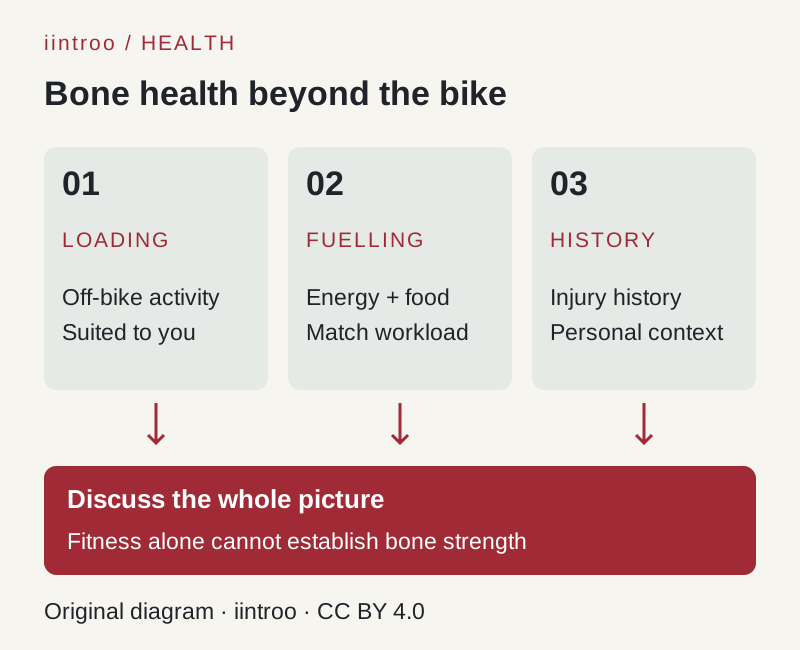
Key points
- Aerobic fitness does not establish bone strength; cycling provides limited impact loading.
- Bone-health planning should consider fuelling and off-bike activity together.
- Low bone density in a research group cannot diagnose an individual cyclist.
A strong engine does not measure the skeleton
This guide is for road cyclists and the coaches supporting them, particularly when most training happens on the bike. Cycling can develop considerable endurance while providing relatively little impact loading. The 2026 UCI nutrition review describes several interacting influences on bone, including the sport's mechanical demands, energy availability and nutrient intake.
A 2023 cross-sectional study compared 39 male road cyclists, 30 mountain bikers and 27 untrained controls. After adjustment for body mass, lumbar-spine bone density was lower in both cycling groups; femoral-neck differences were not significant. This snapshot cannot prove cycling caused the difference, predict an individual's fracture risk or describe women and younger riders equally well.
Add a bone-health conversation to training planning
A 2025 scoping review found only five eligible intervention studies in athletes from low-impact sports. They tested varied approaches, including resistance exercise and jumping, across swimmers and cyclists. Some findings were promising, but study methods and reporting varied. Improving a bone-density measure is also not the same as demonstrating fewer fractures.
Discuss suitable off-bike loading with a qualified professional rather than copying an online jumping challenge. The evidence does not establish one optimal routine for every cyclist. Existing pain, fracture history, training experience and other health conditions change what is appropriate. Someone recovering from a suspected bone injury should not use impact exercise as a self-test.
Fuelling belongs in the same plan
The UCI review places adequate energy and nutrient availability alongside mechanical loading. Review whether meals and ride fuelling match the actual workload, especially during high-volume blocks, travel or intentional weight change. Calcium and vitamin D deserve attention, but a supplement does not compensate for persistent under-fuelling or replace a varied diet.
The IOC describes problematic low energy availability as a possible contributor to impaired musculoskeletal and other health outcomes in female and male athletes. A rider's appearance or power output cannot rule it out. A sports dietitian can help identify practical barriers to eating enough without turning the discussion into a target body weight.
Let personal history guide assessment
Recurrent bone injuries, persistent focal pain, menstrual changes, restrictive eating or unexplained deterioration in recovery are reasons to seek professional assessment. These observations are not diagnostic by themselves. A clinician can consider injury history, examination, diet, hormonal factors and whether imaging or other investigations would answer a specific question.
Do not interpret a scan in isolation or arrange repeated scans simply to track training success. The IOC's clinical framework requires professional interpretation, and its published correction updated assessment-related material. This guide does not reproduce its risk categories or offer self-clearance to ride through pain.
Keep the limits of cycling research visible
Road-cycling findings should not automatically be applied to track sprinting, BMX, mountain biking or adaptive cycling. Even within road cycling, studies differ in age, sex, competitive level and training history. Bone density is one part of skeletal health, and group averages conceal substantial individual variation.
A useful team discussion therefore asks three separate questions: what loading occurs away from the bike, whether fuelling supports the programme, and what the rider's health history suggests. Record these considerations alongside training plans. There is no evidence-based reason to promise that a single food, supplement or off-bike drill will prevent every fracture.