
Rugby shoulder dislocation: rebuild contact readiness, not just time
After a shoulder dislocation, normal daily movement is only one milestone. Rugby return also needs stability, strength, confidence, fitness and progressive contact skills.
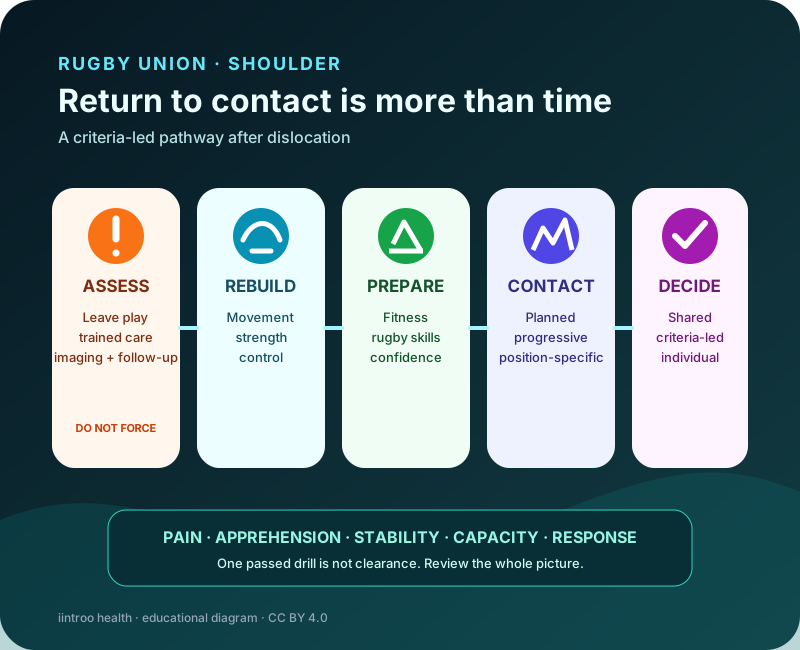
Key points
- A suspected shoulder dislocation should end participation and receive trained assessment; do not force the joint back into place on the touchline.
- Rugby-specific expert consensus supports a criteria-led return that considers pain, apprehension, stability, movement, muscle function, proprioception, fitness and rugby skills rather than time alone.
- Recurrence is a particular concern in young and collision-sport athletes, but evidence cannot supply one treatment choice or return date for every player.
Treat the first incident as an injury, not a sideline test
This guide is for rugby players, families, coaches and health teams. World Rugby identifies the tackle as a major mechanism for shoulder dislocation. Severe pain, a visible change in contour or loss of shoulder function after contact should stop participation. Check the event emergency plan and obtain appropriately trained medical help.
Do not ask a player to keep tackling, repeatedly test the joint or force it back into place. World Rugby guidance advises removal from play, neurovascular assessment by trained personnel and hospital imaging and follow-up. A cold or pale limb, absent pulse, progressive numbness or weakness, open injury or major trauma needs urgent emergency care.
Establish the diagnosis and the player's context
A dislocation can be accompanied by fracture, labral injury, nerve symptoms or recurrent instability. The plan depends on age, direction and number of dislocations, associated damage, playing position, competition level and the player's goals. An online guide cannot decide between nonoperative and operative management.
A 2023 systematic review of nonoperative first-time anterior instability found substantial recurrence, especially in younger collision athletes, but included varied studies and treatment programmes. It supports an informed individual discussion; it does not prove that every rugby player needs surgery or that one pathway prevents recurrence.
Rebuild capacity before adding collision
Early rehabilitation is diagnosis-specific. Over time, assessment may cover pain, range of motion, clinical stability, strength and power, proprioception and the response to repeated work. Daily comfort or a pain-free jog does not show that the shoulder can control a tackle, fend, fall, scrum or absorb fatigue.
The 2026 rugby Delphi study reached expert consensus on 30 return-to-contact criteria across physical, psychological, fitness and rugby-skill domains. It was a consensus process rather than a trial proving that a particular threshold prevents reinjury, so clinicians should use the domains as a structured conversation, not a universal pass score.
Progress rugby skills and contact deliberately
A staged sequence may move from non-contact handling and conditioning to controlled position-specific skills, pads or bags, planned partner contact and then unpredictable team contact. The sequence, tackle height, volume, intensity and recovery are individual decisions. Record the response during the session and the next day rather than treating completion of one drill as clearance.
Apprehension matters. A player who protects the arm, changes tackle technique or feels unable to commit should be reassessed rather than pushed through contact. Coaches, clinicians and strength staff need one shared plan so club, representative and gym exposures do not combine into an unplanned spike.
Make return a shared, criteria-led decision
Clearance should integrate tissue healing, examination, function under fatigue, rugby demands and the player's confidence and understanding of risk. Protective strapping or padding does not establish stability and must comply with current competition rules. Recurring slipping, pain, weakness or neurological symptoms needs further assessment.
This article provides general education. It does not diagnose an injury, prescribe rehabilitation exercises, select surgery or give a universal return date. A player needs individual review by qualified professionals familiar with shoulder instability and rugby contact demands.