
Running with knee osteoarthritis: what the evidence can—and cannot—tell you
A knee osteoarthritis diagnosis is not an automatic running ban. Understand exercise evidence, its limits and symptoms that need individual assessment.
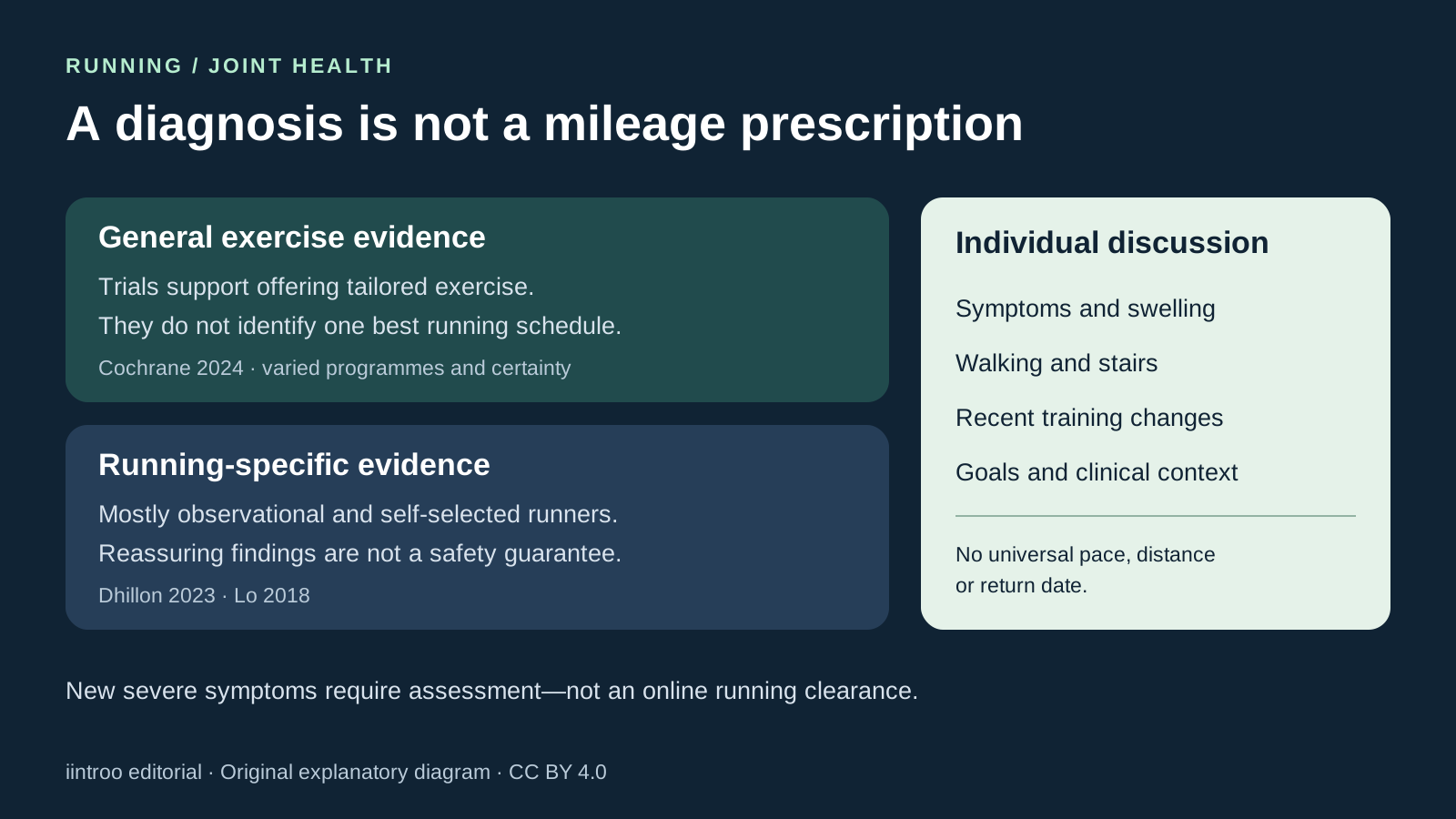
Key points
- Exercise evidence is broader and stronger than evidence about a particular running schedule.
- Self-selected runners in observational studies are not equivalent to everyone newly starting to run.
- Symptoms, function and clinical context matter; neither a scan nor a mileage rule decides everything.
Who this guide is for
This guide is for recreational runners, including older runners, who already have a knee osteoarthritis diagnosis and want to discuss continuing an activity they value. It is not a diagnosis for a newly painful knee, clearance for a race or a programme for recovering from an acute injury. Osteoarthritis and a separate injury can coexist; the label should not explain away every new symptom.
NICE recommends basing management on symptoms and physical function, with tailored therapeutic exercise among the core treatments. That supports an individual discussion about activity, not an automatic prohibition on all running. Equally, it does not establish that a particular person's current training load is suitable.
Exercise helps, but exercise is not synonymous with running
The 2024 Cochrane review included 139 trials involving 12,468 people with knee osteoarthritis. Across varied land-based exercise programmes, exercise probably improved physical function and may have improved pain compared with no treatment, usual care or limited education. The certainty ranged from low to moderate, and the clinical importance of average improvements was uncertain.
Participants and programmes differed substantially. Many trials were small or at risk of bias, and exercise interventions cannot easily conceal treatment allocation from participants. These findings support offering exercise as a treatment option; they do not prescribe a running pace, prove that running is the best exercise for every knee or establish that more training always produces more benefit.
Sources: 2
What the running studies actually show
A 2023 systematic review compared findings across 17 studies containing 7,194 runners and 6,947 non-runners. The authors did not find that running worsened short-term patient-reported or radiological outcomes overall. This is useful evidence against treating running as inevitably destructive, but it is not proof that running prevents osteoarthritis.
Much of the evidence was retrospective, running exposure was inconsistently described, and runners and non-runners differed in age and follow-up. People able and willing to keep running may already have healthier or more tolerant knees. A reassuring group average therefore cannot guarantee safety for a new runner, someone with rapidly changing symptoms or an athlete increasing mileage sharply.
Sources: 3
Established osteoarthritis: a useful but limited cohort
Lo and colleagues studied 1,203 adults aged at least 50 with knee osteoarthritis; 138 reported running. Self-selected running was not associated with greater radiographic progression or new frequent knee pain over the assessed period. The study is especially relevant because it involved people who already had osteoarthritis, rather than only asking whether runners later develop it.
However, running history was collected retrospectively, participation was not randomly assigned, and symptoms may have influenced who continued and how much they ran. This cannot show that asking every non-runner with osteoarthritis to start running would have the same result. It also cannot answer what happens under every competitive training volume or after a substantial change in loading.
Sources: 4
Turn the evidence into a clinical conversation
Discuss your goals, recent training changes, swelling and effects on walking, stairs and everyday life with a physiotherapist or clinician. NICE supports exercise tailored to the person, including strengthening and aerobic fitness, with supervision where useful. Some discomfort can occur when beginning exercise, but persistent or changing problems deserve review rather than a universal instruction to push through.
Seek urgent assessment for inability to bear weight or move the knee, major swelling or deformity, locking, or a hot red knee with fever. These are not problems to manage by adjusting mileage alone. There is no evidence-based universal pain score, weekly distance or return date in the studies above that can replace assessment of your knee and circumstances.