
Tart cherry for athlete recovery: selected signals, no repair guarantee
Tart cherry may influence selected recovery outcomes in some studies, but results are inconsistent and products vary. Start with the recovery problem, not the marketing claim.
Key points
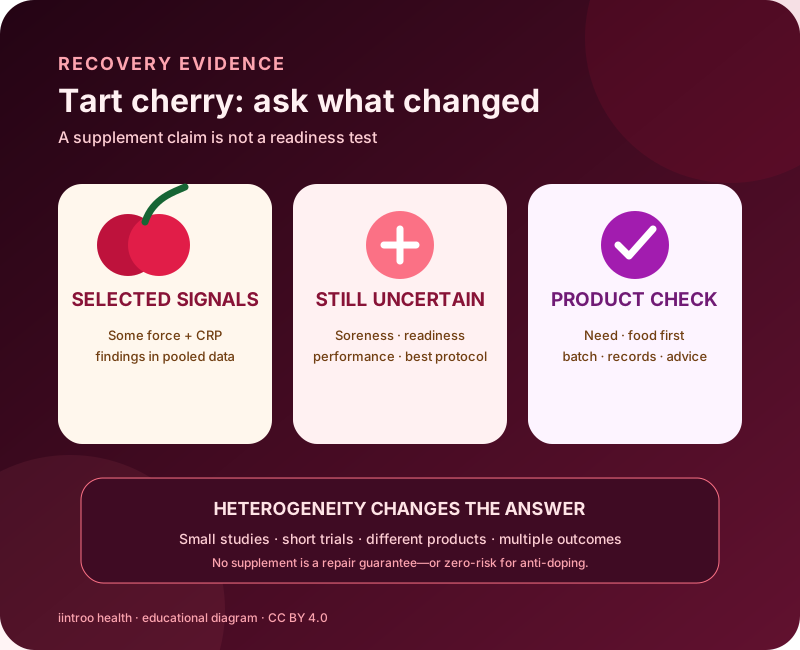
- A 2026 meta-analysis found selected signals for maximal voluntary contraction and C-reactive protein but no pooled benefit for soreness, creatine kinase, several cytokines or range of motion, with substantial heterogeneity.
- Trials are commonly small and short, protocols and products differ, and laboratory markers are not the same as feeling ready or performing well.
- No supplement is risk-free in anti-doping terms. Food-first planning, qualified advice and independent batch testing can reduce—not remove—product risk.
Define the recovery outcome before choosing a product
This guide is for athletes, coaches and support teams considering tart-cherry juice, concentrate, powder or capsules. Start by naming the problem: soreness, force recovery, sleep opportunity, food access or readiness for the next session. A lower blood marker does not automatically solve all of those outcomes.
Product type, cultivar, concentration, dose, timing, exercise model and participant training status vary across studies. That makes the label 'tart cherry' too broad to promise the same result from every serving or to transfer a research protocol directly into an individual plan.
Read the pooled evidence as mixed
A 2026 meta-analysis of 19 trials reported selected pooled signals for maximal voluntary contraction and C-reactive protein, but substantial statistical heterogeneity. It found no pooled effect for muscle soreness, creatine kinase, interleukin-6, tumour necrosis factor-alpha or range of motion. Sensitivity analyses were influenced by individual studies, and certainty varied from very low to moderate.
A 2021 meta-analysis of 14 studies suggested small-to-moderate effects for some recovery measures but not creatine kinase or tumour necrosis factor-alpha. A 2026 scoping review again found inconsistent performance, strength and soreness results across mostly small, short trials. Together, these findings justify uncertainty rather than a recovery guarantee.
Separate biomarker change from useful readiness
Inflammatory and muscle-damage markers can contribute to research, but they are surrogate outcomes. Athletes and teams still need to assess symptoms, sleep, function, training quality and sport-specific performance. A statistical change in one marker may not be large enough to matter in practice.
Some studies may be affected by small samples, multiple outcomes, short follow-up and industry involvement. The 2026 scoping review disclosed Cherry Marketing Institute involvement in its design, interpretation and publication process. Funding or involvement does not invalidate a study, but it belongs in the appraisal alongside methods and consistency.
Put the product inside a food-first plan
First protect adequate energy, carbohydrate, protein, fluids, micronutrients and sleep opportunity. Tart-cherry products should not displace ordinary meals or be used to mask a training load, injury or illness that needs assessment. Juice or concentrate also contributes carbohydrate and energy; gastrointestinal tolerance and practical timing vary.
For tested athletes, Sport Integrity Australia warns that no supplement is 100 per cent safe. Use qualified sports-dietitian advice, check the current anti-doping rules and prefer independently batch-tested products when a supplement is justified. Batch testing lowers contamination risk but does not certify effectiveness or make the risk zero; retain product and batch records.
Treat use as a monitored experiment, not treatment
If an adult athlete and qualified professional decide to trial a product, choose one defined outcome and avoid introducing it for the first time before a major event. Record the exact product, serving, timing, other recovery changes, symptoms and performance context. Stop and seek advice after an adverse reaction.
This article provides general education. It does not prescribe a product, dose or timing and does not treat injury, inflammation, insomnia or disease. Young athletes, pregnant athletes, people taking medicines or anyone with a medical condition should obtain individual clinical and nutrition advice before supplement use.