
Wheelchair rugby in the heat: cooling and hydration must match the athlete
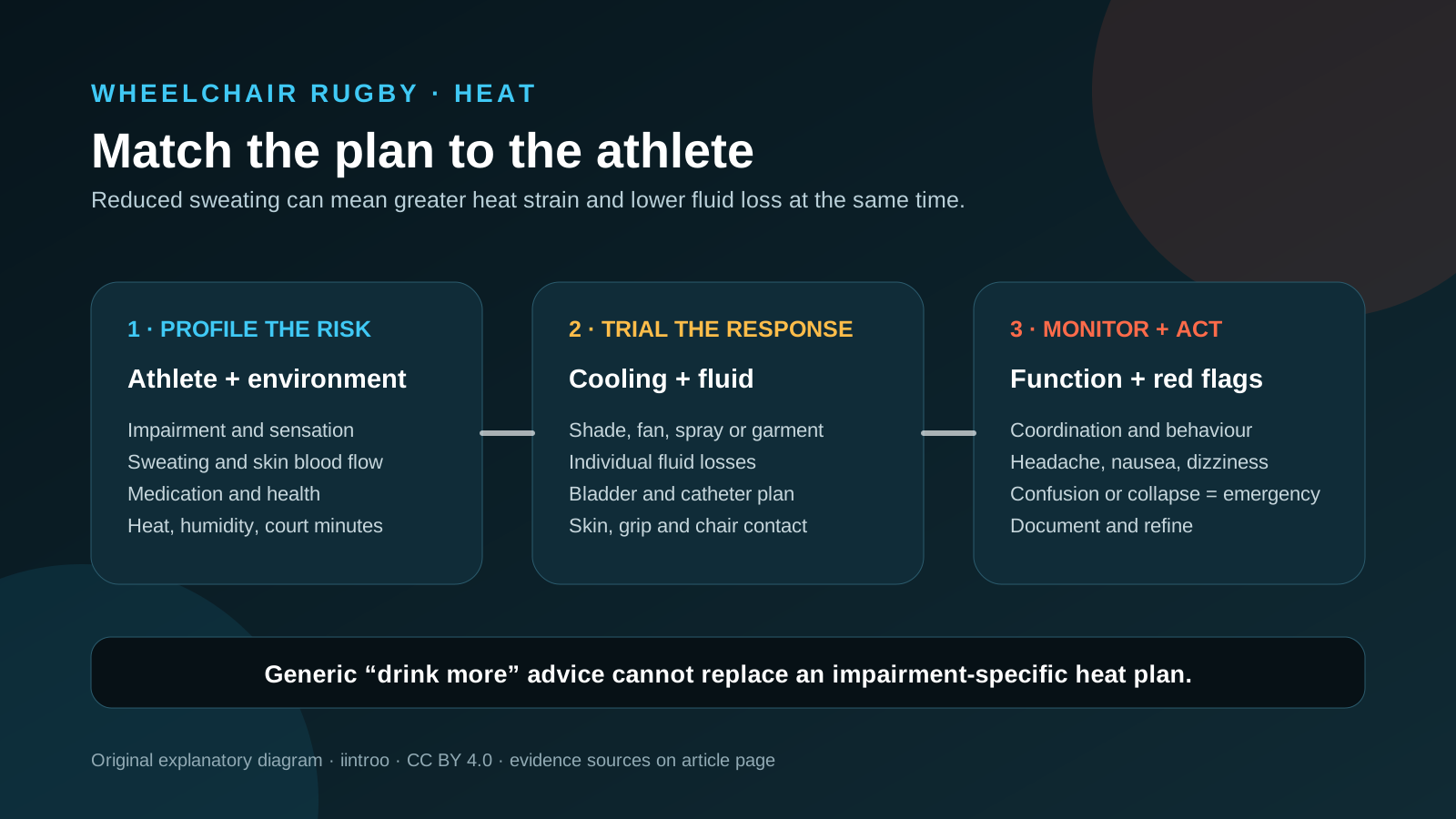
Some wheelchair rugby athletes have reduced sweating and skin blood-flow responses. Heat plans should reflect impairment, environment, toileting and individual fluid loss—not generic drinking advice.
Key points
- Athletes with cervical spinal cord injury can accumulate more heat than teammates doing similar or less external work because heat-loss responses may be impaired.
- Small wheelchair-rugby studies support trialling external cooling, but findings do not identify one universal vest, spray or schedule for every athlete.
- More fluid is not automatically safer: sweat rate, bladder management, autonomic dysreflexia risk, medicines and the environment all affect the plan.
Heat risk is impairment-specific
This guide is for wheelchair rugby athletes, families, coaches, classifiers, event teams and clinicians. Many players have spinal cord injury, but the sport includes different eligible impairments and each person has a distinct pattern of sensation, sweating, skin blood flow, autonomic control, medicines and secondary health conditions. Classification points do not provide a complete heat-risk assessment.
In a 17-player elite match study, the subgroup with cervical spinal cord injury showed a larger rise in core temperature than the non-spinal-impairment subgroup despite lower movement distance and speed. A separate 16-athlete laboratory study found greater thermal strain in athletes with tetraplegia than paraplegia during matched intermittent work. These small male-dominant samples clarify physiology but cannot set one threshold for all players.
Build the plan from athlete, environment and exposure
Review venue temperature and humidity, travel and acclimatisation, warm-up, expected court minutes, chair strapping, uniform and gloves, accessible shade, breaks, recovery time and emergency capability. The athlete's previous heat response and clinical advice matter more than copying a teammate's routine.
Reduced sweating does not mean low heat risk. It can mean less evaporative cooling and sometimes lower fluid loss at the same time. World Wheelchair Rugby therefore cautions that generic 'drink more' messages may not fit; individual sweat and urine patterns, bladder or catheter management and autonomic dysreflexia risk need to be considered together.
Cooling is a practised strategy, not a last-minute gadget
In an eight-player crossover experiment, an ice vest before exercise reduced thermal strain, and adding water spray between simulated quarters reduced skin temperature further. A 2024 nine-player study found water spraying improved several perceptual and physiological measures, while neither tested strategy removed exercise hyperthermia. Different protocols and small samples limit certainty.
External options can include fans, water spray, cool towels, shade or a suitable cooling garment where skin integrity and event rules permit. Trial the exact setup in training, checking transfers, wet surfaces, grip, sensation, skin, chair contact points and access during breaks. A cooling product should not delay recognition of illness.
Monitor beyond thirst and subjective heat
Thirst and thermal sensation may not fully reflect core heat storage in every spinal cord injury. Teams should agree who watches for unusual fatigue, reduced coordination, headache, nausea, dizziness, confusion, behaviour change, skin change or a decline in function. Athlete-specific medical instructions may add other signals.
Confusion, collapse, seizure, altered consciousness or suspected exertional heat stroke is an emergency. Stop activity, activate local emergency care and follow the event's evidence-based rapid-cooling and transfer plan. Do not force oral fluid on a person with altered consciousness or assume a cold towel is definitive treatment.
Document what actually worked
After training or competition, record the environment, minutes played, cooling used, fluid intake and output where appropriate, symptoms, skin issues and recovery. Use qualified Para-sport medical and nutrition staff to refine the plan, especially after illness, medication change, travel or a change in impairment-related function.
This article is general education and does not prescribe fluid volume, core-temperature monitoring, acclimatisation or cooling equipment. Individual clinical guidance, current World Wheelchair Rugby and event rules, and the local emergency action plan take priority.