
Youth wrestling weight cuts: growth and hydration come before the scale
Rapid weight loss can trade a short-term weigh-in target for dehydration, under-fuelling and health risk. Young wrestlers need a growth-aware plan led by adults, not a last-minute cut.
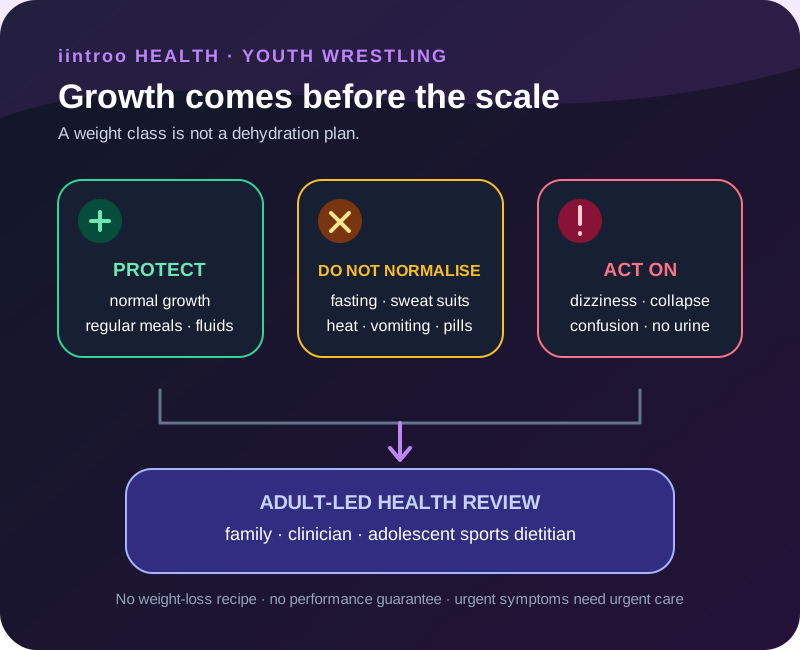
Key points
- Young athletes are still growing; a competition category is not a reason to normalise dehydration, fasting, vomiting, laxatives, diuretics, sweat suits or heated-room weight loss.
- Research in youth combat sports is mostly observational and reports wide variation in weight-cycling practices, so it cannot define a safe personal cut or prove a performance benefit.
- Coaches and families should plan the season around normal growth, accessible food and fluids, and early review by qualified medical and sports-nutrition professionals when weight pressure or symptoms appear.
Treat growth as the first performance system
This guide is for young wrestlers, parents, coaches and support teams. Adolescence includes changes in height, body composition, hormones, bone and psychological development. A weight category that suited an athlete last season may not suit normal growth this season. The responsibility for a safe environment sits with adults and organisations; it should not be transferred to a child as a test of discipline.
A 2022 systematic review found that reported rapid-weight-loss prevalence in young combat-sport athletes varied greatly across observational studies. Methods, ages and definitions differed, and the evidence could not identify a safe individual cut or show that repeatedly cycling weight improves long-term performance. Those limitations argue for caution, not for experimenting until symptoms appear.
Do not turn dehydration into a weigh-in strategy
United World Wrestling's hydration guidance tells wrestlers to begin activity hydrated and warns against dehydration beyond two per cent of body weight. That figure is a warning boundary in general guidance, not a target or permission to lose fluid. A youth programme should not provide a percentage-based cutting recipe because risk depends on age, health, environment, timing and method.
Sweat suits, heated rooms, fluid restriction, prolonged fasting, induced vomiting, laxatives and diuretics can create acute harm and reinforce unsafe behaviour. A young athlete who is confused, collapses, cannot keep fluids down, has chest symptoms, severe headache, very dark or absent urine, or altered consciousness needs urgent medical assessment according to local emergency procedures.
Plan food and fluid around the whole week
Map school, travel, training, sleep, competition and access to meals before the season. Regular eating and drinking opportunities should support growth as well as mat work and strength training. Weigh-ins do not reveal hydration, energy availability, nutrient status or readiness to compete. Body mass should never be used alone to diagnose health or commitment.
If a category change is being considered, involve a clinician and a registered sports dietitian with adolescent experience early. Their role is to assess growth, medical history, eating behaviour and the competition context, not to produce a last-minute dehydration plan. Supplements and electrolyte products do not make aggressive restriction safe.
Recognise when weight pressure is becoming a health problem
Warning patterns include dizziness, fainting, repeated headaches, constipation, irritability, sleep disruption, declining school or training performance, recurrent injury or illness, secretive eating, fear of ordinary meals, compulsive exercise, menstrual or other hormonal change, and persistent preoccupation with the scale. None is specific to one diagnosis, but each deserves a supportive conversation and appropriate assessment.
Ask privately and without praise for weight loss. Do not post team weights, use public weigh-ins as motivation, punish an athlete with extra exercise or make selection conditional on an unsupervised cut. A safeguarding or mental-health pathway may be needed alongside medical and nutrition care.
Build rules that make the safer choice normal
Clubs can define who monitors symptoms, who can discuss weight with minors, how families are involved and where independent clinical advice is available. Coaches should know the current federation and event rules, but compliance with a weigh-in rule is not the same as a health assessment. Record concerns and coordinate school, club and representative programmes so pressure is not duplicated.
This article provides general education. It does not prescribe a competition category, calorie intake, fluid amount, weight-loss rate or return-to-wrestling date. An individual decision requires growth-aware clinical and sports-nutrition assessment.