
Climbing · International
Climber finger-injury series reports return to sport while training time falls
A case series distinguishes resuming climbing from restoring every aspect of participation.
Study publication:
What the January paper found
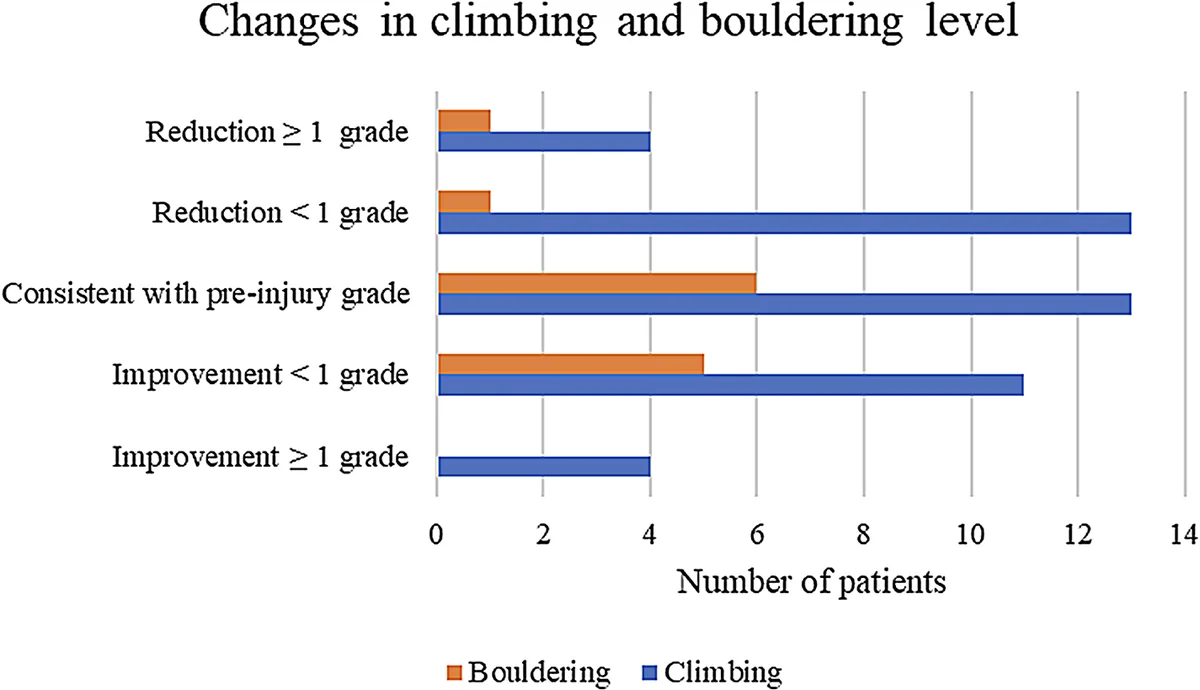
Published 20 January, the series reported 50 climbers with 69 affected finger joints treated during 2015–18. Clinic-specific, stage-based care preceded outcomes evaluated retrospectively through patient recall. All studied climbers returned within twelve months; pain and functional scores improved, but reported climbing time remained lower. With no randomised comparator and several treatments, the study cannot isolate treatment effects or establish a best option. Patients and joints are different counts. This series does not offer an individual treatment plan or establish complete participation recovery.
Injury research needs consistent definitions
The UIAA Medical Commission's injury-classification work was developed to improve comparisons in mountaineering and climbing research. It addresses the definitions and reporting of injury, severity and exposure, recognising that different activities and data sources can make apparent injury rates difficult to compare. This gives a useful framework for reading a clinic series. A count of affected finger joints is not the same as a count of injured climbers, and a group attending a specialist clinic is not an estimate of the whole climbing population. Likewise, return to an activity and the amount of activity are different outcomes. Standard terms help readers see which question a report answers before they compare it with another study. The commission's framework does not identify a treatment for a particular condition. Its contribution is to make sporting injury evidence more interpretable and comparable. Applied to follow-up research, that means describing who was included, what was counted, how severity was assessed and how sporting participation was measured. Those distinctions can reveal meaningful recovery outcomes without treating a single return-to-sport label as the whole result.
Case-series methods separate description from causal inference
Murad and colleagues' methodological framework for case reports and case series examines selection, ascertainment, causality and reporting. It asks how cases were identified, whether outcomes and exposures were measured adequately, and whether other explanations for an observed result were considered. These questions preserve the useful descriptive role of uncontrolled studies while making their limits visible. Improvement after care can reflect the intervention, the passage of time, changes in activity and other factors that a series may not separate. A specialist-clinic sample can also differ from people with the same condition who never attend that clinic. Clear recruitment and follow-up information therefore matters as much as a favourable average outcome. The framework does not turn a case series into a controlled trial or determine the best treatment. It helps readers identify which observations are credible and which conclusions need a stronger comparison. A series can document a clinical experience, describe a range of outcomes and generate questions for later research. Distinguishing those contributions from proof of treatment efficacy allows recovery evidence to be useful without overstating what the design can establish.
This research report is for education and professional discussion. Personal diagnosis, treatment and return-to-sport decisions require a qualified clinician.
Original sources
Read the underlying records.
Explore the official results, organiser reports or original research behind this story.