
Athletics · National
Foot-pressure study finds no simple link between toe contact and athletics performance
A Japanese collegiate sample shows why a standing foot measure should not be treated as a universal performance target.
Study publication:
The January finding
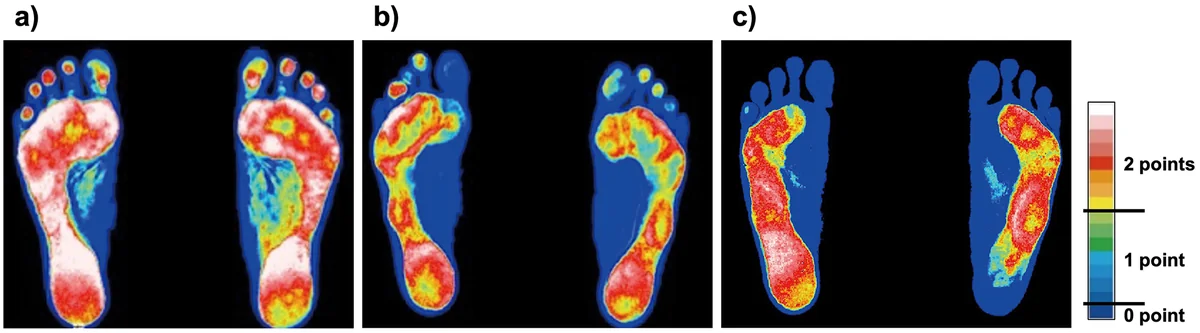
Published on 24 January, researchers compared standing foot-pressure images from 422 collegiate track-and-field athletes and 136 controls. They scored toe contact and compared it with World Athletics performance points. Athletes generally had more toe contact, but the overall athlete sample showed no significant toe-score–performance correlation. Among distance runners, higher performance related to more pronounced floating toes, opposing a simple 'more contact is better' interpretation. The association does not show that changing toe contact improves performance, establish a diagnosis or justify treatment. Sprinters, jumpers and distance runners differed, requiring event-specific interpretation.
What a performance score measures
World Athletics explains that its scoring tables put performances from different disciplines onto a comparable points scale. The 2022 revision used statistical performance data from preceding seasons, and the governing body describes the tables as tools for comparing results. They should not be confused with a test of how a foot works. A points total represents the sporting result; a scanner represents a measurement taken under specified conditions. Relating the two creates a research question, rather than making them interchangeable. This distinction matters when a study covers several events with different movements and competitive outcomes. A common scale makes a mixed-event analysis possible, but it does not mean that every discipline depends on the same physical characteristic in the same way. For readers, the useful question is which event a claimed relationship applies to, how performance was scored, and whether the comparison remains convincing within that event. The points system supplies an outcome framework, not a mechanism explaining why an athlete achieved it.
How to read a cross-sectional result
The STROBE checklist asks observational reports to identify their design, participant selection, setting, measurements and possible confounders. It also calls for reporting missing data, estimates with precision, limitations and the generalisability of findings. Applied here, that framework means separating what was measured from what remains unknown. A comparison observed at one point cannot establish the sequence required to say that a physical feature caused a performance difference. The same pattern might reflect athlete selection, sporting adaptation or other characteristics associated with both measurements. Those are alternative explanations to test, not conclusions about these participants. A future longitudinal study could examine whether changes in the measure precede changes in performance; an intervention would need its own comparison and appropriate outcomes. Readers should also distinguish a statistically detectable association from a useful individual prediction. An average relationship can coexist with considerable variation between people. The practical news value is a more precise question for biomechanics research, not a universal instruction to alter an athlete's toes.
This research report is for education and professional discussion. Personal diagnosis, treatment and return-to-sport decisions require a qualified clinician.
Original sources
Read the underlying records.
Explore the official results, organiser reports or original research behind this story.