
Netball · National
Netball surveillance study distinguishes match injury rates from training burden
The January publication reports a 2021 season in which equal injury counts occurred over very different amounts of exposure.
Study publication:
The same count can produce different rates
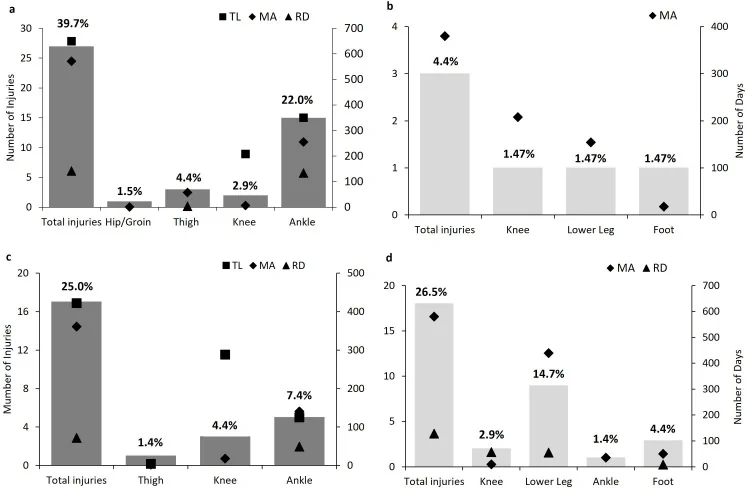
Published on 4 January, the study monitored 90 players over preparation and competition in the 2021 netball season. Thirty-nine players sustained 70 injuries: 35 in matches and 35 in training. Incidence was 41.12 per 1,000 match hours and 1.10 per 1,000 training hours. The higher match rate therefore reflects time exposed, rather than 40 times as many injuries. Lower limbs were prominent; overuse problems were more common in training. Time loss and medical attention captured additional impacts. Data quality and team variation limit interpretation. These descriptive results do not demonstrate an intervention's effectiveness or diagnose an athlete.
Definitions determine what becomes visible
The IOC's 2020 surveillance consensus explains why injury research needs consistent definitions, exposure measures and reporting methods. It distinguishes the frequency of health problems from their severity and overall burden. An injury that causes little absence can still require substantial care or modified participation; a rare severe injury can account for many lost days. These measures answer different planning questions and should appear with their denominator and time horizon. A comparison between sports, teams or seasons also requires knowing which health problems counted and who recorded them. If one system includes all medical-attention complaints while another records only complete absence, their totals are not directly interchangeable. Applied to a season report, the framework encourages readers to examine both the amount of exposure and the consequences of each problem. It also supports checking completeness, missing data and the reliability of collection procedures. Surveillance creates a basis for choosing questions and evaluating changes, while an observed pattern alone does not identify the cause or demonstrate that a proposed intervention reduces it.
Sport-specific preparation is a separate evidence question
Netball New Zealand's NetballSmart materials organise preparation, a dynamic warm-up, cool-down and recovery around the demands of the game. The resource treats preparation and recovery as parts of participation, rather than as a single isolated exercise. This is existing programme context from another national setting, not the intervention tested by the English surveillance study. Keeping that distinction visible prevents an injury profile from becoming an unsupported claim about a prevention programme. A useful evaluation would specify the programme delivered, how consistently it was used and which outcomes changed under an appropriate comparison. It would also examine whether injury definitions and exposure recording remained consistent, so that better reporting was not mistaken for a rise in risk or less reporting for an improvement. For clubs interpreting research, counts, care needs and participation restrictions can each inform different questions about services. The January report provides a description of those issues in elite netball. Choosing or evaluating a response remains another task, requiring evidence about that response and the people and setting in which it is used.
This research report is for education and professional discussion. Personal diagnosis, treatment and return-to-sport decisions require a qualified clinician.
Original sources
Read the underlying records.
Explore the official results, organiser reports or original research behind this story.