
School Sport · National
School sport survey links perceived teacher support with participation
A Chinese questionnaire study explores confidence and persistence as possible pathways, without establishing cause and effect.
Study publication:
The reported association
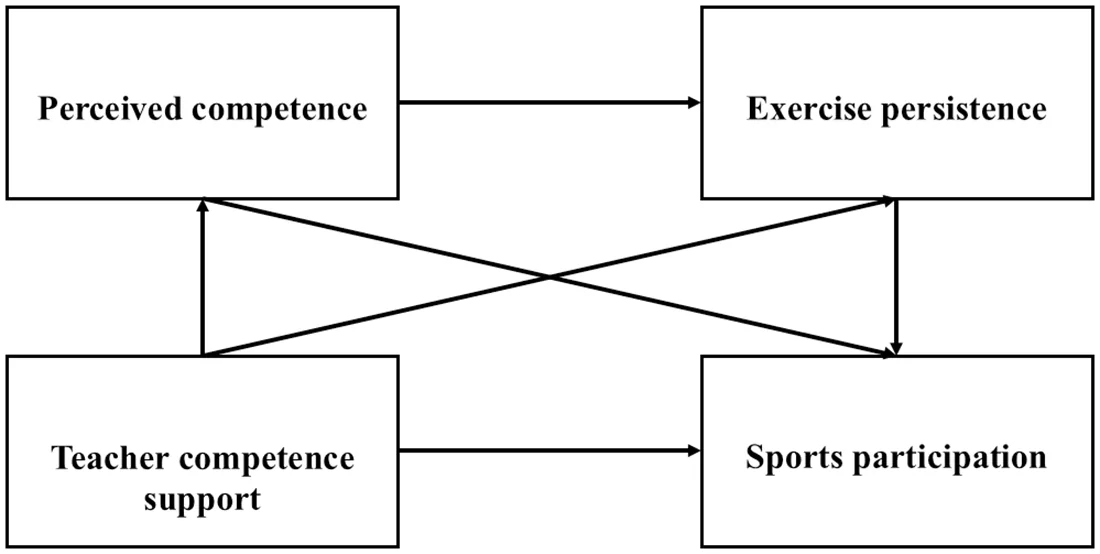
A study published on 7 January analysed questionnaires from 879 students at ten middle schools in Kaifeng, China. The survey was conducted in March and April 2024. Students' perceptions of physical-education teachers' competence support were positively associated with reported sport participation. Researchers used mediation analysis to explore perceived competence and exercise persistence as possible pathways between the measures. This was not a randomised teacher-training intervention, and the statistical model does not establish that changing a teacher's behaviour caused more participation. The measures rely on students' reports, and the sample represents a specific setting. The paper provides a hypothesis about how support, confidence and persistence may relate, which can inform the design of more direct evaluations.
Participation is broader than performance
UNESCO's 2015 International Charter treats access to physical education, physical activity and sport as a fundamental right. It calls for inclusive opportunities, qualified teaching, positive early experiences and programmes suited to participants' characteristics. It also emphasises the development of competence and confidence, and the need to monitor and evaluate whether programmes serve their intended beneficiaries. This provides a policy context for research about students' participation without making a survey a policy trial. A school's success cannot be reduced to a small group of competitive results; the opportunity to participate and the experience of different students are also relevant. Equally, a policy commitment is not evidence that every implementation achieves its goals. Research can help identify which parts of provision deserve investigation and which experiences may be missed by aggregate measures. The January paper addresses one relationship within that wider setting. Questions about facilities, inclusion, teaching resources and continued participation require their own evidence, rather than being resolved by a statistical association between two questionnaire scores.
Arrows in a model do not prove a mechanism
The AGReMA guidance asks mediation analyses to report their objectives, proposed relationships, causal assumptions, measurements, statistical methods and uncertainty. It cautions that conventional labels such as direct and indirect effects do not guarantee a causal interpretation, even in a randomised trial. Assumptions about confounding and the ordering of variables still matter. In a cross-sectional survey, a diagram can show the relationship researchers hypothesise while the data leave its direction unresolved. Students who participate more might also feel more competent or perceive greater support; other influences could relate to both. These are reasons to investigate alternative explanations, not conclusions about these students. A future evaluation could specify the support provided, measure changes over time and use a comparison appropriate to the question. The reporting framework helps readers distinguish a statistically fitted pathway from a demonstrated process. It also encourages considering the magnitude and precision of estimates rather than treating a significant model as a complete explanation. The useful next step is a testable question about support and participation, with its assumptions visible.
This research report is for education and professional discussion. Personal diagnosis, treatment and return-to-sport decisions require a qualified clinician.
Original sources
Read the underlying records.
Explore the official results, organiser reports or original research behind this story.